

AI generated worlds are moving from science fiction into real game development. New tools can create interactive environments, playable spaces, and 3D scenes from prompts, images, or other inputs, giving developers a faster way to imagine and test virtual places.
- What Does Generating a World Mean?
- What AI Generation Means for the Future of Gaming
- FAQs
- 1. What are AI-generated worlds?
- 2. How do AI-generated worlds benefit game developers?
- 3. Will AI replace human game designers?
- 4. Can AI-generated games create endless worlds?
- 5. How could AI-generated worlds improve gaming experiences?
- 6. Are AI-generated worlds already being used in game development?
For gamers, this could change what it means to explore. Future games may include worlds that adapt to your choices, generate new areas on demand, and feel less limited by fixed maps. That does not mean every game will become infinite or every environment will be AI-made. The best games will still need strong design, art direction, story, rules, and polish.
What Does Generating a World Mean?
When people say AI can generate entire worlds, they usually mean more than a flat image or background. A generated game world needs space, depth, navigation, objects, visual consistency, and some form of interaction.
In simple terms, AI world generation is about creating a place you can move through. That might include streets, rooms, terrain, lighting, landmarks, weather, props, and environmental details. More advanced systems may also support real-time exploration, allowing the player to walk, turn, look around, and interact with the world rather than simply viewing it.
AI world generation is also changing how creators think about building playable spaces. Spawn is one example of a platform designed for AI-first game creation, enabling creators to describe worlds, mechanics, and new ideas in natural language as they build.
How Could AI Change Open-World Games?
Open-world games are some of the hardest games to build because they require enormous amounts of content. Developers need landscapes, towns, roads, interiors, side quests, environmental storytelling, collectibles, enemies, landmarks, and reasons for players to keep exploring.
AI-generated worlds could help studios create early versions of these spaces faster. A designer might generate several versions of a ruined coastal city, a snowy mining settlement, or a desert outpost, then choose the strongest direction. That concept could make world-building more experimental because teams can test more ideas before committing to one.
Could Games Become Endless?
A game that generates new areas forever still needs rules. It needs a reason to keep going and a way to make each new place feel connected to the larger experience. Without that structure, an infinite world can start to feel repetitive very quickly.
The most interesting future may not be endless games. It may be responsive games. Instead of giving every player the same world, AI could help create spaces that respond to players’ actions. A cautious player, an aggressive player, and an explorer might encounter different environmental details, routes, or challenges.
That kind of personalization could make games feel more alive without making them shapeless.
What Does This Mean for Indie Developers?
AI-generated worlds could be especially powerful for indie developers. Small teams often have big creative ideas but limited resources for art, design, and production. Building a detailed 3D world by hand can take years, especially when a team lacks a large environment art department.
AI tools may help indie creators move faster in the early stages. They could use generated environments for concept art, prototypes, pitch materials, level ideas, and placeholder worlds. That makes it easier to test whether an idea feels fun before investing heavily in final assets.
This shift could open the door for more unusual games. A solo developer might create a surreal museum, a shifting dream world, or a tiny planet full of strange characters without needing to model every detail from scratch at the beginning.
The Best Game Worlds Still Need Human Designers
AI can generate a landscape, but it cannot automatically make that landscape fun. A great game world is not just a place. It is a sequence of decisions, discoveries, obstacles, rewards, moods, and memories.
Designers decide where the player looks first. Artists shape the visual language. Writers create context. Level designers guide movement. Sound designers make spaces feel alive. QA testers find what breaks. Producers keep the whole project focused.
AI can help with raw material, but people still turn that material into play. The future of world generation will depend on how well studios combine AI speed with human intention.
What AI Generation Means for the Future of Gaming
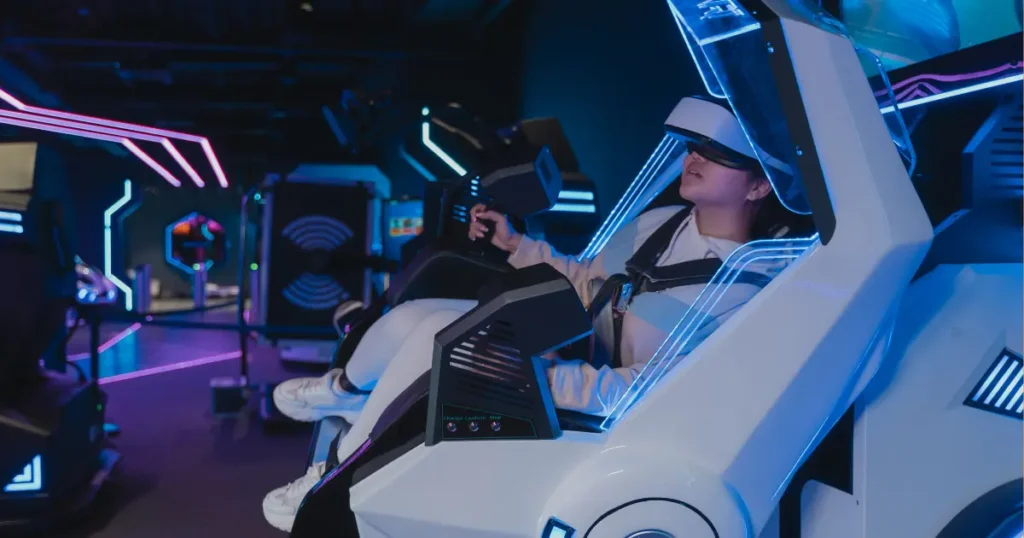 AI-generated worlds could make games more personal, more experimental, and faster to build. Players may see richer prototypes, more adaptive environments, and game spaces that respond to their choices in new ways.
But the real promise is not just bigger maps or endless content. It is the chance to create worlds that feel more reactive, surprising, and connected to the player’s journey.
For gamers, that could mean exploration becomes less predictable. The next cave, city, planet, or haunted house may not be something every player sees in the exact same way. It may be shaped by the game, the developer’s vision, and the choices you make along the way.
AI may have learned to generate worlds, but great games still need more than generation. They need purpose, emotion, challenge, and a reason to keep exploring.
FAQs
1. What are AI-generated worlds?
AI-generated worlds are virtual environments created with artificial intelligence. They can include landscapes, cities, buildings, objects, and interactive spaces generated from prompts, images, or other inputs.
2. How do AI-generated worlds benefit game developers?
They help developers prototype environments faster, reduce development time, explore multiple design ideas, and accelerate the creation of large game worlds.
3. Will AI replace human game designers?
No. AI can assist with creating assets and environments, but human designers are still essential for storytelling, gameplay mechanics, level design, art direction, and player experience.
4. Can AI-generated games create endless worlds?
AI can generate large or even theoretically endless environments, but successful games still require structure, meaningful objectives, and engaging gameplay to keep players interested.
5. How could AI-generated worlds improve gaming experiences?
They could enable adaptive environments, personalized exploration, dynamic quests, and worlds that respond to player choices, making each playthrough more unique.
6. Are AI-generated worlds already being used in game development?
Yes. Many studios and AI platforms are experimenting with AI-assisted world generation for concept art, prototyping, level design, and creating interactive 3D environments, although fully AI-generated commercial games are still emerging.

Sandeep Kumar is the Founder & CEO of Aitude, a leading AI tools, research, and tutorial platform dedicated to empowering learners, researchers, and innovators. Under his leadership, Aitude has become a go-to resource for those seeking the latest in artificial intelligence, machine learning, computer vision, and development strategies.