


Role of AI in Connected TV Campaign Optimization
Right audience. Right moment. But in a fragmented streaming landscape, getting both simultaneously is genuinely hard. Dozens of platforms. Viewer behavior splintering in every direction. No human team keeps pace with that kind of complexity unaided — the data volume alone makes it impossible. AI fills that gap, running audience targeting, bid management, and creative optimization at a speed and scale that manual workflows can’t approach. For any marketer serious about return on ad spend, knowing what AI actually does inside a CTV campaign has become table stakes.
1. Audience Targeting and Segmentation
Demographic buckets are blunt instruments. Always have been. AI digs into viewing habits, device behavior, and engagement metrics to locate the segments most likely to respond to a specific message. Consider this — someone who consistently watches a particular genre late on weeknights may be far more receptive to certain product categories than a midday casual browser. Machine learning catches those patterns. Human planners rarely can, not at this level of granularity. Fewer wasted impressions. Budgets flow toward people with genuine interest. And because these systems keep learning as new campaign data arrives, targeting sharpens week after week — no manual tuning required.
2. Real-Time Bidding and Budget Optimization
Every programmatic impression on CTV triggers an auction. Milliseconds, literally. AI evaluates viewer attributes, content context, time of day, and historical performance all at once — then decides what to bid, or whether to bid at all. It hunts undervalued inventory likely to convert, pushes bids up where the opportunity is real, and pulls back wherever performance history is weak. No babysitting. Beyond individual auctions, budget optimization continuously redirects spend away from dead-end placements toward time slots and channels that actually deliver. Better outcomes. Less budget incinerated on inventory that never converts.
3. Creative Performance Prediction and Optimization
Not every ad lands the same way with every viewer. Fast-paced, trend-forward creative might click with younger audiences; older viewers often respond better to slower, more deliberate storytelling. AI figures that out from historical performance data — pinpointing which messaging styles, visual approaches, and call-to-action formats work across different demographic groups and content environments. Platforms built around ctv advertising solutions deploy dynamic creative optimization engines that automatically serve the right variation to the right user, eliminating manual trafficking decisions entirely. Campaigns don’t just hold performance over their run — they get sharper as the system accumulates data.
4. Predictive Analytics and Campaign Performance Forecasting
Stress-testing a campaign before it fully launches used to be guesswork. Not anymore. Predictive models analyze historical data and surface the patterns that correlate with success or failure — estimating reach, frequency, conversion rates, and expected return on ad spend based on campaign parameters and current market conditions. Advertisers use those projections to settle questions of scale, duration, and budget before committing serious resources. Accuracy improves over time too, as models absorb results from thousands of campaigns across industries and platforms. Teams scale what’s working. They cut what the model flags as a likely underperformer — before it costs them anything significant.
5. Cross-Device Attribution and Measurement
CTV rarely operates in isolation. It sits alongside search, social, display, and mobile — and untangling how all those touchpoints interact is where attribution gets messy. Machine learning tracks user journeys across devices, revealing how a TV impression shapes behavior on a smartphone or desktop hours later. Attribution models might show that viewers exposed to a CTV ad are significantly more likely to search for the product on mobile within a defined window. That’s a measurable, traceable link between impression and intent. With that picture in hand, marketers can assign credit across channels accurately, refine their media mix, and make a clear case for continued CTV investment — rather than relying on instinct.
Conclusion
AI has fundamentally reshaped how CTV campaigns get planned, run, and refined. Audience segmentation, real-time bidding, creative optimization, predictive forecasting, cross-device attribution — none of these are tasks human teams can handle alone at this scale or speed. More precise targeting. Smarter budget allocation. Cleaner measurement. As competition for viewer attention intensifies and the CTV ecosystem keeps expanding, the marketers leaning into AI-driven optimization will pull ahead of those who don’t. And as platforms keep investing in machine learning capabilities, AI’s role in campaign strategy will only grow larger.
Data Privacy and Consent Management in CTV Advertising
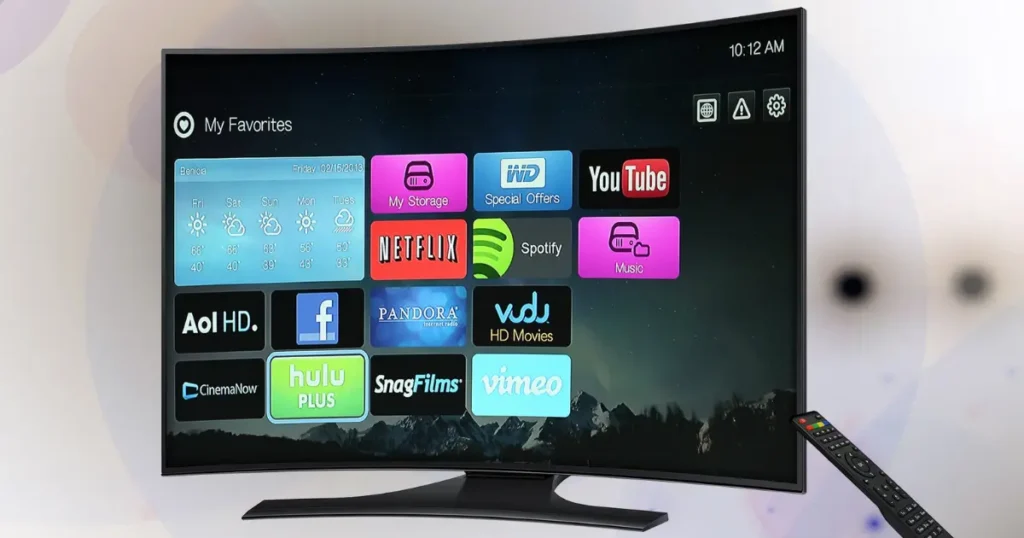
You can’t talk about AI-driven CTV optimization without addressing what fuels it: viewer data. As privacy regulations tighten across markets and walled gardens restrict third-party data sharing, AI systems now carry the added burden of enforcing consent boundaries in real time. Machine learning models flag which audience segments carry valid consent for targeting, strip out identifiers that violate platform-specific privacy rules, and route bidding decisions around data you’re not cleared to use.
This isn’t a side feature. It’s becoming core infrastructure. If your CTV stack treats privacy compliance as an afterthought bolted onto a targeting engine, you’re building on a foundation that regulators will eventually force you to rip out. The advertisers pulling ahead are the ones training their AI systems to optimize within consent constraints from day one, not retrofitting compliance after a campaign already ran.
FAQs
Q1: Does AI make CTV advertising too automated to control?
No. AI handles execution at a speed you can’t match manually, but you still set the strategy: budget ceilings, brand safety rules, and creative direction. Think of it as a co-pilot, not an autopilot. You define the guardrails; the system operates inside them.
Q2: How much data does AI need before CTV targeting actually improves?
There’s no fixed threshold, but most platforms need several weeks of campaign data across a reasonable spend level before targeting sharpens meaningfully. Early campaigns lean more on historical patterns from other advertisers; your own signal takes over as data accumulates.
Q3: Can small budgets benefit from AI-driven CTV optimization, or is this only for enterprise spend?
Smaller budgets benefit too, just differently. AI still prevents obvious waste (bad time slots, weak inventory) even without enough data for deep personalization. The ROI curve is less dramatic at low spend, but it’s rarely negative.
Q4: Does AI creative optimization mean fewer creative variations to produce?
The opposite. Dynamic creative optimization performs best with more variations to test and serve. AI reduces the manual burden of deciding which variation goes where, not the need to produce diverse creative in the first place.
Q5: How does cross-device attribution work if a viewer doesn’t use the same login across devices?
Attribution models use probabilistic matching, household-level signals, and deterministic identifiers where available (like logged-in streaming apps) to stitch together a likely journey. It’s not perfect identity resolution, it’s a confidence-weighted estimate, and platforms differ significantly in accuracy here.
Q6: Is predictive campaign forecasting reliable enough to bet real budget on?
It’s reliable enough to reduce risk, not eliminate it. Treat forecasts as a way to catch likely underperformers before you scale spend, not as a guarantee. Market conditions shift, and models trained on past data lag behind sudden changes in viewer behavior.

I’m Erika Balla, a Hungarian from Romania with a passion for both graphic design and content writing. After completing my studies in graphic design, I discovered my second passion in content writing, particularly in crafting well-researched, technical articles. I find joy in dedicating hours to reading magazines and collecting materials that fuel the creation of my articles. What sets me apart is my love for precision and aesthetics. I strive to deliver high-quality content that not only educates but also engages readers with its visual appeal.