
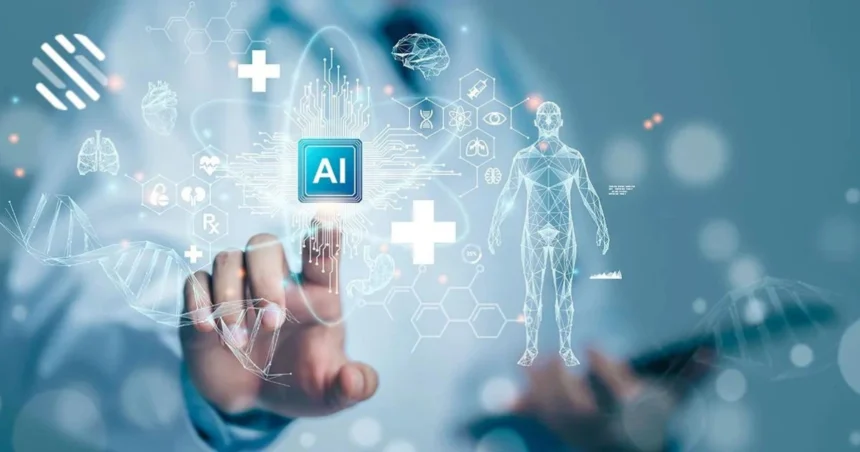
The impact of Artificial Intelligence on the healthcare sector is immense as it improves clinical decision-making, performs routine administrative work, and offers personalized treatment of the patients. With the advent of digital healthcare, there is an increased interest among businesses to develop software solutions using AI in healthcare.
- Why AI Is Becoming Essential in Healthcare Software Development
- Key Technologies Powering AI in Healthcare
- Predictive Analytics
- Benefits of AI in Healthcare Software Development
- Real-World Applications of AI in Healthcare Software Development
- Challenges Businesses Should Consider Before Investing in AI
- Final Thoughts
- Frequently Asked Questions
- 1. What is AI in healthcare software development?
- 2. Why should businesses invest in AI healthcare software?
- 3. How do I choose the right AI healthcare software development company?
- 4. What are the biggest challenges in implementing AI in healthcare?
- 5. Can AI integrate with existing healthcare systems?
- 6. Which healthcare sectors benefit the most from AI?
- 7. How does AI improve patient care?
All of this is supported by an impressive market trend. Industry experts predict that the global AI healthcare market will reach up to $188 billion by 2030 thanks to such technologies as machine learning, NLP, predictive analysis, and computer vision. All players in the field of healthcare – hospitals, insurers, and startups alike – use AI technologies to enhance patient care and decrease operational expenses.
However, the development of effective solutions in the area of AI healthcare software requires not only sophisticated technologies but also security, compliance with regulations, system integration, and domain knowledge. In this article, you will explore how AI is transforming healthcare software development, the key technologies driving this change, the benefits and challenges of adoption, and what businesses should consider when choosing an AI healthcare software development company.
Why AI Is Becoming Essential in Healthcare Software Development
Healthcare has always been data-dependent, but the scale and complexity of data involved in the process have grown immensely over the last ten years. The amount of data provided by EHR, wearable devices, diagnostic imaging equipment, lab reports, and remote monitoring systems is enormous.
The issue here is that regular software tools are generally not designed for managing such massive amounts of data. Meanwhile, AI technology is capable of analyzing vast amounts of data instantly and reaching conclusions that will assist health care professionals in making informed decisions.
That is why AI in healthcare software development is no longer seen as something that is only beginning to emerge. Rather, it has become a smart investment for those who wish to optimize their processes and stay competitive in the digital world of healthcare.
Key Technologies Powering AI in Healthcare
AI is not one technology but a set of technologies that are combined to tackle some challenging issues in the field of healthcare. Knowledge about such technologies will be valuable for enterprises to find the correct solution for their needs.
Machine Learning
This is a technology where healthcare applications can learn how to solve problems using historical and current data without programming. These applications keep learning and improving their skills through finding patterns and making predictions.
Application of Machine Learning in Healthcare
- Disease risk prediction
- Treatment proposals
- Patient readmission analysis
- Clinical decision support
- Predictive analysis
This technology will help doctors to concentrate more on providing care rather than analyzing data.
Natural Language Processing (NLP)
There is an abundance of unstructured data created by healthcare providers in the form of physician notes, discharge notes, prescriptions, and documentation.
The use of Natural Language Processing allows AI to comprehend and structure this data.
Some common uses of NLP are:
- Automated Clinical Documentation
- Medical Transcription
- Smart Chatbots
- EHR Analysis
- Speech-Enabled Health Care Assistants
Not only does NLP cut down the time of documentation but also makes patient data more accessible.
Computer Vision
Computer vision provides computers with the ability to interpret medical images quickly and with great precision.
The health industry is increasingly leveraging image interpretation tools driven by AI to help them:
- Interpret radiological images
- Understand MRI and CT scan images
- Detect cancer
- Conduct ophthalmic tests
- Identify pathology issues
In addition to not substituting specialists, computer vision technology is used to enhance their work.
Predictive Analytics
Predictive analytics combines AI with historical healthcare data to forecast future outcomes.
Healthcare organizations use predictive models to:
- Identify high-risk patients
- Forecast patient admissions
- Optimize staffing levels
- Prevent disease progression
- Improve resource allocation
By anticipating potential challenges before they occur, healthcare providers can deliver more proactive and personalized care.
Benefits of AI in Healthcare Software Development
The increasing usage of AI systems is fueled by their ability to provide tangible business and clinical value. Although each company has different objectives, the benefits of incorporating AI into healthcare systems are becoming obvious.
Improved Clinical Decision-Making
Using AI technologies, healthcare practitioners are able to consider the patient’s history, test results, images, and guidelines simultaneously. In this way, physicians obtain evidence-based information to make effective decisions.
Nevertheless, the final decision regarding patient treatment is made by healthcare practitioners. At the same time, AI technology saves time during the analysis of the case.
Increased Operational Efficiency
It is well known that administrative functions comprise a large part of the expenses of healthcare organizations. With AI, it is possible to automate some of these activities such as scheduling appointments, billing, and coding.
Personalized Patient Experience
Today’s patients are looking for health services that are convenient, responsive, and personalized.
Through AI, health care platforms offer:
- Personalized treatment suggestions
- Drug reminders
- Virtual health care assistants
- Remote monitoring of the patients’ health
- Customized health plans
This results in better and personalized experiences for the patients.
Effective Resource Management
Limited availability of health care resources is always an issue for health care organizations.
AI-based forecasts allow managers to effectively allocate their resources by predicting their needs and avoiding bottlenecks in advance.
Improved Preventive Healthcare
In addition to offering effective treatment, AI helps identify possible risks of developing certain diseases early enough.
With predictive analysis, healthcare organizations can recognize the signs of chronic diseases.
Real-World Applications of AI in Healthcare Software Development
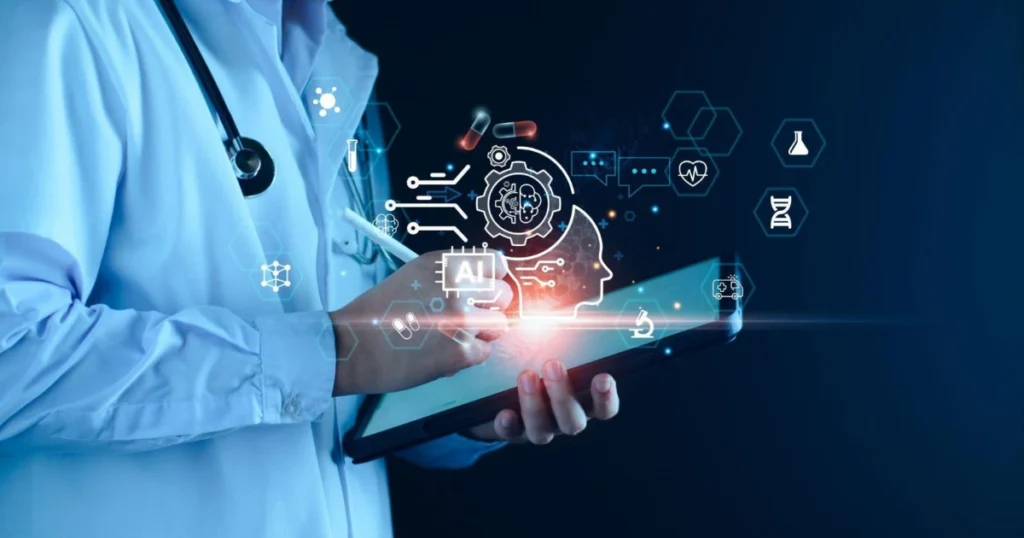
The practical applications of AI extend across virtually every segment of healthcare. Businesses investing in healthcare software development are increasingly incorporating AI capabilities to improve efficiency, accuracy, and patient outcomes.
Decision Support Systems for Intelligent Clinical Decisions
The AI-enabled platforms for clinical decision-making support doctors in the process of analyzing the history of patients, their symptoms, results of diagnosis, medical documentation, and literature on various conditions and treatment.
They contribute to lowering diagnostic variation and making decisions based on evidence-based practices.
Medical Imaging Based on AI
Medical imaging is considered one of the most significant uses of AI.
Special algorithms analyze X-rays, CT-scans, MRIs, and ultrasounds, thus helping radiologists to spot diseases like fractures, tumors, and cardiovascular conditions in advance.
Virtual Healthcare Assistants
AI-enabled virtual assistants allow patients to schedule their appointments, get reminders about taking medications, acquire relevant information about health care and interact with health care specialists without the involvement of people.
This feature increases patient involvement while minimizing the administrative work of the health care professionals.
Remote Monitoring of Patients
Devices which are worn by patients collect their medical data, such as heart rate, blood pressure, oxygen saturation, and physical activity.
Then AI analyzes this data to detect any abnormalities, informs health care specialists about it, and allows for proactive intervention.
Challenges Businesses Should Consider Before Investing in AI
While there may be many positive implications of using AI, the application of this technology requires a carefully thought-out plan. For example, health care organizations need to be innovative regarding AI applications while complying with regulations, securing information, and being scalable. Therefore, there are certain important considerations that businesses need to keep in mind before using AI in health care software development.
Data Privacy and Compliance with Regulatory Requirements
The apps used in the field of medicine contain a lot of sensitive information about patients. As it has been said above, there are certain standards which regulate the process of storage, processing, and sharing of medical data, such as HIPAA, GDPR, and some others.
Thus, AI solutions have to be compliant with these regulations in order to ensure privacy and confidentiality of the stored data. Moreover, being compliant with regulations is important for building users’ trust.
Data Quality
Artificial intelligence relies heavily on the quality of data to produce reliable results. Since data can be gathered from different sources – EHRs, wearable gadgets, lab systems, diagnostics – inconsistencies can make AI solutions less effective and useful.
Integration with Pre-existing Health Care Systems
There is still a lot of pre-existing software in use by many hospitals and health care institutions for their routine operations. If the newly introduced AI software cannot integrate well with the existing software, then this may pose some difficulty for the business in its adoption process.
This means that businesses have to look for healthcare software development solutions that will easily integrate with EHRs, hospital management software, telemedicine applications, and third-party APIs.
Emerging Trends Shaping AI in Healthcare Software Development
The future of AI in healthcare software development extends well beyond automation. As AI technologies continue to mature, healthcare organizations are exploring more advanced applications that enhance both patient outcomes and operational efficiency.
AI-Driven Personalized Medicine
Through the analysis of genetic, lifestyle, and medical information, artificial intelligence can enable customized medicine based on patient-specific information rather than generalized treatment methods.
Intelligent Clinical Decision Making
AI-powered clinical decision-making tools have become more advanced, supporting doctors with the tasks of diagnostics, developing treatment plans, and assessing risks. These solutions provide accurate diagnostics and minimize clinical variability thanks to the use of up-to-date patient information along with medical literature.
Ambient Clinical Intelligence
Healthcare professionals devote considerable time to documentation of patient visits. With ambient AI, doctors will be able to collect all necessary information without any effort.
Predictive Population Health Management
Healthcare organizations tend to move from reactive to preventive medicine. Predictive analytics driven by AI helps identify at-risk populations and predict future diseases.
The presented examples illustrate how artificial intelligence is transforming healthcare delivery and not just improving healthcare software.
Final Thoughts
The use of AI is revolutionizing every process in the healthcare environment, ranging from diagnosis and treatments to engagement and administrative processes. Each passing day, healthcare professionals become increasingly curious about digitization and start investing in AI-based healthcare software applications.
Yet, achieving success with AI cannot be done by simply introducing advanced technology. It requires strategy, quality data, compliance with regulations, and a reliable partner who will help build smart solutions for your needs.
With experience in healthcare and expertise in AI, we create intelligent software products that not only help overcome the current issues but also make sure you will be ready for future opportunities.
Frequently Asked Questions
1. What is AI in healthcare software development?
AI in healthcare software development involves integrating artificial intelligence technologies such as machine learning, natural language processing, computer vision, and predictive analytics into healthcare applications. These solutions help improve clinical decision-making, automate workflows, enhance patient engagement, and optimize operational efficiency.
2. Why should businesses invest in AI healthcare software?
AI enables healthcare organizations to automate repetitive tasks, analyze medical data more efficiently, improve diagnostic accuracy, personalize patient care, and reduce operational costs. It also supports better resource management and long-term scalability.
3. How do I choose the right AI healthcare software development company?
Businesses should evaluate a company’s healthcare domain expertise, AI capabilities, regulatory compliance experience, security practices, integration expertise, and track record in delivering scalable healthcare solutions.
4. What are the biggest challenges in implementing AI in healthcare?
Common challenges include maintaining data privacy, ensuring regulatory compliance, managing high-quality datasets, integrating AI with legacy systems, and continuously monitoring AI models for accuracy and performance.
5. Can AI integrate with existing healthcare systems?
Yes. Modern AI solutions can integrate with Electronic Health Records (EHRs), Hospital Information Systems (HIS), telemedicine platforms, laboratory systems, and other healthcare technologies through secure APIs and interoperability standards.
6. Which healthcare sectors benefit the most from AI?
Hospitals, clinics, diagnostic centers, pharmaceutical companies, insurance providers, telemedicine platforms, and health-tech startups all benefit from AI-powered healthcare software solutions.
7. How does AI improve patient care?
AI supports faster diagnosis, personalized treatment recommendations, continuous remote monitoring, predictive risk assessment, and improved communication between patients and healthcare providers, ultimately enhancing the overall quality of care.

Sandeep Kumar is the Founder & CEO of Aitude, a leading AI tools, research, and tutorial platform dedicated to empowering learners, researchers, and innovators. Under his leadership, Aitude has become a go-to resource for those seeking the latest in artificial intelligence, machine learning, computer vision, and development strategies.