

AI taking over graphic designers has become one of the biggest questions in the creative industry. In 2026, AI tools can generate logos, social media graphics, advertisements, illustrations, presentations, product images, and other visual assets in minutes. Tools such as Canva, Adobe Firefly, and DALL·E have made professional-looking design more accessible than ever.
- What Can AI Do in Graphic Design?
- What AI Cannot Do Like a Human Graphic Designer
- Is AI Replacing Graphic Designers or Changing Their Jobs?
- How AI Is Changing the Role of Professional Graphic Designers
- Will AI Replace Freelance Graphic Designers?
- AI vs. Graphic Designers: Who Wins?
- The Future of Graphic Design With AI
- FAQs
- 1. Will AI replace graphic designers?
- 2. How is AI changing graphic design?
- 3. Can AI create professional graphic designs?
- 4. Should graphic designers learn AI?
- 5. What graphic design tasks can AI automate?
- 6. Is AI good for beginner graphic designers?
- 7. Will AI reduce graphic design jobs?
- 8. What is the future of graphic design with AI?
But does that mean graphic designers are becoming obsolete?
Not exactly.
AI is changing how graphic designers work, but it is not simply replacing them. Instead, it is taking over some repetitive tasks while giving designers new ways to brainstorm, experiment, and produce creative work faster. The bigger shift is that designers now need to combine traditional design skills with AI tools, creative thinking, and strategic problem-solving.
So, the real question is not whether AI will replace graphic designers. It is whether designers who know how to work with AI will have an advantage over those who do not.
What Can AI Do in Graphic Design?
Modern AI graphic design tools can handle many tasks that previously required considerable manual effort. A designer can now describe an idea in plain language and receive multiple visual concepts within seconds.
AI can help with:
- Generating images and illustrations
- Creating social media posts
- Designing presentation layouts
- Removing image backgrounds
- Resizing designs for different platforms
- Generating color palette suggestions
- Creating advertising concepts
- Producing typography combinations
- Creating product mockups
- Editing or extending images
- Generating variations of an existing design
- Developing early concepts for logos and branding
For example, a marketing team might need ten different versions of an advertisement for testing. Instead of creating every variation manually, a designer can use AI to generate initial concepts and then refine the strongest options.
This makes AI particularly useful for high-volume and repetitive graphic design tasks.
AI Makes Repetitive Design Work Faster
One of the biggest advantages of AI is automation.
Tasks such as removing backgrounds, changing image dimensions, creating multiple variations, adjusting compositions, and generating basic visual assets can consume a surprising amount of a designer’s time. AI can reduce the manual work involved in these processes.
That does not necessarily make the designer less important. It allows the designer to spend more time on the parts of the job that require judgment, creativity, and communication.
In other words, AI can take care of some of the design chores while the designer focuses on the bigger picture.
What AI Cannot Do Like a Human Graphic Designer
Despite impressive progress, AI still has important limitations.
A graphic designer does more than produce an attractive image. Professional design often starts with questions such as:
- Who is the target audience?
- What does the brand want people to feel?
- What message should the design communicate?
- Where will the design appear?
- What makes the brand different from its competitors?
- How should the visual identity remain consistent over time?
AI can provide suggestions based on patterns and instructions, but the designer remains responsible for deciding whether those suggestions actually solve the problem.
Human Creativity Still Matters
AI can generate thousands of visual ideas, but quantity does not automatically equal creativity.
A human designer brings personal experience, cultural understanding, emotions, visual judgment, and knowledge of a specific brand or audience. These factors can influence small decisions that make a design feel relevant rather than generic.
For instance, designing a campaign for a children’s education company requires a different visual approach from designing a luxury financial brand. Both may use colors, typography, images, and layouts, but the emotional message and audience expectations are completely different.
AI can assist with the execution. A human still needs to understand the reason behind the design.
Is AI Replacing Graphic Designers or Changing Their Jobs?
The answer is more nuanced than a simple yes or no.
AI is likely to reduce the amount of manual work involved in certain types of graphic design. Simple tasks that once required a designer may now be completed by marketers, business owners, or content creators using AI-powered tools.
However, that does not mean every graphic designer will disappear.
Instead, the role of the designer is evolving.
Designers are increasingly expected to work as creative problem-solvers, brand thinkers, visual strategists, and creative directors rather than spending all their time manually producing individual assets.
This shift is similar to what happened when digital design software replaced many traditional design processes. The tools changed, but the need for people who understand visual communication did not disappear.
How AI Is Changing the Role of Professional Graphic Designers
The modern graphic designer may need a broader skill set than before.
Alongside traditional design principles, designers can benefit from understanding:
- Generative AI tools
- AI image generation
- Prompt writing
- Brand strategy
- Content creation
- Digital marketing
- User experience principles
- Design automation
- Creative direction
- AI-assisted workflows
Instead of spending hours creating every element from scratch, a designer can use AI to explore several directions quickly and then apply human judgment to develop the best concept.
This makes the designer more like a creative director who guides the technology rather than someone who simply operates design software.
AI and Graphic Design for Businesses
Businesses are already using AI to produce visual content at greater speed.
A small company may need social media graphics, promotional banners, email visuals, blog images, advertisements, and product images every week. Creating all of this manually can require significant time and resources.
AI can help businesses generate initial concepts and variations quickly.
For larger marketing campaigns, however, businesses still need experienced designers to maintain brand consistency and make strategic creative decisions.
A useful way to look at it is:
AI handles speed and scale. Designers handle direction, judgment, and creativity.
This combination can help companies produce more content without sacrificing the strategic thinking behind their visual communication.
What Does AI Mean for New Graphic Designers?
AI has lowered the barrier to entry for people who are interested in graphic design.
Someone with limited technical experience can now experiment with layouts, images, typography, and visual concepts without spending years learning every software feature.
That creates both an opportunity and a challenge.
The opportunity is that beginners can learn faster and experiment more. The challenge is that the market can become more competitive because more people can create acceptable-looking designs.
For new designers, simply knowing how to operate Photoshop or another design application may no longer be enough.
Developing skills in branding, visual storytelling, design principles, communication, creative thinking, and AI-assisted design can provide a stronger foundation.
The goal should not be to compete with AI at producing images faster. AI will probably win that race before lunch.
The goal is to become better at deciding what should be created and why.
Will AI Replace Freelance Graphic Designers?
Freelance graphic designers may feel some of the impact of AI, especially in markets focused on inexpensive and simple design work.
For example, clients may use AI tools themselves for basic social media posts, thumbnails, invitations, or simple marketing graphics.
However, clients who need professional branding, campaign concepts, visual identity systems, packaging, art direction, or consistent creative work still need human expertise.
Freelancers who combine design knowledge with AI skills can position themselves differently.
Instead of selling only individual design assets, they can offer broader services such as:
- Brand identity development
- Creative direction
- AI-assisted content production
- Marketing design systems
- Social media creative strategy
- Advertising concepts
- Visual storytelling
- Design consultation
This changes the value proposition from “I can make an image” to “I can help you communicate your brand visually.”
AI Graphic Design Has Challenges Too
The growth of AI-generated design also creates several concerns.
Copyright and Ownership
AI-generated content raises questions about copyright, ownership, training data, and how existing creative works are used to develop AI systems.
The legal landscape continues to evolve, so designers and businesses should understand the rules that apply to the tools and content they use.
Originality
Another concern is creative sameness.
If thousands of people use similar prompts and AI tools, their designs can start to look alike. Human direction becomes important for creating distinctive visual identities.
Quality Control
AI can produce impressive results, but it can also produce inconsistent or unsuitable designs.
A generated image may look good at first glance but fail to match the brand, contain visual inconsistencies, or communicate the wrong message.
That is why human review remains essential.
AI vs. Graphic Designers: Who Wins?
The debate about AI vs. graphic designers often treats the two as competitors. In reality, they perform different roles.
| AI | Graphic Designer |
|---|---|
| Generates ideas quickly | Understands the creative objective |
| Automates repetitive work | Makes strategic design decisions |
| Produces many variations | Selects and refines the strongest concept |
| Processes patterns | Understands brand context |
| Speeds up production | Builds visual identity |
| Assists with execution | Provides creative direction |
The strongest future workflow is therefore not necessarily AI versus designers.
It is AI plus designers.
The Future of Graphic Design With AI
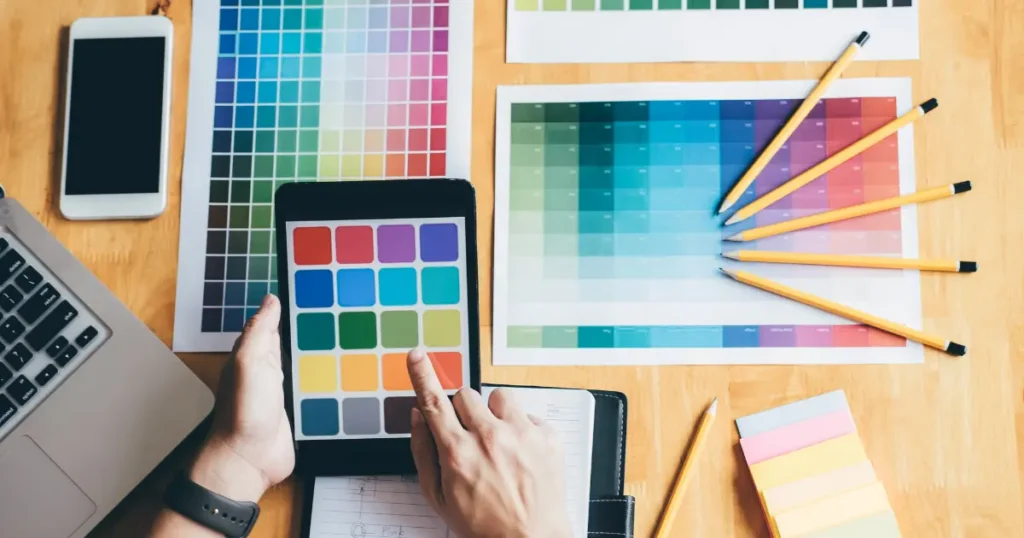
By 2026, AI has become an increasingly important part of the graphic design workflow. That trend is likely to continue as creative software becomes more capable.
Future designers may spend less time manually producing individual visual elements and more time developing concepts, reviewing AI-generated outputs, building brand systems, directing creative campaigns, and solving communication problems.
This does not mean every designer needs to become an AI engineer.
It means designers should become comfortable using AI as part of their creative toolkit.
The designers who learn how to combine human creativity with AI-powered graphic design can potentially work faster, explore more ideas, and take on a wider range of projects.
So, Will AI Take Over Graphic Designers?
AI is unlikely to completely replace graphic designers, but it will replace some design tasks and change what clients expect from designers.
Simple, repetitive, and highly automated design work is increasingly accessible through AI. At the same time, complex branding, creative direction, strategic communication, and human-centered design still require judgment and experience.
The future belongs less to designers who ignore AI and more to designers who learn how to use it effectively.
AI can generate the image.
A skilled designer decides whether that image is actually worth using.
That distinction is likely to remain one of the most important parts of graphic design in the AI era.
FAQs
1. Will AI replace graphic designers?
AI is unlikely to completely replace graphic designers. It can automate repetitive and simple design tasks, but professional design still requires creativity, strategic thinking, brand understanding, and human judgment.
2. How is AI changing graphic design?
AI is making graphic design faster by helping with image generation, layouts, background removal, resizing, color suggestions, design variations, and other repetitive tasks. It is also changing designers’ roles toward creative direction and strategy.
3. Can AI create professional graphic designs?
Yes, AI can create high-quality graphics for many purposes, including social media posts, advertisements, illustrations, presentations, and marketing materials. However, human review and editing are often needed to ensure accuracy, consistency, originality, and brand alignment.
4. Should graphic designers learn AI?
Yes. Learning AI-powered design tools can help graphic designers improve productivity, generate ideas faster, and stay competitive. AI skills can complement traditional knowledge of typography, composition, color theory, branding, and visual communication.
5. What graphic design tasks can AI automate?
AI can automate or simplify tasks such as background removal, image resizing, image generation, design variations, color suggestions, basic layouts, image editing, and creating visual concepts.
6. Is AI good for beginner graphic designers?
AI can be useful for beginners because it makes experimentation easier and helps them explore different design concepts. However, beginners should still learn fundamental design principles instead of relying entirely on AI-generated results.
7. Will AI reduce graphic design jobs?
AI may reduce demand for some simple and repetitive design tasks, particularly low-cost production work. However, demand can remain strong for designers who provide branding, creative direction, visual strategy, and specialized design expertise.
8. What is the future of graphic design with AI?
The future will likely involve greater collaboration between AI and human designers. AI will assist with production and idea generation, while designers will focus more on strategy, creativity, storytelling, brand identity, and creative decision-making.
Conclusion
AI is changing graphic design, but it is not simply taking graphic designers out of the picture. Instead, it is automating repetitive tasks, speeding up creative workflows, and giving designers more opportunities to experiment. Tools such as Canva, Adobe Firefly, and DALL·E can handle parts of the production process, but human designers still bring strategy, emotional understanding, brand knowledge, and creative judgment.
The future of graphic design will likely belong to professionals who can combine human creativity with AI-powered design tools. Designers who learn how to use AI effectively can work faster, explore more ideas, and focus on higher-value creative decisions. Rather than competing directly with AI, graphic designers can use it as a powerful creative assistant.

Dinesh Suthar is an AI and technology writer who explores the latest trends in artificial intelligence, emerging tools, and digital innovation. He simplifies complex tech topics into practical insights for businesses, marketers, and tech enthusiasts.