Fitness technology has moved from step counters to sensors, AI coaches and connected equipment that read your body in real time, but none of it replaces the basics of training, sleep and food.
- 1. Wearables: from step counters to biosensors
- 2. AI coaching: plans that adapt to you
- 3. Connected equipment, VR and gamified training
- 4. Recovery tech: progress happens between workouts
- 5. Nutrition tech: logging that takes seconds
- 6. At the end of the day, it boils down to what you eat
- Fitness technology at a glance
- How to choose the right fitness technology
- Putting it together: a daily and weekly routine
- Frequently asked questions
- The bottom line
- Sources
1. Wearables: from step counters to biosensors
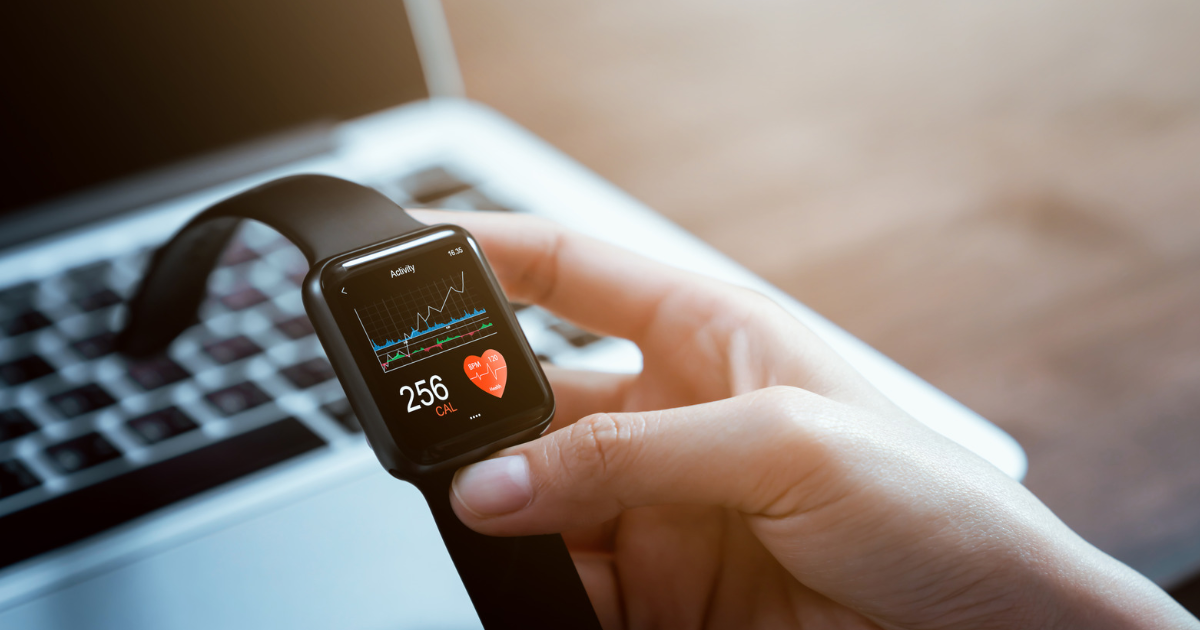
Wearable technology is the number one trend in the American College of Sports Medicine’s 2026 Worldwide Fitness Trends, a survey of 2,000 fitness professionals. It has also outgrown the step counter. Modern watches, bands and rings can track:
- Heart rate and heart-rate zones during workouts
- Sleep duration and sleep stages
- Resting heart rate and heart-rate variability (HRV), which hint at how well you are recovering
- Skin temperature and blood oxygen on many models
Smart rings are the newest form factor. Their appeal is comfort: you can wear one to bed without the bulk of a watch. Market forecasts for smart rings vary widely between research firms, so treat any single growth figure with caution.
The frontier is chemical sensing. Engineers at UC San Diego built a ring prototype that can measure glucose, ketones, lactate, uric acid, vitamin C and alcohol from fingertip sweat, tracking up to four at once. In tests with healthy volunteers and people with type 1 diabetes, its glucose and ketone readings tracked commercial monitors closely. It is still a research prototype, so be sceptical of consumer rings that promise non-invasive glucose readings today.
The main limitation is that wearables estimate; they do not diagnose. Readings vary with device, fit and activity, so look at weekly trends rather than reacting to a single day’s number.
2. AI coaching: plans that adapt to you
Traditional programmes hand everyone the same template. AI coaching apps instead adjust the plan using the data you give them: workouts completed, heart rate, sleep and how hard sessions felt. Industry commentary, such as Gold’s Gym’s 2026 trends piece, describes algorithms handling day-to-day programming while a human trainer fine-tunes technique. For context, AI is not a ranked trend in ACSM’s 2026 list, but mobile exercise apps rank fourth and data-driven technology eighth.
What these apps do well:
- Adjust the plan when you miss a session or feel run down
- Add weight, distance or reps automatically as you progress
- Offer coaching at a fraction of the cost of regular one-to-one training
- Answer quick questions, such as exercise swaps for limited equipment
Where they fall short:
- They cannot see your form, spot pain or know about a stressful week unless you tell them
- Advice becomes generic when the data you log is thin or inconsistent
- Accountability and motivation still come largely from people
The sensible way to use AI coaching is as a planning assistant, not a replacement for a qualified trainer, especially if you are returning from injury.
3. Connected equipment, VR and gamified training

Treadmills, bikes, rowers and strength machines increasingly sync with apps, so a session at home and one at the gym end up in a single record. That matters because progress is far easier to judge when your history sits in one place instead of scattered across notebooks and screenshots.
VR and gamification target the oldest problem in fitness, which is boredom. Streaks, challenges, leaderboards and virtual environments can make routine sessions more engaging, and consistency is what ultimately drives results.
Connected equipment is most useful for:
- Home exercisers who want guided classes without a studio membership
- Runners and cyclists who want pace, distance and effort logged automatically
- People who stay motivated by points, competition or visible progress
The trade-offs are cost and lock-in. Smart machines and headsets can be expensive, some need a subscription, and many work best inside one brand’s ecosystem. A basic setup and a plan you actually follow will beat premium kit that gathers dust.
4. Recovery tech: progress happens between workouts
Recovery is now framed as part of training rather than a break from it. Gold’s Gym’s 2026 trends piece describes the old “no days off” mentality becoming less common. Recovery trackers support that shift by estimating readiness from signals such as sleep, resting heart rate and HRV, and many apps use those estimates to suggest a lighter or harder day.
How to use recovery scores sensibly:
- Compare them with your own baseline, not other people’s numbers
- Watch trends across several days instead of reacting to one low reading
- Combine the score with how you actually feel: energy, soreness, mood and motivation
- Treat a low score as a nudge to adjust intensity, not an order to skip training
How accurate are they? In a small Harvard Medical School and Brigham and Women’s Hospital study of 35 adults with healthy sleep, the Oura Ring Gen 3 agreed with a hospital sleep test about 80% of the time on sleep stages and did better than the Apple Watch Series 8 and Fitbit Sense 2, according to TechRadar’s report. That is encouraging, but it is one small study of an older ring model. HRV-based readiness scores remain wellness estimates, not medical diagnoses.
5. Nutrition tech: logging that takes seconds
Food-logging apps turn calories, protein, carbohydrate and fat into numbers you can track alongside your training. Many now recognise foods from a photo or a short description, and some wearable platforms pair with continuous glucose monitors to show how individual meals affect your energy.
Why people find them useful:
- They make protein and calorie targets visible instead of guessed
- They reveal patterns, such as low-protein days or late-night snacking
- They show how your intake lines up with training load and body-weight changes
What to watch out for:
- Database entries can be wrong or user-submitted, so packaged-food labels are more reliable
- Photo logging often misjudges portion sizes
- Constant tracking does not suit everyone, and a registered dietitian can set safer targets
In short, these tools measure and log food. They do not replace it.
6. At the end of the day, it boils down to what you eat
Sensors and apps can show what your body is doing, but at the end of the day, it boils down to what you eat. For most people training for muscle gain or fat loss, protein is the nutrient to plan around, because it supports muscle repair after training and helps you feel full. Exact targets depend on your body weight, goals and health, so a registered dietitian is the best person to set one.
Meal prep is where tracking turns into results. Cooking a batch of lean protein once or twice a week makes a daily target easier to hit and cuts down on last-minute takeaway decisions. Technology helps here too: scheduled grocery delivery, freezer-friendly cuts, and a logging app that remembers your usual portions.
When choosing the best website/app to order chicken online, look for:
- Cold-chain handling, so frozen or chilled meat stays safe in transit
- Clear cut, weight and nutrition information on the listing
- A readable ingredient list (for marinated products, check added salt, oils and sugar)
- Delivery slots that suit your routine, plus a simple refund policy
- Price per kilogram compared with local alternatives
When it comes to finding the best website/app for ordering chicken and meat, One example is Meatigo, an online meat delivery brand that launched in 2016. In a 2021 Entrepreneur India interview, its founder described running its own cold chain and offering over 150 products across several cities. Its chicken range is also sold through quick-commerce platforms such as Swiggy Instamart and BigBasket. Cities served and stock vary, and listings can show as sold out.
The Everyday Chicken Breast is a marinated, frozen boneless breast that its listing describes as high-protein and low-carb, with no MSG or palm oil. FatSecret lists it at 163 kcal, 31.8 g protein, 3.7 g fat and 0.7 g carbohydrate per 100 g, but it does not state where that data comes from, so check the pack label before you log it. Because the product is marinated, compare its sodium and ingredients with plain chicken breast if you are watching either, and compare price per serving across suppliers.
A practical tip: weigh portions the same way every time, either raw or cooked, so your food log stays consistent.
Fitness technology at a glance
No single tool does everything. This table compares what each category does well and where it falls short.
| Technology | Main benefits | Limitations | Best for |
|---|---|---|---|
| Wearables (watches, bands, rings) | Track heart rate, sleep, activity and HRV trends; easy to wear all day | Estimates, not diagnoses; accuracy varies by device, fit and activity | Anyone starting to track habits |
| AI coaching apps | Adaptive plans, automatic progression, low cost | Cannot see your form; advice is only as good as the data you log | Self-directed trainees |
| Connected equipment | Automatic logging, guided classes, gamified motivation | Higher cost; often tied to one brand or a subscription | Home exercisers |
| Recovery trackers | Readiness trends from sleep and HRV; help flag overreaching | Scores are estimates; over-reading them can cause needless worry | Regular and advanced trainees |
| Nutrition apps | Make protein and calories visible; quick food logging | Database errors, portion guesses; tracking is not right for everyone | People with weight or muscle goals |
How to choose the right fitness technology
Start with the problem you want to solve, not the newest gadget. What helps most depends on how experienced you are.
Beginners
- Start with your phone and a free or low-cost app that logs workouts, steps and sleep
- If you add hardware, a basic band or watch is enough; skip premium gear until the habit sticks
- Pick one or two metrics to follow, such as weekly workouts completed and average sleep
Regular gym-goers
- Add a training log with progression tracking so you can see strength and volume trends
- A wearable with reliable heart-rate tracking helps with cardio and recovery
- Consider a food log to check that you hit a daily protein target
Advanced athletes
- Prioritise data quality and integration: devices that export data and sync with your coach or platform
- Use HRV and readiness trends alongside how you feel, and test whether the scores match your experience before trusting them
- Expect to pay more, and judge each tool on whether it changes a decision in your training
Before you buy anything, check four things: whether it works with your phone and other apps, whether it needs a subscription, whether it is comfortable and correctly sized (rings need sizing), and how your health data is stored and shared.
Putting it together: a daily and weekly routine
The tools work best when they share one routine instead of competing for your attention. A simple pattern:
- Before training: check your sleep and recovery trend, then confirm your planned session in your training app, or lighten it if you feel run down.
- During training: let your wearable or connected equipment track heart rate and effort, and log your sets so progression is automatic next time.
- After training: log a protein-rich meal or snack, ideally from your weekly meal prep, so you are not guessing at the end of the day.
- In the evening: keep a consistent bedtime and let your wearable record the night, without obsessing over any single score.
- Once a week: review seven-day trends for workouts completed, average sleep and days you hit your protein target, then change just one thing.
Two habits matter more than any device. Review trends, not single readings, and add one new tool at a time so you know what is actually helping.
Frequently asked questions
What are the latest fitness technology trends in 2026?
ACSM’s 2026 survey ranks wearable technology first, mobile exercise apps fourth and data-driven technology eighth. Industry commentary also points to AI-assisted programming, smart rings and recovery-focused training, while sweat-sensing rings remain at the research stage.
Can AI fitness apps replace personal trainers?
Not fully. They handle programming and progression well, but they cannot watch your form, notice pain or hold you accountable. They work best as a supplement, and people with injuries or complex goals should still consult a qualified trainer.
Are smart rings accurate for tracking recovery?
They can be reasonably good for sleep and heart-rate trends, but recovery scores remain estimates. In a small study of 35 healthy adults, one ring model matched a hospital sleep test about 80% of the time on sleep stages. Use weekly trends, not single readings, and do not treat scores as diagnoses.
How does fitness technology help with nutrition?
Logging apps make protein and calorie targets visible, some wearables pair with glucose monitors, and grocery delivery makes meal prep easier to sustain. The limits are database errors and portion guesses, so check packaged-food labels.
Which fitness technology is best for beginners?
A phone app that logs workouts, steps and sleep, plus a basic band or watch if you want one. Add more tools only after you have trained consistently for a couple of months.
The bottom line
The trends that matter most this year are wearables going mainstream, smart rings, AI-assisted coaching, recovery-focused training and easier food logging. Sweat-sensing rings are promising but still experimental.
The common thread is that technology supports training rather than replacing it. The basics still decide results:
- Train consistently and progress gradually
- Protect your sleep and treat recovery scores as nudges, not verdicts
- Eat enough protein and plan meals ahead, using logging apps to stay honest
- Add one tool at a time, and keep only the ones that change a decision
Used this way, devices and apps make good habits easier to keep. They cannot do the training, the sleeping or the eating for you.
This article is for general information and is not medical advice. Speak to a doctor or registered dietitian before major changes to your diet or exercise routine. Nutrition values are approximate.
Sources
- ACSM: 2026 Worldwide Fitness Trends
- UC San Diego: wearable ring tracks glucose, ketones and other biomarkers in sweat
- TechRadar: Oura Ring vs Fitbit vs Apple Watch clinical study
- Gold’s Gym: Fitness trends 2026
- Entrepreneur India: A new age of on-demand meat delivery, Meatigo
- Swiggy Instamart: Meatigo Everyday Marinated Chicken Breast listing
- BigBasket: Meatigo frozen chicken
- FatSecret India: Meatigo Everyday Chicken Breast nutrition

Sandeep Kumar is the Founder & CEO of Aitude, a leading AI tools, research, and tutorial platform dedicated to empowering learners, researchers, and innovators. Under his leadership, Aitude has become a go-to resource for those seeking the latest in artificial intelligence, machine learning, computer vision, and development strategies.