
Artificial intelligence is influencing many areas of digital entertainment, including online gaming. From adaptive challenges to interactive characters, AI technologies offer developers new ways to create engaging experiences.
- The Growing Connection Between AI and Online Games
- AI-Themed Games and Interactive Experiences
- AI Can Support Game Development
- Privacy Challenges in AI-Based Games
- FAQs
- 1. What are AI-powered browser games?
- 2. How does AI improve browser gaming?
- 3. Do all online games with intelligent characters use AI?
- 4. What are Mystic Mirror and Soulmate DNA?
- 5. Can AI make browser games more challenging?
- 6. Can developers use AI to create browser games?
- 7. Are AI-powered browser games safe to play?
At the same time, browser gaming has made games easier to access. Players can explore puzzles, simulations, and interactive adventures without installing large applications.
Together, these developments are creating opportunities for more personalized and creative gaming experiences.
The Growing Connection Between AI and Online Games
Artificial intelligence has been used in video games for decades, particularly to control computer opponents and manage character behavior.
Modern AI techniques can support more sophisticated interactions, including dialogue generation, pattern recognition, and adaptive gameplay.
In browser games, these capabilities may help developers create experiences that respond differently to individual players.
However, not every game featuring intelligent-looking characters or automated decisions uses modern machine learning.
Traditional programming techniques can also produce convincing interactive behavior.
Understanding this distinction is important when discussing AI-powered entertainment.
AI-Themed Games and Interactive Experiences
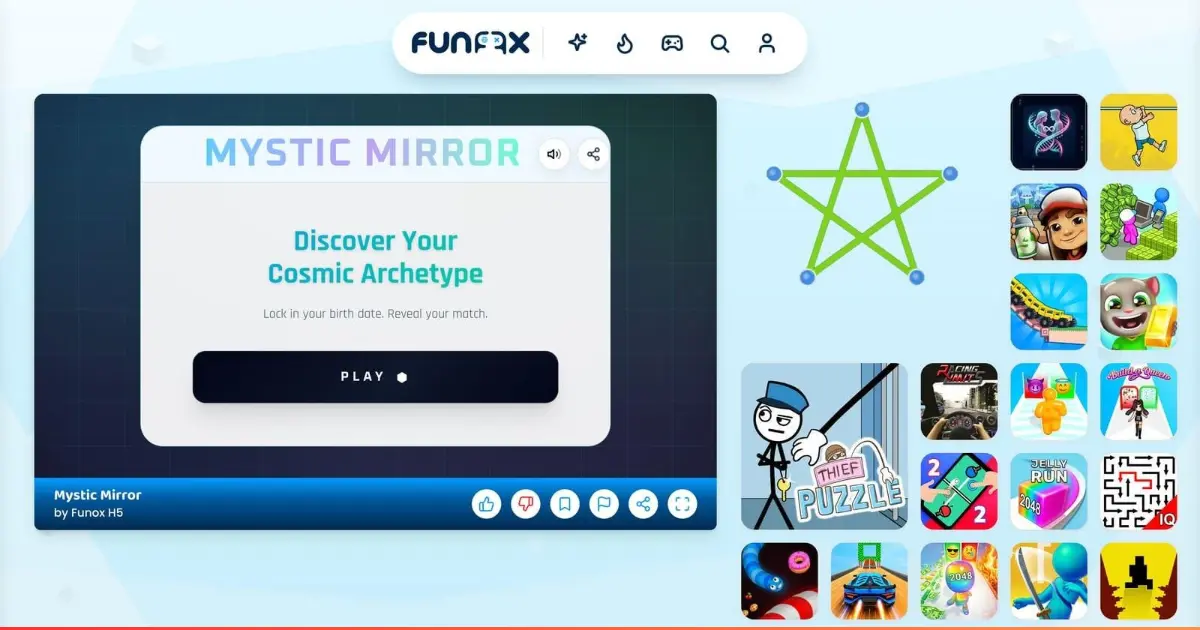
Some online AI games explore themes associated with artificial intelligence, digital identity, and personal relationships.
Mystic Mirror, for example, offers an unusual interactive experience built around self-discovery and personal curiosity.
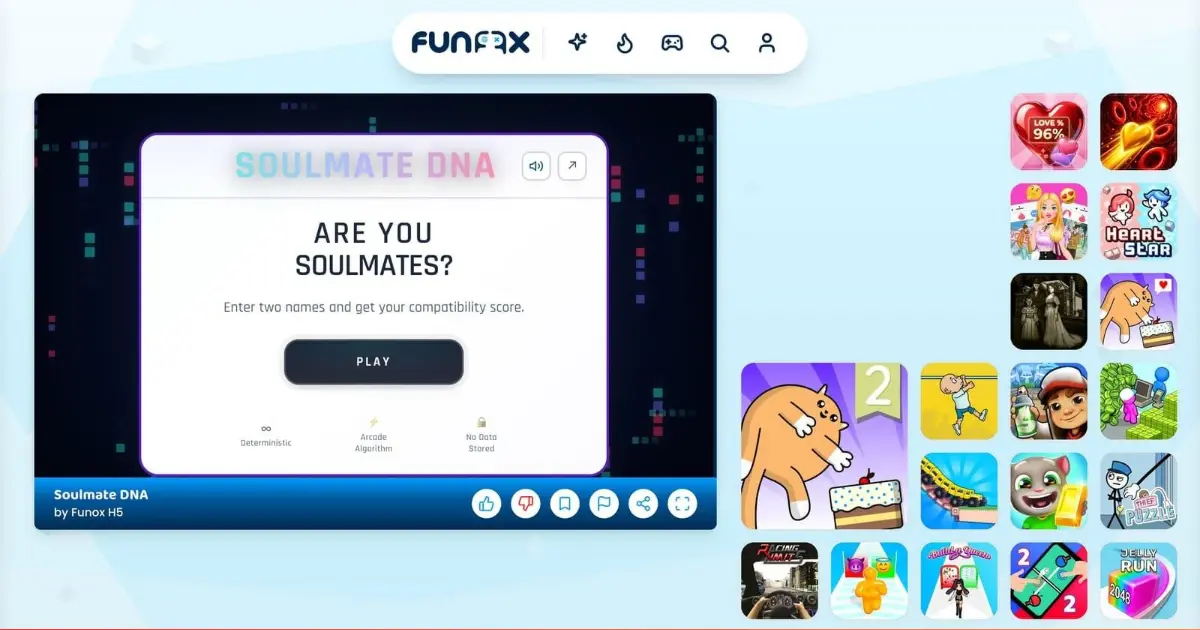
Soulmate DNA explores relationship compatibility through a playful digital concept.
These games demonstrate how browser entertainment can incorporate themes related to identity, prediction, and personal interpretation.
Their themes should not be confused with proof that they use generative AI or scientifically validated predictive systems.
For players, their appeal comes from curiosity, interaction, and the opportunity to explore something different from conventional arcade games.
Smarter Challenges Through Adaptive Gameplay
One promising application of AI in gaming is dynamic difficulty adjustment.
Traditional games often follow fixed difficulty levels. An adaptive system can instead analyze player performance and modify certain challenges.
For example, a puzzle game might offer additional hints after repeated unsuccessful attempts.
A racing game could adjust computer-controlled opponents based on a player’s skill level.
These features may help developers balance accessibility with challenge.
However, adaptive difficulty requires careful design. If adjustments are too noticeable or inconsistent, players may feel that the game is unfair.
AI Can Support Game Development
Artificial intelligence is also becoming useful during the development process.
Developers may use AI-assisted tools to brainstorm game concepts, generate prototype code, or experiment with visual assets.
For smaller studios, these tools can accelerate certain repetitive tasks.
However, generated content still requires human review for accuracy, originality, quality, and intellectual property considerations.
Creating an enjoyable game involves much more than producing artwork or code.
Developers must also test controls, balance challenges, optimize performance, and ensure that the final experience works reliably.
Why Browser Accessibility Matters
Browser games provide a convenient environment for experimenting with interactive entertainment.
Modern technologies such as HTML5, JavaScript, and WebGL allow developers to build experiences that work across compatible devices.
Players can explore games directly through a website rather than installing separate applications.
This accessibility may help smaller developers introduce experimental ideas to wider audiences.
However, AI-powered features can introduce additional requirements, including server processing, network connectivity, and operating costs.
Developers must balance advanced functionality with loading speed and device compatibility.
Privacy Challenges in AI-Based Games
Personalization can make games more engaging, but it also raises questions about data collection.
Some AI systems may process player behavior, preferences, or text entered during interactions.
Developers should clearly explain what information is collected and how it is used.
Players should avoid sharing sensitive personal details with unfamiliar interactive services.
Transparent privacy practices are particularly important when games involve personal questions, relationships, or simulated conversations.
What the Future Could Look Like
Future browser games may offer more responsive characters, personalized challenges, and interactive storytelling.
AI-assisted development could also help independent creators experiment with new concepts.
Still, advanced technology does not automatically produce better entertainment.
Simple gameplay, responsive controls, and creative design remain essential.
Final Thoughts
Artificial intelligence offers exciting possibilities for browser gaming, from adaptive difficulty to more interactive digital experiences.
Games such as Mystic Mirror and Soulmate DNA highlight the appeal of unusual, personalized themes, while emerging AI technologies may enable more sophisticated interactions in future titles.
The most successful developments will likely combine innovation with accessibility, privacy, and enjoyable gameplay.
FAQs
1. What are AI-powered browser games?
AI-powered browser games are web-based games that use artificial intelligence techniques to support features such as adaptive challenges, interactive characters, personalized experiences, or automated game development.
2. How does AI improve browser gaming?
AI can help adjust difficulty, create more responsive character interactions, and support personalized gameplay. These features depend on how each game is designed and implemented.
3. Do all online games with intelligent characters use AI?
No. Traditional programming can also control character behavior and game decisions. Intelligent-looking behavior does not necessarily mean a game uses machine learning or generative AI.
4. What are Mystic Mirror and Soulmate DNA?
In this article, Mystic Mirror and Soulmate DNA are examples of browser experiences built around themes such as self-discovery, personal curiosity, and relationship compatibility. Their themes alone do not establish that they use generative AI or scientifically validated prediction systems.
5. Can AI make browser games more challenging?
Yes. Adaptive difficulty systems can respond to player performance by adjusting challenges, offering hints, or changing the behavior of computer-controlled opponents.
6. Can developers use AI to create browser games?
Developers can use AI-assisted tools to brainstorm concepts, prototype code, and experiment with visual assets. Human review and testing remain important for quality, originality, performance, and reliability.
7. Are AI-powered browser games safe to play?
Safety depends on the game and its data practices. Players should review privacy policies and avoid sharing sensitive personal information with unfamiliar gaming services.

Sandeep Kumar is the Founder & CEO of Aitude, a leading AI tools, research, and tutorial platform dedicated to empowering learners, researchers, and innovators. Under his leadership, Aitude has become a go-to resource for those seeking the latest in artificial intelligence, machine learning, computer vision, and development strategies.