


Personal transportation is undergoing a major transformation as artificial intelligence reshapes the way people travel. From smarter navigation systems to intelligent safety features, AI is helping commuters move more efficiently while reducing many of the challenges associated with daily travel.
- Key Innovations in Artificial Intelligence Empowering Personal Transportation
- Real-Time Data Processing for Optimal Navigation
- Advanced Driver-Assistance Systems (ADAS) Enhancing Vehicle Safety
- Personalized Mobility Experiences with Smart Transportation Systems
- The Future of Autonomous Vehicle Technology in Personal Travel
- Next-Generation Self-Driving Features and Urban Commuting
- Collaboration of AI with Electric and Micro-Mobility Solutions
- AI for Road Safety: Preventing Accidents Before They Happen
- Overcoming Challenges in AI Implementation for Personal Vehicles
- Sustainability, Efficiency, and the Green Revolution Through AI
- Final Thoughts on AI-Powered Personal Transportation
- People Also Ask: AI and Personal Transportation
Whether it’s a connected car, an electric bike, or a shared mobility solution, AI is making transportation safer, more convenient, and increasingly sustainable. As cities grow and commuting demands evolve, intelligent technologies are becoming essential tools for creating a better personal transportation experience.
Key Innovations in Artificial Intelligence Empowering Personal Transportation
Artificial intelligence in personal vehicles extends well beyond the self-driving car narrative. Every trip, whether you’re behind the wheel, on an e-bike, or riding a scooter, is increasingly shaped by AI working quietly in the background. It lives inside navigation tools, braking systems, and personalization engines that learn your habits over time.
Real-Time Data Processing for Optimal Navigation
Today’s commuter apps process live traffic feeds, weather conditions, and road data simultaneously to surface the fastest, safest path forward. That’s not magic, it’s machine learning operating at speed.
For e-bike riders specifically, AI-powered navigation factors in elevation changes, remaining battery range, and local congestion. It’s a small detail that compounds significantly over dozens of commutes. Riders using advanced urban mobility solutions, including those available through StreetRides electric bikes Canada, can benefit from smarter route planning that helps maximize efficiency, conserve battery power, and improve the overall commuting experience. You arrive faster, with more battery to spare, and less frustration along the way.
Advanced Driver-Assistance Systems (ADAS) Enhancing Vehicle Safety
AI for road safety has found one of its most consequential homes in Advanced Driver-Assistance Systems. Automatic braking, adaptive cruise control, and lane-keeping assistance don’t just assist drivers; they actively intervene to prevent accidents.
What’s particularly exciting is that ADAS no longer belongs exclusively to cars. Modern e-bikes and scooters are beginning to incorporate stability controls and collision alerts, extending meaningful safety advantages to micro-mobility riders who previously had none.
Knowing your route is only half the equation. Arriving safely is the other half, and this is exactly where ADAS is rewriting the rules.
Personalized Mobility Experiences with Smart Transportation Systems
Smart transportation systems do something genuinely useful: they learn from you. Preferred routes, commute patterns, and riding behavior, AI absorbs this information and uses it to make each subsequent trip better calibrated to how you actually travel.
Over time, commuting starts to feel less like an ordeal and more like a reliable, comfortable ritual. That kind of consistency matters enormously for driving long-term adoption of sustainable transport options.
The Future of Autonomous Vehicle Technology in Personal Travel
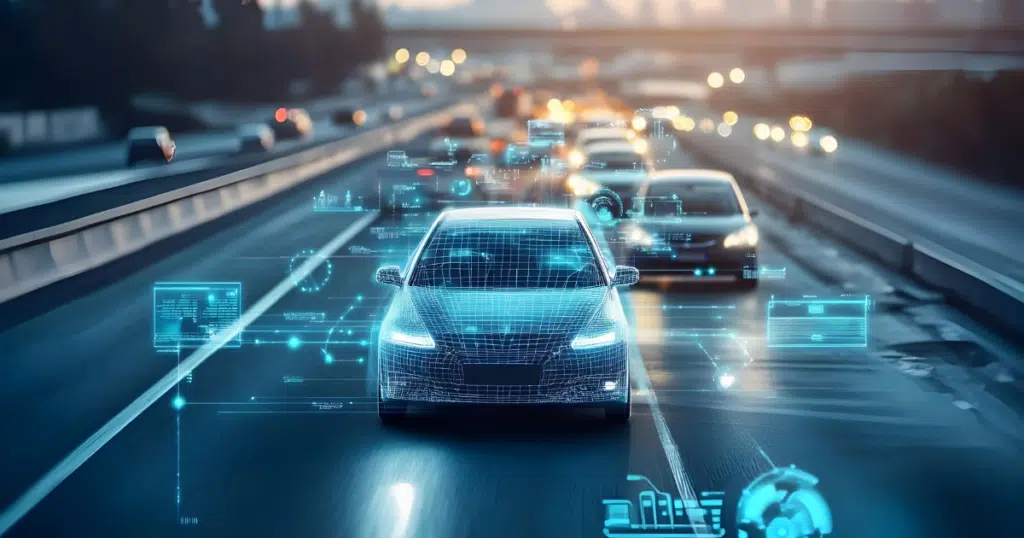
Autonomous vehicle technology operates across a defined spectrum, Level 0 representing zero automation, Level 5 representing full self-driving capability. Most personal vehicles on the road today operate somewhere between Level 2 and Level 3. They can handle certain tasks independently, but still require a human ready to intervene.
Next-Generation Self-Driving Features and Urban Commuting
Urban commuters have the most to gain as autonomy advances. Reduced driver fatigue, fewer collisions, and reclaimed commute time represent a meaningful quality-of-life improvement for anyone spending hours weekly in city traffic. That’s not an abstraction for a lot of people; that’s life-changing.
Collaboration of AI with Electric and Micro-Mobility Solutions
Self-driving cars dominate the headlines, but the autonomous revolution reaches further than four wheels. AI-enhanced e-bikes now deliver predictive maintenance alerts, intelligent route suggestions, and motor assistance that adapts to individual rider behavior. That level of responsiveness makes sustainable commuting genuinely practical, not just aspirational.
AI for Road Safety: Preventing Accidents Before They Happen
A recent study found e-scooter users are four times more likely to seek emergency care than cyclists, a number that makes the urgency of safety innovation in micro-mobility impossible to ignore.
Predictive Analytics for Accident Avoidance
Machine learning enables vehicles to identify dangerous situations before they escalate into crises. Sensor fusion pulling simultaneously from cameras, radar, and GPS constructs a real-time environmental picture no human driver could replicate unaided.
This is what separates AI for road safety from traditional safety measures. It isn’t reactive. It’s proactive, designed to catch threats before impact becomes inevitable.
Enhancing Vulnerable Road User Protection
Pedestrian detection, cyclist recognition algorithms, and proximity alerts, these technologies are becoming standard in advanced vehicles and are increasingly present in high-end e-bikes. For shared urban spaces, that matters profoundly.
Overcoming Challenges in AI Implementation for Personal Vehicles
Data Privacy and Security in Connected Vehicles
Connected vehicles collect substantial data on location history, riding patterns, and personal preferences. Protecting that information isn’t optional, and Canadian regulators, alongside global counterparts, are establishing clearer frameworks for responsible data handling. Riders deserve straightforward transparency about what’s collected and how it’s protected.
Infrastructure and Integration Barriers
Even sophisticated AI systems underperform without compatible infrastructure. Interoperability between different vehicle brands, transport modes, and city systems remains a live challenge, though one receiving serious, sustained attention from engineers and policymakers alike.
Sustainability, Efficiency, and the Green Revolution Through AI
Reduced Emissions and Smart Energy Management
AI-optimized routing reduces unnecessary energy consumption and extends battery lifespan. Predictive maintenance keeps e-bikes operating efficiently for longer, cutting waste meaningfully across the product lifecycle.
Promoting Safer, Greener Urban Environments
| Feature | Traditional Vehicles | AI-Enhanced E-Bikes | Autonomous Cars |
| Route Optimization | Manual/Basic GPS | AI-Powered | AI-Powered |
| Safety Systems | Limited | Collision Alerts | Full ADAS |
| Emissions | High | Near-Zero | Low (EV) |
| Personalization | None | Moderate | High |
| Infrastructure Need | High | Low-Moderate | High |
Crowdsourced data, interpreted through AI analysis, is actively helping city planners design smarter bike infrastructure, safer intersections, and better-connected transit networks, improvements that benefit every commuter regardless of how they travel.
Final Thoughts on AI-Powered Personal Transportation
Artificial intelligence is transforming personal transportation by making travel safer, smarter, and more efficient. From intelligent navigation and predictive safety features to personalized mobility experiences, AI is helping commuters save time, reduce risks, and make better use of available transportation options.
As autonomous technologies, connected vehicles, and micro-mobility solutions continue to evolve, AI will play an even greater role in shaping the future of urban travel. By improving safety, supporting sustainability, and enhancing everyday convenience, AI is not only changing how people move, but it is helping create a more connected and efficient transportation ecosystem for the years ahead.
People Also Ask: AI and Personal Transportation
Which personal vehicles benefit most from artificial intelligence in transportation?
Electric bikes, scooters, and connected cars benefit most. AI improves their navigation, safety systems, and energy efficiency. Micro-mobility vehicles, in particular, gain meaningful upgrades through collision alerts, route optimization, and predictive maintenance that traditional vehicles often lack entirely.
How does AI for road safety differ between cars and electric bikes?
Cars use full ADAS suites automatic braking, lane-keeping, and adaptive cruise control. E-bikes typically use lighter systems like proximity sensors and stability alerts. Both approaches reduce accident risk, but cars currently offer more comprehensive, integrated safety coverage overall.
Can AI-powered systems predict and prevent traffic accidents before they occur?
Yes. Machine learning models analyze real-time sensor data, road conditions, and traffic patterns to identify risks before they escalate. Predictive braking and hazard detection are already available in many vehicles and are becoming standard in advanced micro-mobility options.

Sandeep Kumar is the Founder & CEO of Aitude, a leading AI tools, research, and tutorial platform dedicated to empowering learners, researchers, and innovators. Under his leadership, Aitude has become a go-to resource for those seeking the latest in artificial intelligence, machine learning, computer vision, and development strategies.