

One of the most successful design platforms in the world in 2026 and specifically with novices, marketers, and small businesses is Canva. No longer a graphics design product, it has hundreds of millions of users, and is now a complete creative ecosystem powered by AI. One of the most useful tools offered by Canva AI Image Generator is the possibility to create images with text prompt in a few seconds. It is one of the magic studios in Canva that has other AI features like the Magic Design, Magic Edit and background remover.
The best feature of Canva AI is that it is not difficult to use- an individual is not required to be a skilled designer to create a professional look of a visual. However, like any AI, it has its advantages and disadvantages. This critical review will include Canva AI Image Generator and its features, functionality, image quality, price, real-life application of the application in practice, and whether we should be using it in 2026 compared to other AI applications available in the market.
Canva AI Image Generator is what then?
The Canva AI Image Generator is an artificial intelligence software that will automatically output images when any text prompts are used in the Canva design tool. Users can create, edit and publish images at a central point instead of flipping through a variety of applications. The rationale of this choice is the Magic Media system of Canva that offers the user a choice of styles, including realistic photography, illustration, 3D art, watercolor and digital painting. It produces multiple copies of each prompt and a user can choose an outcome that is best suited.
Intimate relation to templates i.e. with the generated images as they are revealed they can be directly applied to a post in a social media, presentations, advertisements and marketing plans. The Canva AI, according to the review, will be most applicable to fast and on-brand visuals but not to the creation of incredibly detailed artworks, so it can be incredibly helpful when one is to deal with non-designers and business clients and deliver them fast and easy content.
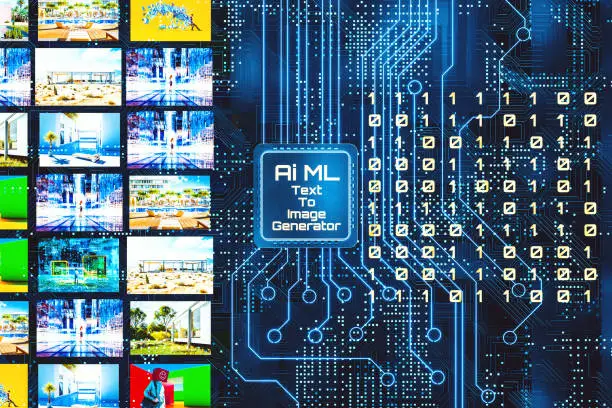
Canva AI Image Generator Features.
Canva AI has a Magic Studio ecosystem that includes numerous features. One of the most important is a text-to-image generation when a user just explains what he/she wants and receives a set of the visual solutions. The other characteristic is the possibility to choose the style that helps the user to control the visual tone of the picture. Canva has also Magic Edit that enables the user to make some modification to an image, with the help of text prompts.
The background removal is another useful tool that can be applied in marketing products since it helps in creating clear images of products. In addition, Canva now features AI-generated design suggestions, an autopilot of propose designs, colors and layouts, depending on the generated image. The new updates have also introduced a stronger editor malleability with new features like Magic Layers which can further subdivide pictures into editable components in order to provide more control over them. All these characteristics render Canva AI not only an image generator, but a complete-fledged design assistant to ensure that the content is made in a hurry and in an efficient way.
Image Quality and Performance.
Canva AI is better in higher-quality images, which are more generic, and is not always as detailed as other more expensive AI, like Midjourney or Leonardo AI. The final product is optimized marketing and social media content, which can be used and is clean. But they too can be desirous to possess beautiful artistic richness, or elegant realism. Canva AI is not a hyper-realist but a fast and convenient tool. This makes sure that it is more appropriate to business users who need fast image as compared to state of art digital art performance wise Canva AI is incredibly fast as it utilizes cloud computing.
The users can make pictures within a few seconds and immediately customize it to designs. However, inconsistency in quality depending on prompts and styles that some users complain about is an issue. In practice Canva AI has so far been the most productive in the context of real-life marketing where timeliness and expediency receive a more serious weight than artistry.
Easy Interface and usability.
One of the strengths of Canva AI is the user-friendly interface of the tool. In comparison with more advanced applications of AI, where users must have fast fingers to use engineering knowledge, Canva allows users to just type what they want, and have an answer in real-time. It will be user-friendly and that is, not intended to be operated by designers. The users can drag and drop pictures, edit and customize without possessing any technical skills. This is best to students, freelancers, social media and business owners’ creators.
Integration with templates also reduces manual design process to a minimum such that users are in a position to create entire posts, advertisements and presentations and do so in the shortest time possible. One might say it is a bit too limited, however, to more advanced users, in terms of depth of customization and artistic control. However, Canva AI provides one of the most enjoyable learning experiences to beginners in the Asian image generation business industry.
Comparison of other Image Generators of AI.
Canva AI is branded similarly to other advanced AI tools, including Midjourney, DALL and Stable Diffusion, which puts it in a different brand. No high-level or highly-configured outputs here: it is about simplicity, speed and usability. Compared to Stable Diffusion, Midjourney has superior cinematic and artistic images, but the latter offers unmatched control and flexibility to more advanced users. DALL·E is concerned with the accuracy and fast comprehension.
On the other hand, Canva AI is a design tool, which also has an image generating feature, and, consequently, more applicable to making daily content. It means that users are not required to make pictures and move them to a different application to edit or post. This is all under one roof. It may not be capable of competing with the high-end image realism or creative richness, but it is faster in the workflow. Canva AI will turn out to be more viable because it will give the user an opportunity to compare the simplistic, high-speed results to more complex adjustment.
Control on Content and Marketing Production.
The nature of content creation in the digital marketing and social media management has changed due to the Canva AI. Before the AI tools, a standardized visual content needed a designer, editing software and lots of edits. The Canvas AI has enabled firms to assemble complete marketing content in just a matter of minutes. This has greatly boosted production especially to small firms and individual entrepreneurs who do not have the huge teams of creativity within their midst. The option to generate the images, edit and share them directly on the social media sites has rendered the process very simple.
It also allows marketers to test as many visual concepts as they can over a relatively long period so that the performance of the campaign improves because of experimenting on a small scale over a short duration of time. Therefore, Canva AI is not just a design tool but a comprehensive content-generating platform that can assist the ever-evolving digital marketing environment.
It also has a great impact on such areas, as e-commerce, education and personal branding since speed and frequency are the most essential points, which should be considered in order to be successful.
Pricing and Accessibility
Canva AI has a freemium business model in which most of the fundamental features are provided to customers with advanced features in the premium plans. The free version can only support a couple of AI applications which is adequate among such users who are casual or are just learning to use the tool. Canva Pro version enables greater AI generation, enhanced output and design capability.
Among the most significant advantages, one can mention the fact that the usage of AI features is a part of the Canva subscription which implies that a user will not have to use other tools and subscriptions. This is because it is free to those who already design using Canva. However, the free version may not apply to high users as it comes with limited credits. By and large, Canva AI is quite cheap and easy to operate compared to many other image generators present in the market, which are either standalone AI and costly to use.
Real-World Use Cases
Canva AI can be applied to any business- and real-life scenario that is common. It assists small business to create posts in social media, adverts and images of products even without the need to hire designers. Content creators, who are in a hurry to make the thumbnails, banner and promotional graphics, use it. The Canva AI assists the marketing departments in creating the appearance of the campaign within a restricted period and testing out various designs.
It is also extensively applied within the education sector where it is used by teachers as well as learners in creating presentations as well as learning tools. One of the most efficient uses of e-commerce is a type of sellers, who can produce mockups of the product and advertising images on the spot. However, in situations of actually artistic or cinematic images, the more advanced tools are likely to be employed. However, Canva AI is also one of the most viable options to meet the content creation needs on a daily basis.
Canva AI drawbacks.
The Canva AI is a powerful tool, however, it has certain weaknesses. The greatest weakness of it is that it lacks advanced artistic control like other applications like Midjourney or Stable Diffusion. The user can not customize generation in depth parameters and this is not permissible to express creativity. The other issue is that images may not be of good quality at times based on prompts and this leads to low consistency.
The instrument also, could be even too primitive, to be used by the intelligent designer, to act on the professional level of creativity. Additionally, despite Canva implementing several AI applications, some of these are not as powerful as the individual AI systems. Probably, though, these limitations can be explained by the fact that Canva is more of a simplicity and ease of use-oriented program, rather than a more advanced AI testing.
Conclusion
In conclusion, Canva Image Generator AI is a powerful and productive program that leads to the simplicity and efficiency of the process of creating content in the contemporary world. It is not meant to take the place of more sophisticated AI tools like Midjourney or Stable Diffusion but will instead allow anyone to come up with anything. The best one is that it enables one to create, edit and post pictures under the same platform, which is time saving, and there is no need to utilize a lot of tools.
Canva artificial intelligence offers non-expert users, marketers, small businesses, and content creators’ easy access to artificial intelligence-assisted design without requiring technical expertise and engineering expertise simultaneously. It is neither the deepest and most sophisticated customization and artistic details, but it is incredibly fast, practical and does not disrupt the working process. The product is invaluable and practically applicable in the real life because of the strengths that it has in the present fast and digitalized world. Overall, Canva AI may be of interest to users, who are more concerned with convenience, fast delivery and handy solutions to design, rather than creative control.
FAQs
1. What is Canva AI Image Generator?
Canva AI Image Generator is an AI-powered tool that creates images from text prompts directly inside Canva. Users can generate, edit, and use images in designs without switching between different applications.
2. How does Canva AI Image Generator work?
It uses text prompts to generate multiple image options in different styles, including realistic photography, illustrations, 3D art, watercolor, and digital painting.
3. Is Canva AI Image Generator easy to use?
Yes. Canva AI is designed for beginners and does not require advanced design or technical skills. Users can generate images, customize them, and add them to designs using Canva’s drag-and-drop interface.
4. What can Canva AI Image Generator be used for?
It can be used to create social media posts, advertisements, presentations, product visuals, thumbnails, banners, and other marketing content.
5. Does Canva AI Image Generator have different image styles?
Yes. Canva AI provides different visual styles, including realistic photography, illustration, 3D art, watercolor, and digital painting.
6. Is Canva AI Image Generator free?
Canva AI follows a freemium model. The free version provides access to some AI features, while premium plans offer greater AI usage and additional design capabilities.
7. Is Canva AI better than Midjourney or Stable Diffusion?
It depends on the user’s needs. Canva AI focuses on simplicity, speed, and integrated design workflows, while tools such as Midjourney and Stable Diffusion generally provide greater artistic control and customization.
8. What are the disadvantages of Canva AI Image Generator?
Its main limitations include less advanced artistic control, inconsistent results with some prompts, and fewer customization options compared with specialized AI image-generation platforms.
9. Can Canva AI images be used for marketing?
Yes. Canva AI is particularly useful for marketing because users can quickly generate visuals and incorporate them into social media posts, advertisements, campaigns, and other marketing materials.
10. Who should use Canva AI Image Generator?
Canva AI is particularly suitable for beginners, marketers, small businesses, freelancers, content creators, teachers, and students who need to create visual content quickly without advanced design skills.

Dinesh Suthar is an AI and technology writer who explores the latest trends in artificial intelligence, emerging tools, and digital innovation. He simplifies complex tech topics into practical insights for businesses, marketers, and tech enthusiasts.