


From Passive Scrolling to Active Understanding
Digital reading has a friction problem. Articles compete with notifications, PDFs become dense walls of text, and long AI responses often demand more sustained attention than readers can comfortably give. Traditional text-to-speech solved one part of the problem by making text audible. The emerging generation of AI-assisted reading tools is addressing the harder challenge: keeping listening connected to comprehension.
That shift can be seen in products such as CastReader, which combines read-aloud playback with synchronized highlighting and in-context AI explanation across common reading surfaces. The important idea is broader than any single product: audio becomes more useful when it remains visibly anchored to the source.
Why conventional text-to-speech is no longer enough
Basic text-to-speech is effective when the goal is simply to hear a short passage. It becomes less reliable for long-form reading. A listener may miss a name, lose the start of a paragraph or realize several minutes later that attention has drifted. Returning to the right sentence can be surprisingly difficult, especially when the audio player is detached from the original document.
The issue is not the voice alone. It is orientation. Readers need to know where they are, what is being spoken and how the current idea relates to the surrounding text. This is why synchronized word or paragraph highlighting is becoming a core part of modern read-aloud design. The visual cue creates a moving reference point, making it easier to pause, resume and scan backward without starting over.
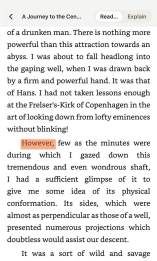
Figure 1. Synchronized highlighting keeps the spoken passage visibly anchored to the source text. Image: CastReader.
AI explanation can preserve the reading flow
Complexity is another reason people leave a document. A technical term, an unfamiliar reference or a compressed argument can interrupt an otherwise productive reading session. The usual response is to copy a passage, open a search engine or chatbot, ask a question and then reconstruct the original context afterward. Each transition creates another chance to become distracted.
An in-context explanation layer reduces that switching cost. Instead of replacing the source with a generic summary, the reader can ask for clarification while the relevant passage remains visible. A useful explanation should point back to the words that triggered it, distinguish the source text from the interpretation and make it easy to continue reading.
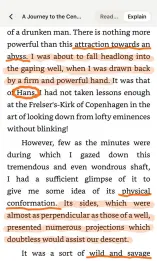
Figure 2. An explanation remains connected to the relevant lines rather than moving the reader to a separate app. Image: CastReader.
The browser is becoming a listening environment
Much of today’s serious reading happens in places that were not designed as ebook readers: news sites, research pages, cloud documents, web-based PDFs, Kindle Cloud Reader and AI chat interfaces. A browser level tool has an advantage because it can meet the text where it already lives instead of asking the user to export every item into a separate library.
For desktop readers, the CastReader browser extension illustrates this approach by extracting the readable content of a page, skipping much of the surrounding navigation and advertising, and adding playback controls without requiring the reader to rebuild the document elsewhere. It also supports common document formats and Kindle Cloud Reader, although availability can still depend on the structure and permissions of the original source.
This model also matters for lengthy AI-generated answers. Reading a short response on screen is easy; reviewing a deeply researched answer can feel closer to reading a report. Selective read-aloud allows the user to listen to the completed response while following the text, rather than having menus, prompts and interface labels read along with it.
Mobile reading changes the value of audio
On a phone, read-aloud is not only an accessibility feature. It can turn otherwise unusable moments into reading time: a commute, a walk, household tasks or the period before sleep when another hour of screen focus feels unrealistic. The best mobile experience therefore needs more than a play button. Background playback, remembered position, adjustable speed and a clear route back to the text all affect whether a reader can finish a long document.
A dedicated CastReader mobile app extends the same listen-and-follow pattern to iPhone and iPad, while an Android version is available through Google Play. The larger design lesson is consistency: people benefit when reading position and interaction patterns remain familiar as they move between desktop and mobile contexts.
Four principles for better AI-assisted reading
- Keep audio tied to the source. Highlighting and easy navigation help listeners verify a word, revisit a claim and maintain a mental map of the document.
- Explain without erasing context. AI clarification should supplement the original passage, not silently rewrite it or make the source difficult to recover.
- Reduce interface noise. A reader should hear the main content, not every menu item, advertisement or repeated page element.
- Respect user control. Speed, voice, starting position and pause-and-resume behavior should remain predictable across sessions and devices.
What this means for the future of reading
AI read-aloud will not replace visual reading, nor should it. Its greatest value comes from making reading more flexible. A person can listen when eyes are occupied, follow the text when precision matters and request an explanation when comprehension stalls. These modes can work together instead of forcing a choice between audio and the page.
For developers, publishers and education platforms, the opportunity is to design for continuity rather than novelty. Natural voices attract attention, but orientation, context and control determine whether a tool remains useful after the first demonstration. The strongest systems will treat speech, highlighting and explanation as parts of a single reading loop.
The result is a more active form of listening: one that can help readers stay with difficult material, move across devices and return to the exact sentence that matters. In a digital environment built to fragment attention, that continuity may be the most important reading feature of all.

Sandeep Kumar is the Founder & CEO of Aitude, a leading AI tools, research, and tutorial platform dedicated to empowering learners, researchers, and innovators. Under his leadership, Aitude has become a go-to resource for those seeking the latest in artificial intelligence, machine learning, computer vision, and development strategies.