

You submitted your article. Your client flagged it as AI. Your student’s essay came back with a red banner. You want to know: does this AI detector actually know what it’s talking about?
The short answer is sometimes. AI detectors are genuinely useful, but they’re not lie detectors. Some have accuracy rates that hover around 70–78%. Some falsely flag human writing. And a few are genuinely reliable for specific use cases. This guide breaks all of it down so you pick the right one.
What Is an AI Detector?
An AI detector is a tool that analyzes text and estimates the probability it was generated by a large language model (LLM) like ChatGPT, Claude, or Gemini. It doesn’t give a definitive yes or no it gives a likelihood score based on statistical patterns in the writing.
That distinction matters more than most people realize. When a tool says “85% AI generated,” it isn’t finding a hidden watermark or reading your metadata. It’s making a probabilistic guess based on how the text behaves. And that guess can be wrong.
The use cases are real, though. Educators checking student submissions, publishers verifying freelance work, SEO teams auditing content pipelines, and HR departments screening job application letters all of them have legitimate reasons to use these tools. The key is understanding what they can and can’t do before you act on their output.
Best AI Detector Tools in 2026: Ranked and Compared
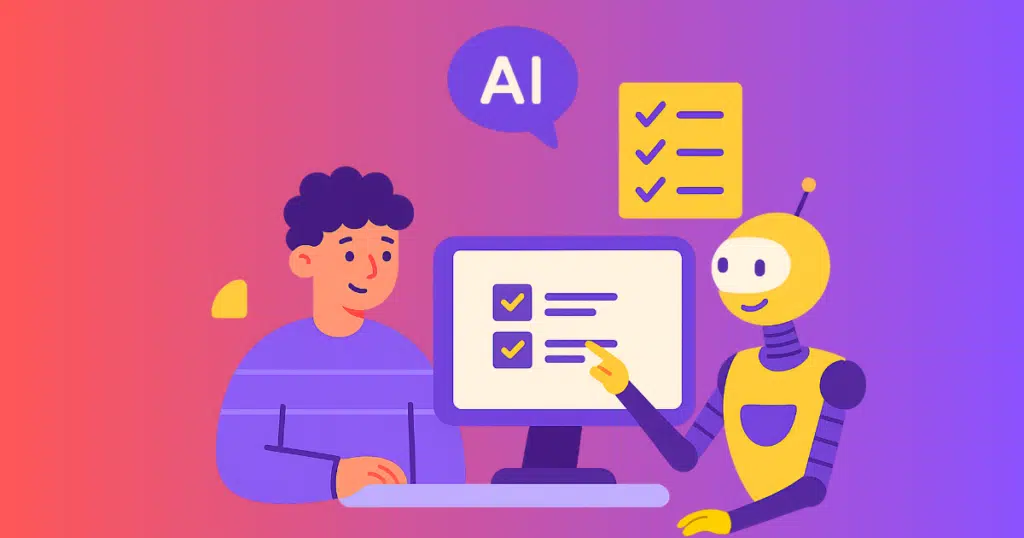
Here’s an honest look at the leading tools what they’re actually good at, where they fall short, and who they’re built for.
Grammarly
Best for: Writers who want a detector signal on their own draft before someone else runs one
Grammarly is an AI writing assistance platform with a built-in AI Detector aimed at the person doing the writing, not the person auditing it. Paste in a draft and it returns a probability signal on how the text may be perceived by detection tools, with the same probabilistic caveats that apply to every tool on this list. The value is timing. Writers see the signal before an editor, client, or instructor does, and can decide what to change while the draft is still theirs to shape.
AI Detector sits inside a broader writing workflow rather than as a standalone auditing tool. Its Humanizer helps writers revise a rough AI-assisted draft so it reads clearly, sounds natural, and reflects their own voice, with a custom voice option that learns from a sample of their previous work. Citation Finder helps locate credible sources and generate citations. Plagiarism Checker reviews originality. Authorship can show what was typed, pasted, or generated in a document, which matters when a flagged score turns into a conversation.
Grammarly works inside Google Docs, Microsoft Word, Gmail, and other tools writers already use, so the detector and revision steps happen in the draft itself rather than in a separate tab. Free and Pro tiers are available, with Pro starting at $12 per member per month billed annually.
Watch out for: Grammarly is not built for auditing third-party submissions at scale. Its AI Detector is a writer-side signal, most useful to the person actually drafting the piece, and it carries the same accuracy limits as any other detector on edited or humanized text.
GPTZero
Best for: Educators, academic institutions
GPTZero is consistently one of the strongest performers on independent benchmarks, including the RAID benchmark where it has scored around 99% accuracy on clearly AI generated pure text. It uses perplexity and burstiness scoring with sentence level highlighting, so you can see exactly which parts of a document triggered the flag not just a single overall score.
It’s particularly well suited for student style writing and performs strongly on hybrid AI human content. The free tier is usable; the paid tier (starting around $10/month) removes limits and adds batch processing.
Watch out for: Like all tools, accuracy drops on edited or humanized AI text. Don’t treat the sentence highlighting as a courtroom exhibit.
Originality.AI
Best for: Content marketers, SEO teams, publishers
Originality.AI was built specifically for professional content workflows, and it shows. It combines AI detection with plagiarism checking, which makes it genuinely useful for editorial teams managing freelancers at scale. Accuracy on GPT-4 content has tested well in independent comparisons, and the tool updates regularly to keep pace with newer models.
Pricing is credit-based (starting around $30 for 3,000 credits / pages), which suits high-volume teams better than individual users. The API access also lets you integrate detection into your CMS or publishing pipeline.
Watch out for: It’s not the right choice for a single occasional check the pricing model is designed for volume.
Scribbr AI Detector
Best for: Students, academic writers who want a free option
Scribbr’s independent testing methodology is among the most rigorous publicly documented. In their 2026 comparison (testing across fully AI generated, mixed, and human texts), Scribbr’s own detector tied for second place with 78% accuracy, and it’s completely free with no account required.
For students who want a quick, honest sense of where their writing sits before submission, Scribbr is a reliable starting point. It’s not the most powerful tool in this list, but it’s the most accessible honest one.
Winston AI
Best for: Educators already in Google Classroom, teams needing AI image detection
Winston AI stands out for two specific reasons: its Google Classroom integration (which saves teachers significant time) and its ability to detect AI generated images a capability most text focused tools don’t have. It also has consistently low false positive rates in comparative testing.
The paid plan starts around $18/month for up to 80,000 words, which suits a classroom load reasonably well.
Watch out for: If you don’t need the education integrations or image detection, it’s not necessarily the best value compared to GPTZero or Originality.AI.
Copyleaks
Best for: Enterprise teams, multilingual content, plagiarism + AI detection in one
Copyleaks has been a plagiarism detection standard for years, and its AI detection layer has been well received in professional settings. It’s particularly strong for multilingual content useful for international publishers or companies reviewing content in multiple languages. It also integrates with LMS platforms, making it a popular choice in higher education procurement.
Watch out for: The interface is more complex than tools designed for solo users. If you just want to paste text and get a score, Copyleaks might feel like overkill.
QuillBot AI Detector
Best for: Writers who also use QuillBot for paraphrasing and editing
If you’re already in the QuillBot ecosystem for grammar checking or paraphrasing, the free AI detector integrates naturally into that workflow. In Scribbr’s independent testing, QuillBot tied for second with 78% accuracy on free tools.
It’s not the tool you’d choose if AI detection is your primary need. But if you’re a writer using QuillBot anyway, it’s a convenient and free option for a quick check.
Turnitin
Best for: Institutional academic integrity programs
Turnitin isn’t really a consumer tool it’s an institutional platform that most users access through their school or university, not directly. That said, it’s worth understanding because it’s the tool most likely to flag student work in higher education.
Turnitin retrained specifically to recognize humanizer modified outputs as of mid 2025, making it one of the most evasion resistant tools on the market. It’s not perfect, but it’s ahead of most commercial tools on this specific challenge.
Important: If you’re a student whose work was flagged by Turnitin, the tool provides a probability score not a verdict. Most institutions allow students to discuss flagged results with instructors before any action is taken.
Please check these comparisons:
| Tool | Best For | Free Option | Accuracy (independent) | False Positive Risk |
|---|---|---|---|---|
| Grammarly | Writer-side detection paired with revision, citation, and originality tools | Yes (limited) | Not independently benchmarked here | Same detector caveats apply; writer sees the signal first |
| GPTZero | Education, quick checks | Yes (limited) | ~99% pure AI; lower on edited | Medium |
| Originality.AI | SEO/content teams | No | High on GPT-4 content | Low-Medium |
| Scribbr | Students, occasional use | Yes (full) | ~78% | Medium |
| Winston AI | Classrooms, image detection | No (trial) | High, low FP rate | Low |
| Copyleaks | Enterprise, multilingual | No | Good | Low-Medium |
| QuillBot | Writers in QuillBot ecosystem | Yes (full) | ~78% | Medium |
| Turnitin | Academic institutions | No (institutional) | High on humanized text | Medium |
Which Tool Is Right for You?
You’re a teacher or professor: Start with GPTZero or Winston AI. GPTZero gives you sentence level detail; Winston AI gives you Google Classroom integration. Either way, don’t discipline a student on a detector score alone use it as one signal alongside the rest of what you know about their work.
You run a content team or SEO operation: Originality.AI is the clear choice. The plagiarism + AI combo, API access, and regular model updates make it purpose built for this workflow.
You’re a student checking your own work: Scribbr or QuillBot both free, both honest, and both useful for getting a sense of where your writing sits before submission.
You need multilingual support at scale: Copyleaks.
You’re trying to understand if content submitted to you was AI generated: Use two different tools and compare. If they disagree, treat the result as inconclusive.
One thing worth knowing: humanizer tools have become sophisticated enough that no current detector consistently catches content that’s gone through a quality rewrite pass. That’s not a reason to distrust detectors entirely – it’s a reason to use them proportionately and to rely on contextual judgment alongside them.
FAQ
Are AI detectors accurate?
Not perfectly. Independent tests put most free tools at around 70–78% accuracy across mixed real-world content. Paid tools like GPTZero and Originality.AI perform better on clearly AI generated text but remain imperfect especially on content that’s been edited or rewritten. No tool should be used as the sole basis for an accusation.
Can AI detectors catch ChatGPT content?
Yes, generally though accuracy varies by model version and whether the text has been edited. Detectors trained specifically on GPT-4 outputs (like Originality.AI) tend to perform better here. ChatGPT content that has been paraphrased or humanized is harder to catch reliably.
Do AI detectors work on content written with Claude or Gemini?
They’re designed to detect AI writing patterns generally, not just ChatGPT specifically. However, accuracy varies by tool and model. Some detectors (like Undetectable AI’s multi model approach) check against several detection engines simultaneously for broader coverage.
Can Google detect AI generated content?
Google has confirmed it does not penalize content based on whether it was AI generated. What Google penalizes is low quality, thin, or unhelpful content regardless of who or what wrote it. An AI generated article that provides genuine value ranks just as well as a human written one that does the same.
What causes false positives in AI detectors?
Highly polished, consistent writing styles can trigger false positives because they lower burstiness scores the same signal used to flag AI text. Non native English speakers are also disproportionately affected. Writers who use clear, simple, formal sentence structures are more likely to be misidentified than writers with irregular or informal styles.
Is there a free AI detector that’s actually good?
Yes, Scribbr and QuillBot both offer genuinely free AI detectors with no account required, and both scored 78% accuracy in Scribbr’s independent testing. For most students and occasional users, that’s sufficient. For high stakes professional use, it’s worth paying for Originality.AI or GPTZero’s premium tier.
Conclusion
AI detectors are useful, but they’re probability tools, not truth machines. The three things worth remembering:
- Accuracy varies a lot. Free tools run around 70–78%. Premium tools do better, but no detector is consistently reliable on edited or humanized content. GPTZero and Originality.AI lead independent benchmarks.
- False positives are real and consequential. Don’t act on a single detector result, especially in high stakes situations like academic integrity. Use detectors as one data point, not a verdict.
- Match the tool to your use case. Teachers get the most value from GPTZero or Winston AI. Content teams belong on Originality.AI. Students checking their own work can rely on Scribbr or QuillBot for free.
The best AI detector is the one you understand well enough to interpret correctly. Pick the right one for your context, and use it with the appropriate level of skepticism.

Sandeep Kumar is the Founder & CEO of Aitude, a leading AI tools, research, and tutorial platform dedicated to empowering learners, researchers, and innovators. Under his leadership, Aitude has become a go-to resource for those seeking the latest in artificial intelligence, machine learning, computer vision, and development strategies.