


Your Best Writing Deserves More Than a Static Page
You spent hours crafting that piece about the cultural significance of synth-pop, or the way neon-lit arcades shaped an entire generation’s relationship with technology. It lives on your blog, it gets the occasional read, and then it disappears into the archive. The writing is good – the problem is the format. In an era where short-form video dominates every major platform, long-form text articles about niche cultural moments are fighting an uphill distribution battle. The content has real value; it just needs a new vehicle.
- Your Best Writing Deserves More Than a Static Page
- What Makes 80s Content Particularly Well-Suited to AI Video Conversion
- Where Animoto AI Fits Into This Workflow
- Conclusion: Your Archive Is a Video Channel Waiting to Happen
- FAQs
- 1. How can I turn my old blog posts into video essays using AI?
- 2. Why is 80s-themed content ideal for AI video generation?
- 3. Do I need video editing experience to create AI-generated video essays?
- 4. Can I use the same article to create content for multiple social media platforms?
- 5. What is the difference between Pollo AI and Animoto AI?
Why the 80s Content Renaissance Is Happening Right Now
Nostalgia-driven content is experiencing a measurable surge across YouTube, TikTok, and Instagram. Creators covering retro aesthetics, vintage music culture, and decade-specific pop history are building substantial audiences because the emotional pull of that era translates powerfully into visual media. The problem most writers face is that transforming a thoughtful, research-heavy article into a compelling video essay traditionally requires video editing skills, stock footage sourcing, voiceover recording, and hours of post-production work – none of which are natural extensions of the writing process.
This is precisely where AI video generation changes the equation. When you use Text to Video AI through Pollo AI, the platform analyzes your written content and generates corresponding visual sequences, matching the tone, pacing, and thematic content of your original text.
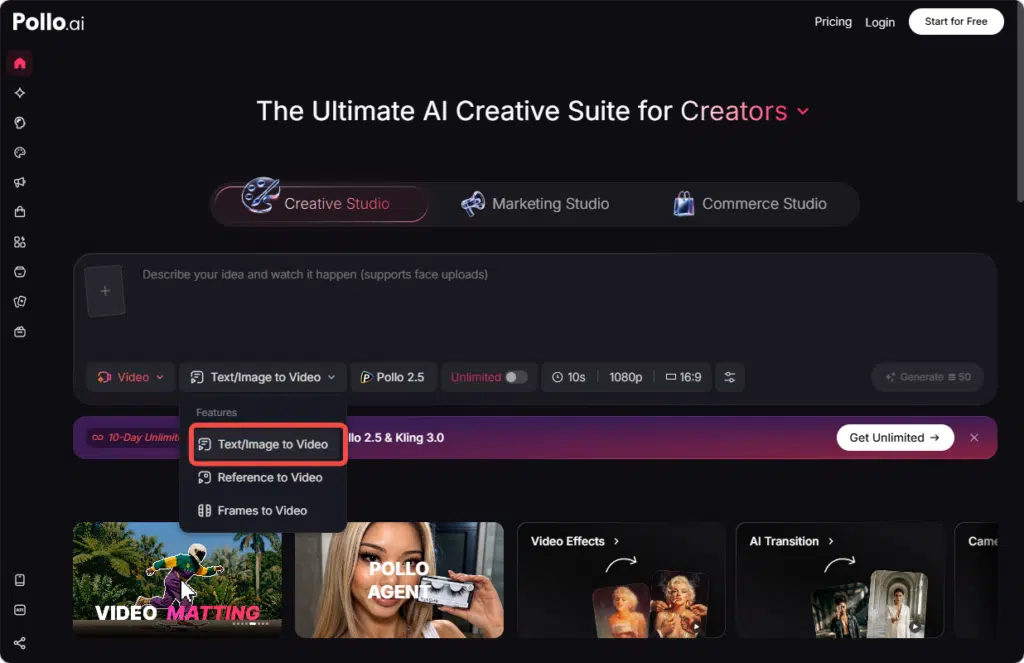
Pollo AI functions as a full creative suite integrating top-tier image and video models, supporting text-to-image, text-to-video, and image-to-video workflows across more than a hundred AI creative applications. For a writer with a library of cultural essays, this is the most direct path from archived text to publishable video content.
What Makes 80s Content Particularly Well-Suited to AI Video Conversion
The visual language of the 1980s is extraordinarily distinctive – bold color palettes, specific typography styles, recognizable aesthetic codes that AI models have been trained on extensively. This means that when you feed decade-specific cultural writing into a Text to Video AI system, the model has a rich visual reference set to draw from. Prompts referencing that era’s aesthetic – the particular quality of VHS grain, the look of early MTV graphics, the neon-and-chrome visual vocabulary of the decade – produce output that genuinely evokes the period rather than approximating it generically.
For writers covering music criticism, film analysis, or cultural commentary from that era, this specificity is significant. Your essay about the cultural impact of a particular album or the sociological meaning of a specific film genre can generate visual content that feels authentic to the period you are writing about, not just thematically adjacent to it.
Step-by-Step: Converting a Written Essay Into a Video Essay
Step 1 – Structure Your Article for Visual Conversion
Before feeding your content into any AI video tool, spend fifteen minutes restructuring it for visual storytelling. Identify the three to five core arguments or narrative beats in your article and write a one-sentence visual description for each. These become the foundation of your generation prompts.
An essay about the rise of hair metal, for example, might break down into: the cultural context of the early decade, the visual identity of the genre, the peak commercial moment, the critical backlash, and the lasting cultural legacy. Each beat maps to a distinct visual sequence.
Step 2 – Generate Your Core Visual Sequences With Text to Video AI
Using Pollo AI’s Text to Video AI capabilities, generate a visual sequence for each narrative beat you identified. Write prompts that combine the thematic content of your text with specific visual era markers. Rather than a generic prompt, describe the scene with period accuracy: the quality of the light, the texture of the environment, the specific visual codes of the moment you are describing.
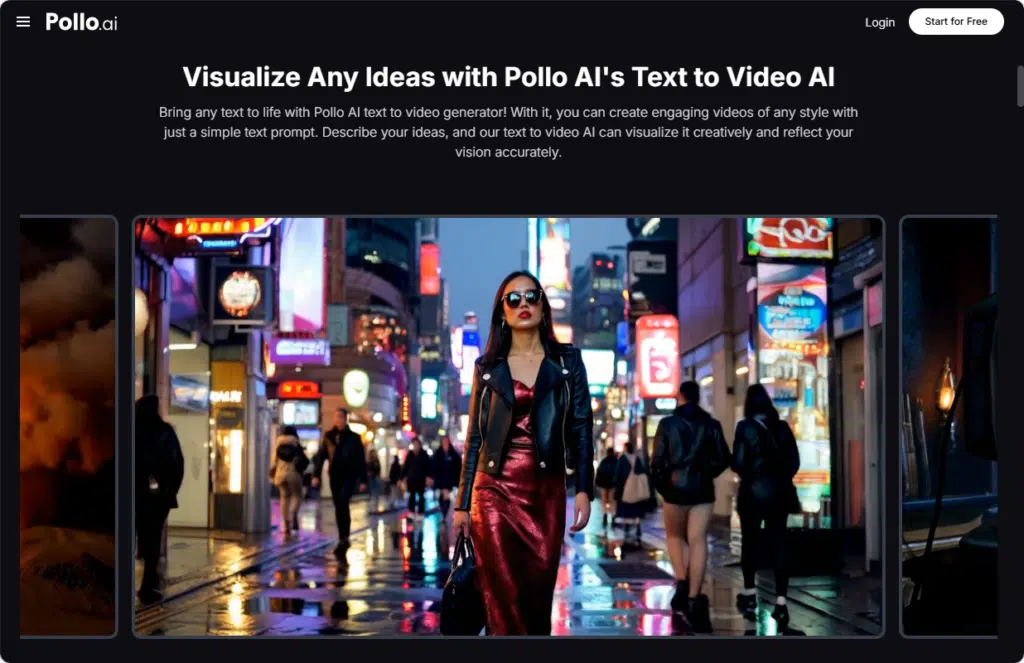
Pollo AI’s Text to Video AI draws on multiple top-tier models to produce cinematic-quality output with automatic audio matching, giving your video essay a production quality that would be impossible to achieve manually without significant resources.
Step 3 – Sequence and Pace Your Visual Narrative
Once you have your core sequences, arrange them in the narrative order of your original article. Pay attention to pacing – video essays work best when the visual rhythm supports the argumentative rhythm of the writing. High-energy cultural moments benefit from faster cuts and more dynamic motion; reflective or analytical passages suit slower, more atmospheric visuals. Most AI video platforms allow you to adjust clip length and motion intensity to support this kind of pacing control.
Step 4 – Add Narration and Text Overlays
Your original article text is your narration script. Record a voiceover reading of the key passages, or use AI voice generation if you prefer not to record yourself. Layer text overlays for key quotes, dates, and critical points – these serve both as accessibility features and as visual anchors that reinforce your argumentative structure.
Step 5 – Finalize and Distribute Across Platforms
Export your finished video essay in the formats appropriate for each platform where you plan to publish. A twelve-minute video essay suits YouTube; a condensed three-minute version suits Instagram Reels or TikTok. The source material – your original article – can produce multiple platform-specific versions from a single production session.
Where Animoto AI Fits Into This Workflow
While AI video generation handles the conversion of your analytical, text-heavy content into visual sequences, there is a complementary tool that excels at a different part of the 80s content creation workflow. Animoto AI is a streamlined video creation platform designed for fast, template-driven production – particularly well-suited to assembling existing visual materials into polished, cohesive short-form content.
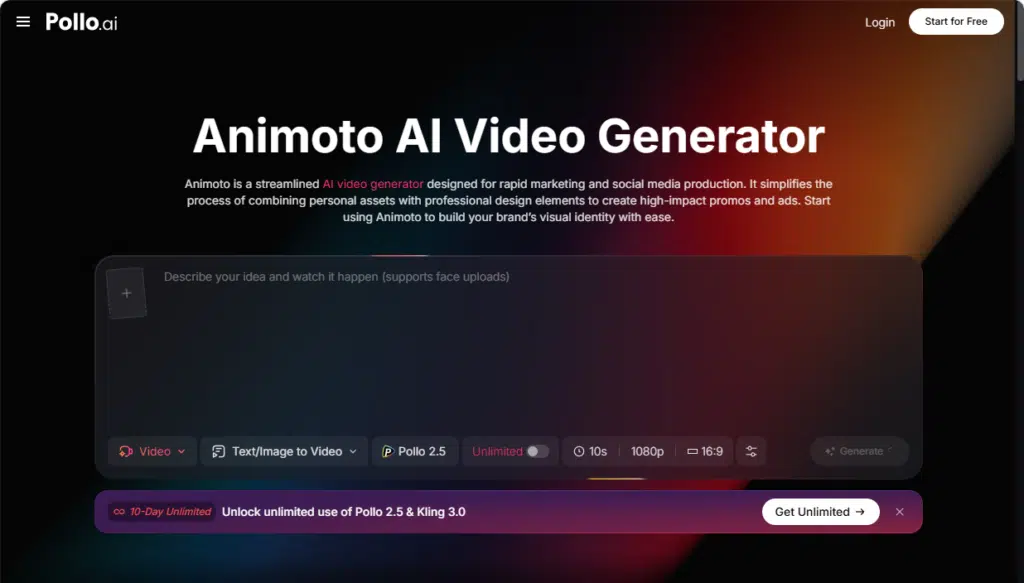
For the supplementary content that surrounds your main video essay – the promotional clips, the teaser reels, the social media cutdowns – Animoto AI’s drag-and-drop interface and marketing-optimized templates make fast assembly straightforward.
Its dynamic typography overlay system allows you to add era-appropriate text treatments and titles that reinforce the visual identity of your content, while its precision trimming tools let you cut supplementary clips to exact platform-specific length requirements.
If you have a collection of old photographs, scanned magazine clippings, or album cover images that you want to assemble into a quick visual companion piece, Animoto AI’s template library includes formats specifically designed for this kind of retrospective collage content.
The two tools serve different creative functions: Pollo AI generates original visual content from your written ideas, while Animoto AI assembles and packages existing materials into polished short-form pieces. Used together, they cover the full production range of a 80s cultural content channel.
Advanced Techniques for More Evocative Results
Specificity in your prompts is the single most impactful variable in output quality. Decade-specific visual references – the particular color temperature of 1980s film stock, the characteristic lens flare of the period, the typography styles associated with specific music genres – produce significantly more authentic output than generic period descriptors. Build a reference vocabulary for the visual codes of the era you are writing about and apply it consistently across your prompts.
Consider using image-to-video conversion for your most visually specific sequences. If you have access to period-appropriate still images – album artwork, concert photography, magazine covers from the era – animating these through Pollo AI’s image-to-video workflow produces output with a direct visual authenticity that text-generated sequences cannot always match.
Audio is not an afterthought in video essays – it is structural. The automatic audio matching in Pollo AI’s generation workflow provides a starting point, but consider layering period-appropriate instrumental tracks under your narration to deepen the atmospheric effect. The sonic texture of the decade is as distinctive as its visual language, and audio that evokes the era reinforces the emotional impact of the visual content.
Conclusion: Your Archive Is a Video Channel Waiting to Happen
Every cultural essay, music review, and decade-specific analysis in your archive is a video essay waiting to be made. The production barrier that has historically separated strong writing from strong video content has effectively been removed by AI video generation technology. With Pollo AI’s Text to Video AI capabilities handling the conversion of your written ideas into visual sequences, and complementary tools managing the assembly of supporting short-form content, the full production workflow for a 80s cultural video channel is now accessible to any writer with a clear creative vision and a library of existing work. Start with your strongest piece, generate your first sequence, and discover what your writing looks like in motion.
FAQs
1. How can I turn my old blog posts into video essays using AI?
You can use AI video generation tools like Pollo AI to convert written blog content into engaging video essays. The platform analyzes your text and creates visual sequences that match the themes, tone, and pacing of your article, reducing the need for manual video editing.
2. Why is 80s-themed content ideal for AI video generation?
The 1980s have a highly recognizable visual style, including neon colors, VHS aesthetics, retro typography, and vintage pop culture references. AI models are well-trained on these visual elements, making it easier to generate authentic-looking retro video content from written essays.
3. Do I need video editing experience to create AI-generated video essays?
No. Modern AI video platforms automate much of the production process, including scene creation, motion effects, and audio matching. Writers can focus on their content while the AI handles the technical aspects of video production.
4. Can I use the same article to create content for multiple social media platforms?
Yes. A single blog post can be transformed into different video formats. You can create a longer version for YouTube and shorter clips for platforms like TikTok, Instagram Reels, and YouTube Shorts, maximizing the reach of your content.
5. What is the difference between Pollo AI and Animoto AI?
Pollo AI specializes in generating original video content from text prompts, images, and written articles. Animoto AI is designed for assembling existing media, such as photos and video clips, into polished short-form videos using templates and drag-and-drop editing tools. Together, they support both content creation and content packaging workflows.

Sandeep Kumar is the Founder & CEO of Aitude, a leading AI tools, research, and tutorial platform dedicated to empowering learners, researchers, and innovators. Under his leadership, Aitude has become a go-to resource for those seeking the latest in artificial intelligence, machine learning, computer vision, and development strategies.