
In our previous article, we explored the different types of intelligent agents in artificial intelligence, from simple reflex agents to sophisticated learning agents. Now, let’s walk through how these intelligent systems are being applied in the real world to solve complex problems and transform industries.
- Healthcare: Transforming Patient Care and Operations
- 1. Clinical Documentation Assistants
- 2. Patient Triage Systems
- 3. Medical Imaging Analysis
- 4. Medication Management
- Finance: Enhancing Decision-Making and Risk Management
- 1. Algorithmic Trading Systems
- 2. Fraud Detection and Prevention
- 3. Credit Risk Assessment
- 4. Financial Planning Assistants
- Customer Service: Elevating the Customer Experience
- 1. Virtual Customer Assistants
- 2. Personalized Recommendation Engines
- 3. Proactive Service Agents
- 4. Sentiment Analysis Systems
- Manufacturing and Supply Chain: Optimizing Operations
- 1. Predictive Maintenance Systems
- 2. Quality Control Agents
- 3. Supply Chain Optimization
- 4. Autonomous Warehouse Robots
- Transportation and Logistics: Revolutionizing Mobility
- 1. Autonomous Vehicles
- 2. Traffic Management Systems
- 3. Delivery Route Optimization
- 4. Autonomous Delivery Robots
- Smart Homes and Buildings: Enhancing Comfort and Efficiency
- 1. Energy Management Systems
- 2. Security Monitoring
- 3. Smart Home Assistants
- 4. Predictive Maintenance for Buildings
- Agriculture: Cultivating Smarter Farming
- 1. Crop Monitoring and Management
- 2. Autonomous Farm Equipment
- 3. Livestock Monitoring
- 4. Weather Prediction and Risk Management
- Education: Personalizing Learning Experiences
- 1. Adaptive Learning Platforms
- 2. Automated Grading and Feedback
- 3. Student Support Chatbots
- 4. Content Recommendation
- Human Resources: Streamlining Talent Management
- Conclusion: The Future of Intelligent Agents
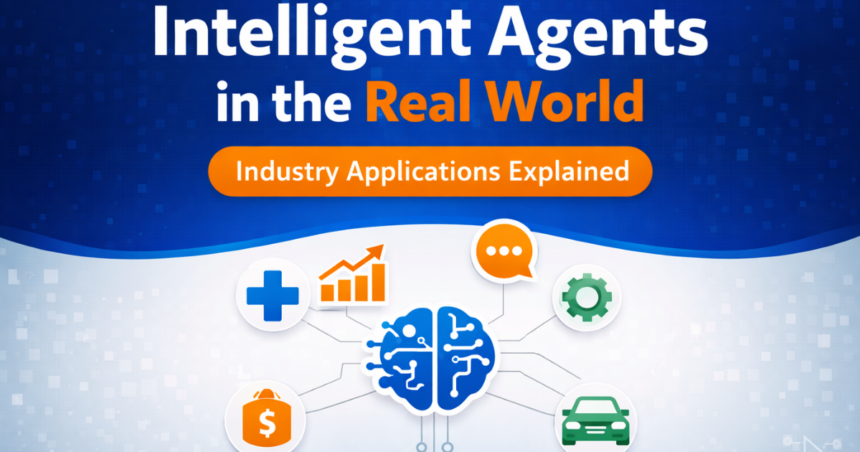
Intelligent agents have moved beyond theoretical concepts to become practical tools that businesses and organizations use every day. These autonomous systems perceive their environment, make decisions, and take actions to achieve specific goals with minimal human intervention. Their ability to handle complex tasks, learn from experience, and operate continuously makes them invaluable across numerous sectors.
In this article, we’ll explore compelling real-world applications of intelligent agents across various industries, demonstrating their versatility and impact on our daily lives and business operations.
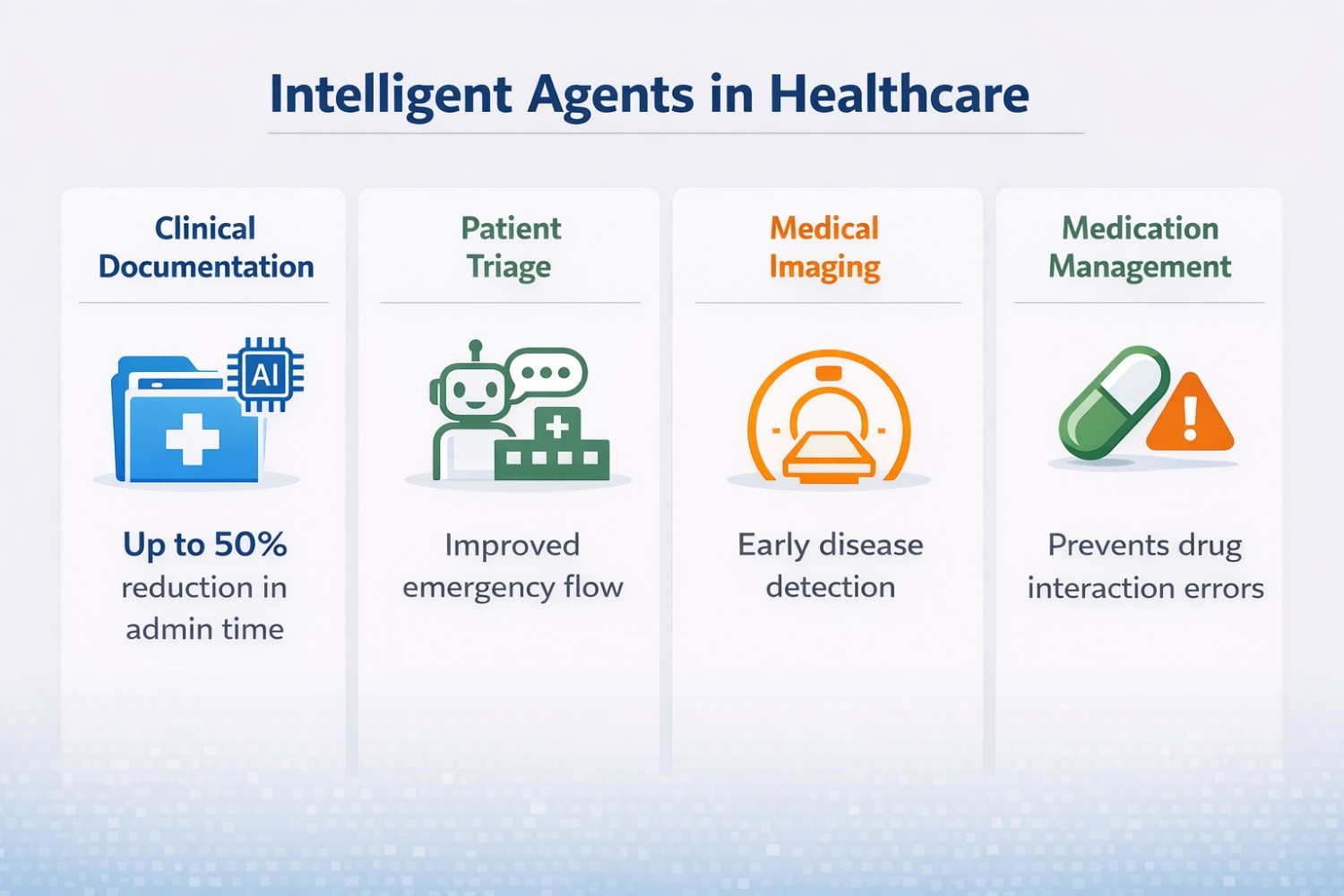
Healthcare: Transforming Patient Care and Operations
Healthcare organizations are leveraging intelligent agents to improve patient outcomes, streamline operations, and reduce administrative burden.
1. Clinical Documentation Assistants
Medical professionals spend countless hours documenting patient encounters. Intelligent agents now assist by automatically extracting and summarizing crucial information from patient interactions, test results, and medical records. These systems can reduce administrative time by up to 50%, allowing healthcare providers to focus more on patient care.
2. Patient Triage Systems
AI-powered triage agents help healthcare systems manage patient flow more efficiently. These intelligent systems engage with patients, ask structured questions about symptoms, and assess medical needs to direct individuals to the most appropriate care level. The UK’s National Health Service has implemented such systems, resulting in a significant reduction in emergency department congestion.
3. Medical Imaging Analysis
Intelligent agents specializing in medical imaging are revolutionizing diagnostics by automatically reviewing CT scans, MRIs, and X-rays to identify abnormalities. These systems can detect early-stage cancers or rare diseases that might otherwise go unnoticed. Beyond spotting anomalies, these agents can quantify tumor growth, measure organ function, or track disease progression over time, helping radiologists reduce fatigue-related errors.
4. Medication Management
Smart medication management agents monitor patient prescriptions, flag potential drug interactions, and send reminders to ensure adherence to treatment plans. These systems help prevent medication errors and improve treatment outcomes, especially for patients with complex medication regimens.
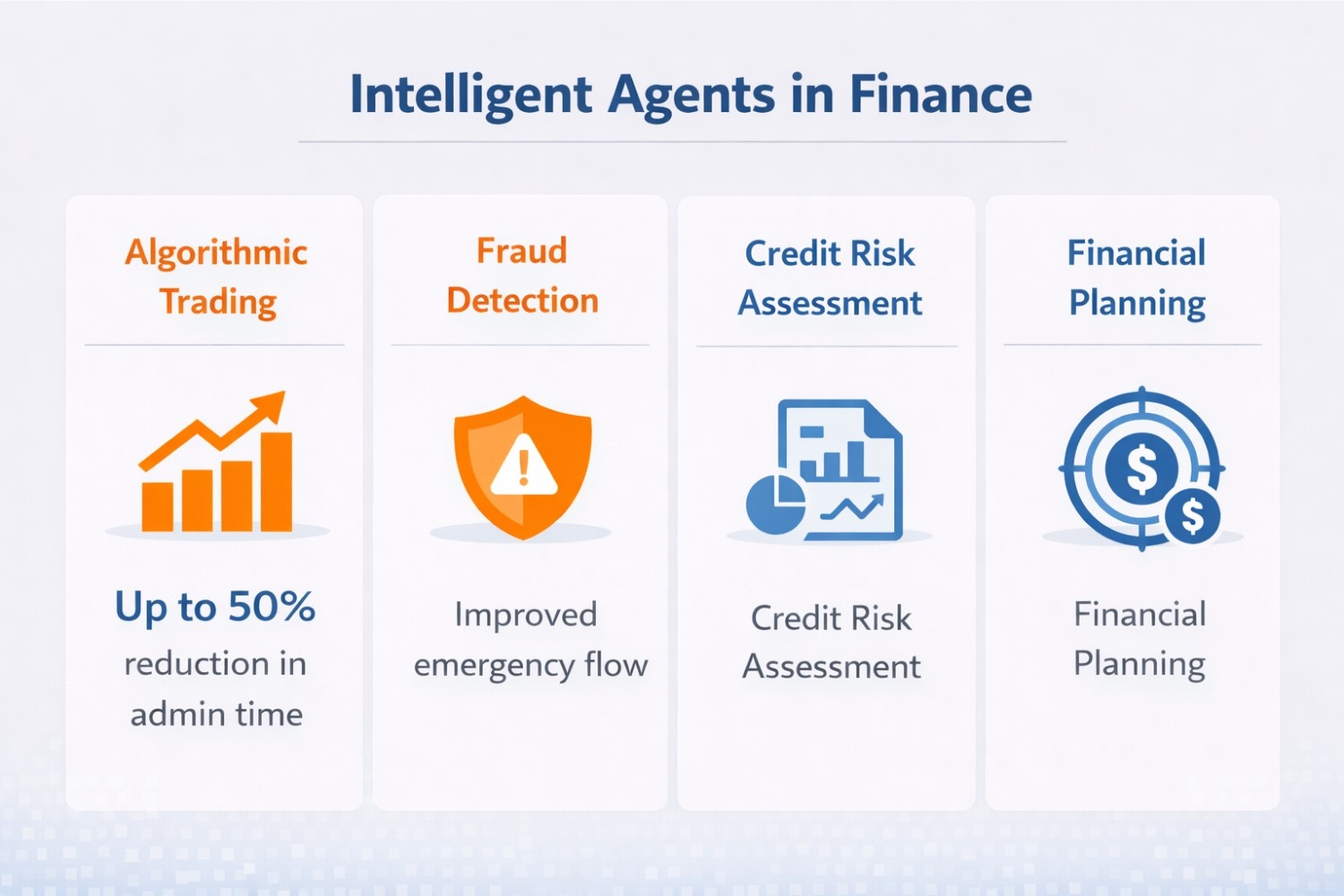
Finance: Enhancing Decision-Making and Risk Management
The financial sector has been quick to adopt intelligent agents for their ability to process vast amounts of data and make rapid decisions.
1. Algorithmic Trading Systems
Utility-based AI agents analyze market trends, evaluate risk factors, and execute trades at optimal times. These systems weigh potential returns, market volatility, and diversification strategies to recommend asset allocations that best align with financial goals. They continuously monitor market conditions and automatically rebalance portfolios when necessary, providing sophisticated financial management without human intervention.
2. Fraud Detection and Prevention
Intelligent agents monitor financial transactions in real-time, identifying unusual patterns that may indicate fraudulent activity. By analyzing historical data and learning from past fraud cases, these systems can detect increasingly sophisticated scams and protect consumers and institutions from financial losses.
3. Credit Risk Assessment
AI agents evaluate loan applications by analyzing numerous factors including credit history, income stability, and market conditions. These systems can process applications faster than human analysts while potentially reducing bias in lending decisions. They continuously learn from loan performance data to improve their risk assessment capabilities.
4. Financial Planning Assistants
Goal-based intelligent agents help individuals plan for retirement, education expenses, and other financial goals. These systems consider income, expenses, risk tolerance, and market projections to create personalized financial plans and recommend investment strategies.
Customer Service: Elevating the Customer Experience
Intelligent agents are transforming how businesses interact with customers, providing faster, more personalized service at scale.
1. Virtual Customer Assistants
Modern customer service agents have evolved far beyond simple chatbots. These intelligent systems can understand complex customer inquiries, access relevant information across multiple databases, and provide personalized solutions. They learn from each interaction, continuously improving their ability to resolve issues without human intervention, while providing 24/7 support capability.
2. Personalized Recommendation Engines
Learning agents analyze customer preferences, purchase history, and browsing behaviour to recommend products or content that align with individual interests. These systems help customers discover relevant items they might not have found otherwise, increasing satisfaction and sales.
3. Proactive Service Agents
Rather than waiting for customers to report problems, proactive service agents monitor product usage patterns and identify potential issues before they affect the customer experience. For example, telecommunications companies use these agents to detect network degradation and initiate repairs before customers notice service disruptions.
4. Sentiment Analysis Systems
Intelligent agents monitor social media, review sites, and customer communications to gauge public sentiment about products and services. These insights help businesses address concerns quickly and adapt their offerings to better meet customer expectations.
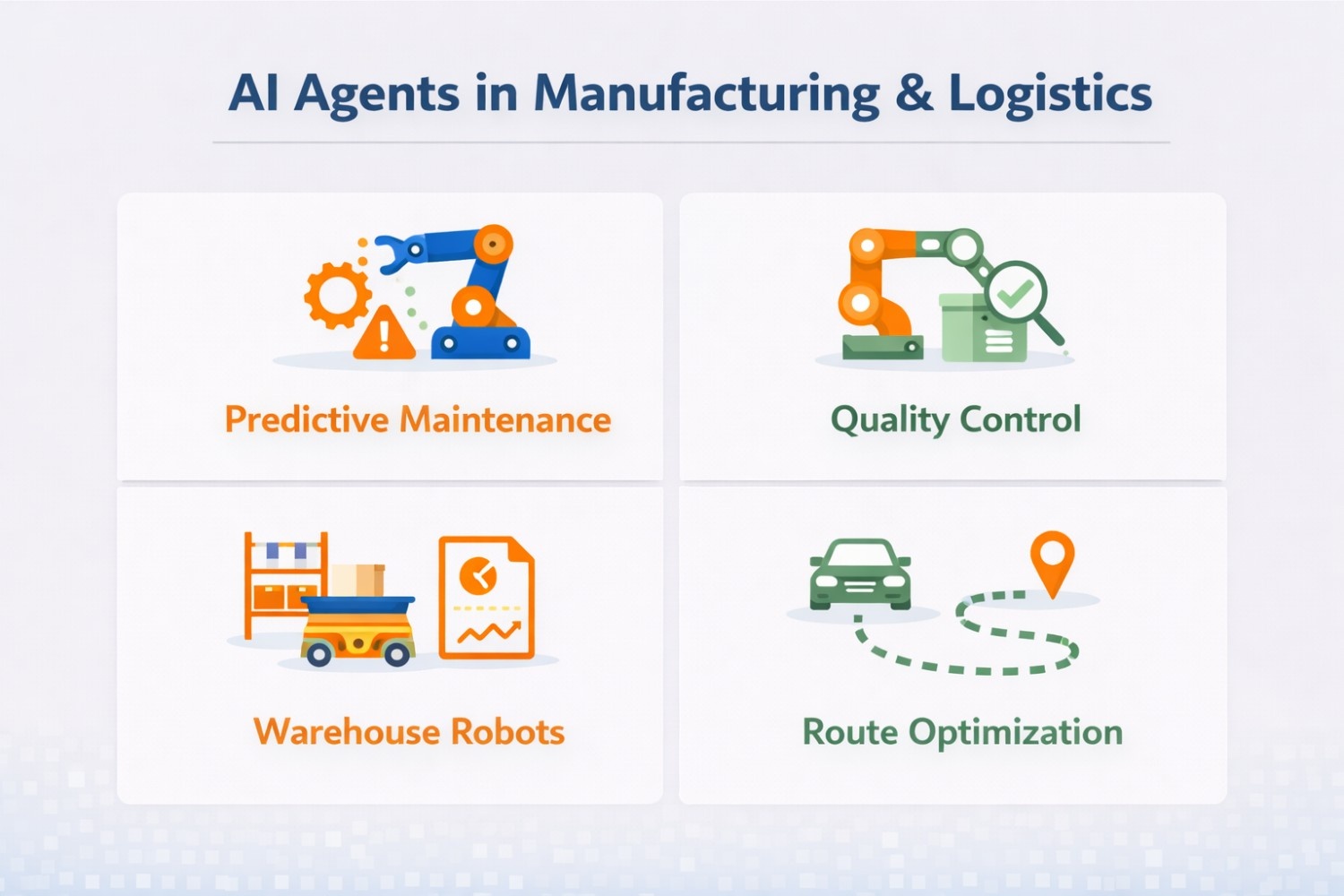
Manufacturing and Supply Chain: Optimizing Operations
Intelligent agents are revolutionizing manufacturing and supply chain management by improving efficiency, quality, and adaptability.
1. Predictive Maintenance Systems
In industrial settings, intelligent agents monitor equipment performance through sensors and predict potential failures before they occur. These systems analyze patterns in temperature, vibration, and other metrics to identify early warning signs of mechanical problems. By enabling proactive maintenance, these agents help manufacturing companies avoid costly downtime, extend equipment lifespan, and optimize maintenance schedules based on actual conditions rather than fixed intervals.
2. Quality Control Agents
Computer vision-powered agents inspect products on assembly lines, identifying defects with greater accuracy and consistency than human inspectors. These systems can operate continuously without fatigue, ensuring higher quality standards across production runs.
3. Supply Chain Optimization
Intelligent agents analyze global supply chain data, including inventory levels, transportation costs, and demand forecasts, to optimize procurement, production, and distribution decisions. These systems help businesses maintain optimal inventory levels, reduce costs, and improve resilience against disruptions.
4. Autonomous Warehouse Robots
Intelligent agents control robots that navigate warehouse environments, retrieving and transporting items without human intervention. These systems optimize picking routes, adapt to changing inventory layouts, and collaborate with human workers to improve fulfilment speed and accuracy.
Transportation and Logistics: Revolutionizing Mobility
Intelligent agents are transforming how people and goods move around the world, making transportation safer, more efficient, and more sustainable.
1. Autonomous Vehicles
Self-driving cars represent one of the most visible examples of intelligent agents in action. Companies like Waymo have developed sophisticated utility-based agents that process data from multiple sensors to navigate complex environments safely. These systems continuously monitor road conditions, predict the behaviour of other vehicles and pedestrians, and make split-second decisions to ensure passenger safety.
2. Traffic Management Systems
Intelligent agents analyze traffic patterns, weather conditions, and special events to optimize signal timing and reduce congestion. These systems can adapt in real-time to changing conditions, improving traffic flow and reducing commute times across urban areas.
3. Delivery Route Optimization
AI agents plan delivery routes that minimize distance, fuel consumption, and time while considering factors like traffic patterns, delivery windows, and vehicle capacity. These systems continuously reoptimize routes as conditions change, improving efficiency and customer satisfaction.
4. Autonomous Delivery Robots
Delivery robots used on sidewalks or in office complexes exemplify autonomous agents in action. Equipped with sensors, GPS, and AI navigation systems, these robots transport goods to customers without direct human control. They navigate paths, avoid pedestrians, and adapt to unexpected obstacles while independently completing delivery tasks, transforming last-mile delivery logistics.
Smart Homes and Buildings: Enhancing Comfort and Efficiency
Intelligent agents are making our living and working spaces more comfortable, efficient, and responsive to our needs.
1. Energy Management Systems
Smart thermostats and building management systems use intelligent agents to optimize heating, cooling, and lighting based on occupancy
patterns, weather forecasts, and energy prices. These systems learn occupant preferences over time and automatically adjust settings to maximize comfort while minimizing energy consumption.
2. Security Monitoring
Intelligent agents analyze feeds from security cameras and sensors to detect unusual activity that may indicate security threats. These systems can distinguish between normal activities and potential security breaches, reducing false alarms while improving protection.
3. Smart Home Assistants
Voice-activated assistants like Amazon’s Alexa and Google Assistant use intelligent agents to understand and respond to user commands, control connected devices, and provide information. These systems learn user preferences and habits over time, becoming more helpful and personalized with continued use.
4. Predictive Maintenance for Buildings
Similar to industrial applications, intelligent agents monitor building systems like elevators, HVAC, and plumbing to predict maintenance needs before failures occur. These systems help property managers maintain comfortable, functional environments while reducing emergency repair costs.
Agriculture: Cultivating Smarter Farming
Intelligent agents are helping farmers produce more food with fewer resources through precision agriculture techniques.
1. Crop Monitoring and Management
Drones and satellites equipped with sensors collect data on crop health, soil moisture, and pest presence. Intelligent agents analyze this information to recommend precise irrigation, fertilization, and pest control interventions, optimizing resource use and crop yields.
2. Autonomous Farm Equipment
Self-driving tractors and harvesters use intelligent agents to navigate fields, plant seeds, apply treatments, and harvest crops with minimal human supervision. These systems can operate around the clock during critical planting and harvesting windows, improving productivity.
3. Livestock Monitoring
Intelligent agents track animal health, behaviour, and productivity through wearable sensors and automated feeding systems. These systems alert farmers to potential health issues before they become serious, improving animal welfare and farm profitability.
4. Weather Prediction and Risk Management
AI agents analyze historical weather data and current conditions to provide localized weather forecasts and risk assessments for farming operations. These insights help farmers make informed decisions about planting, harvesting, and protecting crops from adverse weather.
Education: Personalizing Learning Experiences
Intelligent agents are transforming education by providing personalized learning experiences and reducing administrative burden for educators.
1. Adaptive Learning Platforms
Intelligent tutoring systems assess student knowledge and learning styles, then adapt content and pacing to meet individual needs. These systems provide additional practice in areas where students struggle and accelerate through material they quickly master, improving learning outcomes.
2. Automated Grading and Feedback
AI agents evaluate student assignments, providing immediate feedback and freeing educators to focus on more complex teaching tasks. These systems can assess not only multiple-choice questions but also essays and open-ended responses, offering constructive feedback to help students improve.
3. Student Support Chatbots
Intelligent agents answer common student questions about course requirements, deadlines, and resources, providing 24/7 support without increasing faculty workload. These systems can also identify students who may need additional support and alert advisors before academic problems become serious.
4. Content Recommendation
Learning agents suggest relevant readings, videos, and practice exercises based on student interests and learning goals. These recommendations help students discover resources that enhance their understanding and engagement with course material.
Human Resources: Streamlining Talent Management
Intelligent agents are helping HR departments attract, develop, and retain talent more effectively.
1. Recruitment and Screening
AI agents screen resumes, identify qualified candidates, and even conduct initial interviews, allowing HR professionals to focus on the most promising applicants. These systems can process thousands of applications quickly while potentially reducing bias in the screening process.
2. Employee Onboarding
Intelligent agents guide new hires through the onboarding process, providing information, answering questions, and ensuring completion of required tasks. These systems help new employees become productive more quickly while reducing administrative burden on HR staff.
3. Performance Management
AI agents analyze performance data, provide feedback, and suggest development opportunities for employees. These systems help managers identify both high performers and team members who may need additional support, improving overall organizational performance.
4. Workforce Planning
Intelligent agents analyze workforce data, business forecasts, and labour market trends to help organizations plan future hiring needs. These insights enable proactive recruitment strategies and more effective talent development programs.
Conclusion: The Future of Intelligent Agents
The applications we’ve explored represent just the beginning of how intelligent agents are transforming industries and daily life. As AI technology continues to advance, we can expect these agents to become even more capable, autonomous, and integrated into our world.
Future developments will likely include:
- Greater collaboration between agents– Multiple specialized agents working together to solve complex problems
- Enhanced human-agent partnerships– Intelligent systems that complement human capabilities rather than simply replacing tasks
- More personalized experiences– Agents that understand individual preferences and adapt their behaviour accordingly
- Increased autonomy– Systems that can handle more complex decisions with less human oversight
- Broader application areas– Intelligent agents entering new domains currently requiring human expertise
Organizations that effectively leverage intelligent agents will gain significant competitive advantages in efficiency, customer experience, and innovation. However, successful implementation requires careful consideration of ethical implications, user needs, and integration with existing systems and processes.
By understanding the capabilities and applications of different types of intelligent agents, businesses and individuals can better prepare for a future where these AI systems play an increasingly important role in our work and lives.
How are you using intelligent agents in your organization? Share your experiences in the comments below!

Hi, I’m Pragya.
I write about AI tools, digital trends, and emerging technologies in a way that’s simple, practical, and easy to apply. I enjoy exploring new AI platforms, testing their features, and breaking them down into clear guides that actually help people use them confidently.
My focus is not just on writing content, but on creating value. I believe powerful technology should feel accessible, not overwhelming. That’s why I aim to turn complex tools into actionable insights for creators, marketers, and growing online businesses.
I’m constantly learning, researching, and staying updated with the fast-moving AI space so readers always get relevant and useful information.