

Introduction
Every revenue leader has sat in the same meeting. The forecast says one number, the pipeline review says another, and nobody fully trusts either, because the records underneath were typed in by a rep at six on the last day of the quarter. For twenty five years the CRM answered one question well: what did we say happened? It was never built to answer what is actually happening.
- Introduction
- How Has AI in CRM Changed Since 2024?
- Why Does CRM Data Quality Decide Whether AI Works?
- How Does AI Turn CRM Records Into Revenue Intelligence?
- What Can AI Agents Actually Do Inside a CRM Right Now?
- Why Do Most AI CRM Projects Fail to Show a Return?
- What Governance Does an AI Powered CRM Need in 2026?
- Where Should a Revenue Team Start?
- Summary
That gap is what AI in CRM is closing, not with a chatbot in a sidebar but by capturing signals a rep never logged, resolving them to the right account, and turning them into the next action somebody owns. The category has a name now: in December 2025, Gartner published its first Magic Quadrant for Revenue Action Orchestration, folding sales engagement, revenue intelligence, and sales force automation into one market.
Most companies are not yet seeing the benefit. Individual sellers report real gains while their organizations report flat results. What follows explains that gap using research published between late 2025 and August 2026, alongside what my team at Lucrative ai sees when these systems go into production against a live pipeline.
FAST FACT: 87 percent of sales organizations now use some form of AI, and 54 percent of sellers have already worked with an AI agent. Nearly nine in ten expect to by 2027. (Source: Salesforce, State of Sales, 2026)
How Has AI in CRM Changed Since 2024?
The first wave was predictive: lead scores, opportunity scores, churn risk. Useful, but the output was a number in a field a rep could ignore. The second was generative: draft this email, summarize this call. Useful too, but a person still had to start every task.
The current wave is agentic AI, and the difference is that the system acts. An agent reads a call transcript, updates the deal stage, logs the contact roles it heard, flags a missing close date, and prepares the follow up for approval. Salesforce put its own prospecting agents onto leads no rep had capacity to work: in four months they contacted 130,000 leads and created 3,200 opportunities from pipeline that would otherwise have died.
Scale is arriving unevenly. McKinsey found 40 percent of organizations above one billion dollars in revenue are scaling AI agents in at least one function, up from 27 percent a year earlier, while smaller organizations stayed flat at 22 percent. Most case studies therefore come from companies with a dedicated data team. Aitude’s explainer on what an AI agent is covers how agents differ from chatbots, and its roundup of real world agent examples shows where the pattern holds in production.
Why Does CRM Data Quality Decide Whether AI Works?
This is the part every demo skips. An agent reasoning over a customer record is only as good as that record. Give it a duplicate contact, a stale job title, and an opportunity with no close date, and it returns a confident, fluent, wrong recommendation. Salesforce’s own EVP of Sales put it plainly: agents without full customer context tend to fail.
The research is consistent. 51 percent of sales leaders using AI say disconnected systems are slowing their initiatives, and 74 percent of sales professionals are actively cleaning data. The split by performance is worth pinning to a wall: 79 percent of high performers prioritize data hygiene, against 54 percent of underperformers. In the data consolidations we run at Lucrative.ai, the blocker is almost never the model. It is that sales, marketing, and service each hold a different version of the same account, and nobody owns the tiebreak.
Data quality is not a project, which is why cleanup budgets get spent twice. It is a rate: B2B contact data decays at roughly 2.1 percent a month, compounding to about 22.5 percent a year. A database cleaned in January is materially wrong by autumn. Settle three things before buying agentic AI:
- One definition of an account and a contact that sales, marketing, and service all accept.
- Automated activity capture, so records are written by the system rather than by a rep on Friday afternoon.
- Field level ownership, so a named person is accountable for close dates, stages, and contact roles.
FAST FACT: 51 percent of sales leaders using AI say disconnected systems are slowing their AI initiatives, and 74 percent of sales professionals are focused on data cleansing. (Source: Salesforce, State of Sales, 2026)
How Does AI Turn CRM Records Into Revenue Intelligence?
Revenue intelligence captures what actually happened in a deal, from calls, emails, meetings, and engagement data, then uses it to predict and change the outcome. The CRM records what a rep chose to write down. This records what the buyer did.
Nowhere is that clearer than forecasting, quietly broken for years. Gartner reports that sales forecasting accuracy of 90 percent or higher is reached by only 7 percent of organizations, that the median sits between 70 and 79 percent, and that 69 percent of sales operations leaders say forecasting has got harder. That is not a math problem. It is a data problem.
Four things change when analysis runs on observed behaviour instead of self reported optimism:
- Deal health is scored on evidence: stakeholder count, meeting recency, competitor mentions, response latency.
- Risk surfaces early. A silent economic buyer triggers an alert in week two, not a surprise in week twelve.
- Coaching becomes systematic, because every call is analyzed rather than the two a manager heard.
- The commit number becomes defensible under board scrutiny.
Gartner formalized this in December 2025 with the first Magic Quadrant for Revenue Action Orchestration. These stopped being separate purchases, which is why executive revenue intelligence is now scoped as a platform capability rather than a reporting layer.
FAST FACT: Only 7 percent of sales organizations achieve forecast accuracy of 90 percent or higher, and median accuracy sits between 70 and 79 percent. (Source: Gartner, The Role of AI in Sales)
What Can AI Agents Actually Do Inside a CRM Right Now?
AI agents in sales split into what ships today and what lives on a roadmap slide. In a mainstream AI powered CRM, agents currently handle six categories of work reliably:
- Activity capture and record updates drawn from calls, meetings, and email.
- Account research before a first call, compressing work that takes a human five to fifteen minutes.
- Lead qualification against an ideal customer profile, at a volume no team could staff.
- Draft outreach grounded in real account context, and pipeline hygiene that flags missing fields, stale deals, and unforecastable opportunities.
- Quote preparation and approval routing, with pricing rules kept out of the model.
The returns are measurable. Sellers expect fully implemented agents to cut prospect research time by 34 percent and email drafting by 36 percent, which matters because the average seller spends only 40 percent of the week selling and Gen Z reps just 35 percent. High performers who grew revenue are 1.7 times more likely to use prospecting agents. Aitude keeps a comparison of AI sales assistants for shortlisting, and its piece on AI voice agents for lead capture covers the inbound side.
FAST FACT: The average seller spends 40 percent of the week selling. Gen Z reps spend 35 percent, losing about two hours a week to manual data entry. (Source: Salesforce, State of Sales, 2026)
Why Do Most AI CRM Projects Fail to Show a Return?
The uncomfortable data first. MIT’s NANDA initiative found roughly 95 percent of enterprise generative AI pilots produced no measurable impact on profit and loss. McKinsey frames it from the other end: 80 percent say AI improved their personal productivity, but only 37 percent say it contributed to company earnings, unchanged since 2025.
Gartner calls this a value ceiling. Melissa Hilbert, a vice president analyst in the Gartner sales practice, warns that beyond a point more AI does not mean more productivity, and that layering extra prompts onto complex workflows risks overwhelming sellers.
The failure modes repeat across companies:
- AI inserted into an existing workflow instead of the workflow being rebuilt around it. Nearly three quarters of McKinsey’s high performers redesigned workflows, against a quarter of everyone else.
- No baseline taken before deployment, so nobody can prove afterwards what changed.
- Poor CRM data quality, producing outputs that reps quietly stop trusting and then stop using.
- Tool sprawl and unmanaged cost. One in five organizations reports AI operating costs constraining usage.
FAST FACT: Only 6 percent of organizations qualify as AI high performers, and 37 percent report any EBIT impact from AI, essentially unchanged from 2025. (Source: McKinsey, The State of AI, August 2026)
What Governance Does an AI Powered CRM Need in 2026?
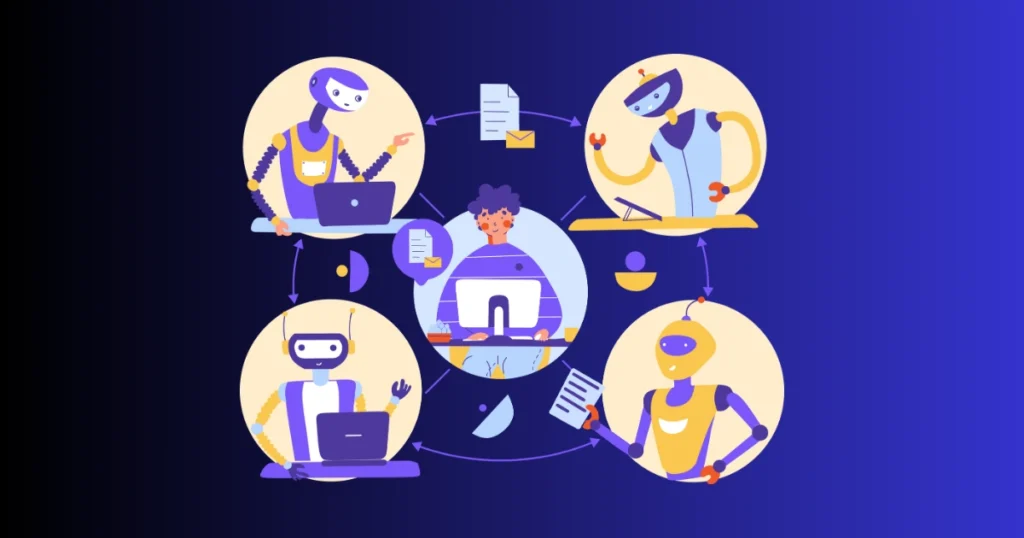
Governance stopped being a preference in August. The EU AI Act’s Article 50 transparency obligations took effect on 2 August 2026 and were left out of the Digital Omnibus deferral. If you deploy AI that interacts with customers, you must disclose it. High risk obligations for Annex III systems moved to 2 December 2027, but transparency did not, which is the detail most compliance calendars got wrong.
For a revenue team, that means five things:
- Disclosure when an agent rather than a person is emailing, messaging, or calling a prospect.
- An audit trail recording what the system saw, what it recommended, who approved it, and when.
- A human approval gate on anything touching pricing, contract terms, or a customer commitment.
- Explicit data residency and retention rules, since CRM records are personal data under GDPR.
- A named owner for every automation, so nothing runs unattended.
The failure here is rarely a missing feature. It is the handoff, where customer context, the accountable owner, the approval state, and the next action get dropped between systems. That is the principle we build around at Lucrative.ai: AI prepares the work, and the accountable human keeps the decision. It is also the practical answer to the trust problem. Reps do not abandon AI because a benchmark says it hallucinates. They abandon it the first time it sends something embarrassing under their name.
Where Should a Revenue Team Start?
If you are planning the next quarter rather than the next three years:
- Pick one workflow with a number attached: lead response time, forecast variance, or research hours per deal.
- Measure the baseline for four weeks first, or you will argue about attribution all year.
- Fix identity resolution and activity capture for that workflow only. Boiling the whole database is how these stall.
- Deploy one agent with a human approval step, logging every decision so the audit trail exists from day one.
- Review at 60 days. If the number moved, expand the pattern. If not, establish whether the data, the workflow, or the model failed before buying anything else.
None of this is exotic. It is the discipline behind the shift from manual CRM work to intelligent automation, and it applies whether you run a twelve person sales floor or a global omnichannel customer journey. Every engagement we scope at Lucrative ai starts at step two, because a team without a baseline cannot tell a working agent from an expensive one.
Summary
AI in CRM crossed from experiment to infrastructure between 2024 and 2026. Eighty seven percent of sales organizations now use AI somewhere in the cycle, over half of sellers have worked with an agent, and Gartner expects agents to outnumber human sellers ten to one by 2028. Agents capture activity, qualify leads at volume, score deals on observed behaviour, and give back measurable time. Revenue intelligence, formalised as a category in December 2025, is where this becomes a business outcome rather than a productivity feature.
The gap between adoption and return is the real story of 2026. MIT put the failed pilot rate at 95 percent, and McKinsey found only 6 percent of organizations qualify as AI high performers while 80 percent of individuals report personal gains. The difference is not the model. It is whether the data is connected, whether the workflow was rebuilt rather than decorated, and whether a named human still owns the decision. Since 2 August 2026, that last point carries a legal obligation in the EU.
Frequently Asked Questions
What is AI in CRM?
AI in CRM means machine learning and generative models embedded in the CRM itself, where they read, score, and increasingly write the customer record. It spans three layers: predictive scoring, generative drafting, and agentic AI that acts on the record, for example by updating a deal stage. The commercial distinction is between AI that suggests and AI that acts, because only the second gives a rep time back.
What is the difference between CRM and revenue intelligence?
A CRM stores what your team entered. Revenue intelligence analyses what your buyers did, using call transcripts, email threads, and engagement signals no rep logs manually. The CRM answers what happened; the second answers what happens next. Gartner recognised the convergence by creating the Revenue Action Orchestration category in December 2025.
Does AI actually improve sales forecasting accuracy?
It improves the inputs, where most forecast errors start. Only 7 percent of sales organizations reach 90 percent accuracy and the median sits between 70 and 79 percent, largely because forecasts rest on rep judgement and incomplete records. Automated activity capture removes the gaps. Treat vendor accuracy claims as directional.
What CRM data do you need before deploying AI agents?
At minimum: deduplicated accounts and contacts, consistent pipeline stage definitions, close dates on every open opportunity, and captured activity history. If reps keep private spreadsheets because they distrust the CRM, you are not ready to put an agent on top of it.
Will AI replace sales reps and CRM administrators?
The evidence points to reallocation, not replacement. McKinsey found just 14 percent of organizations reported an AI related decline in workforce size last year, well under half the 32 percent who expected one. Salesforce reports 85 percent of reps using AI agents in sales say it frees them for higher value work. Roles defined by data entry shift most; those defined by judgement become more valuable.
Is AI in CRM worth it for a small business?
An AI powered CRM can pay off for a small team, but the economics differ. Agent scaling among smaller organizations stayed flat at 22 percent while large enterprises jumped to 40 percent, which reflects the cost of the data work rather than the software. Start with activity capture and lead qualification, and skip multi agent orchestration until the data is trustworthy.

Jalil Nawaz is the Chief Executive Officer of Lucrative.ai, an AI native revenue engine that unifies CRM, marketing automation, analytics, and quoting on one customer record, with human approved AI action and an audit trail behind every agent decision. He works with revenue teams on data consolidation, agent governance, and the handoffs that break between systems, and writes about what happens when AI agents meet production sales data.