
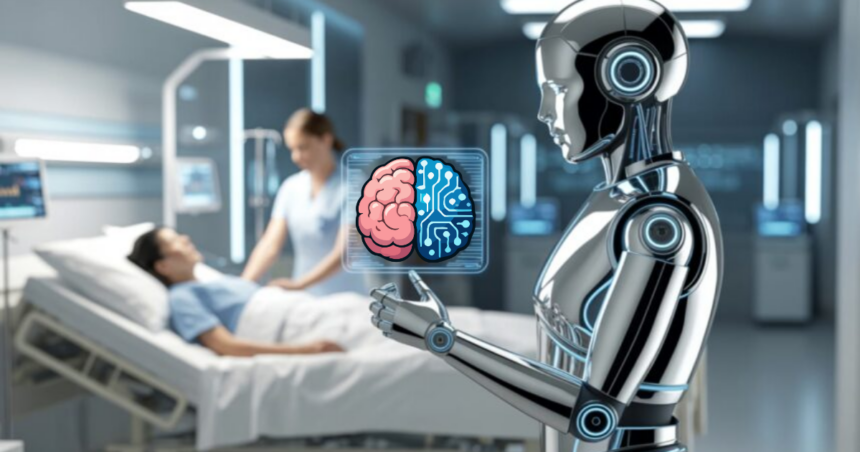
False representations add to the cost of operation, Artificial intelligence in insurance premium and decrease the level of trust between the insurance company and the policyholders. The conventional fraud detection systems used in the past were manual audits and rule-based that were slow and had limited scope. The current state of Artificial intelligence is changing the way health insurance companies detect and stop fraud. Artificial intelligence offers quicker, smarter, and more precise detection measures protecting insurance companies and honest clients.
- Health Insurance Fraud Understanding
- The Role of Machine Learning
- Pattern Recognition and Anomaly Detection
- Network analysis to identify Organized Fraud
- Real-Time Fraud Prevention
- Fraud Detection Natural Language Processing
- Reducing False Positives
- Perpetual Education and Change
- Advantages of Insurers and Policyholders
- Difficulties and Ethical Concerns
- Conclusion
- FAQs – AI in Detecting Health Insurance Fraud
- 1. How does AI detect fraud in health insurance claims?
- 2. Can AI prevent fraudulent claims before payment?
- 3. Is AI more effective than humans at spotting fraud?
- 4. Does using AI affect honest policyholders?
- 5. How secure is the data used by AI for fraud detection?

Health Insurance Fraud Understanding
Health insurance fraud may have a lot of forms. It can be in the form of patients making false claims, providers charging services that were not provided, or overstating the treatment prices. In other settings, organized fraud gangs collude in order to take advantage of insurance systems. Due to the continuous development of fraud patterns, it is not easy to notice new tricks with the help of traditional systems.
Human expertise and predetermined rules are important in manual review. Although these techniques are effective in identifying the presence of very apparent frauds, they are usually ineffective in identifying the presence of possible frauds that are subtle or complex. Here is where artificial intelligence is important.
The Role of Machine Learning
The basic aspect of AI-based fraud detection is machine learning. It enables systems to study historical claims data in bulk and acquire patterns related to legitimate and fraud claims. Rather than strictly following set rules, machine learning models are constantly being upgraded through additional data.
As an illustration, an Artificial intelligence system can find out that some billing codes are common in fraudulent claims. It is also capable of identifying abnormal amounts of claims as compared to similar cases. The model can then automatically identify suspicious claims in real time to be investigated further after being trained.
This is a data-driven method of raising the accuracy and minimizing the likelihood of overlooking latent patterns of fraud.
Pattern Recognition and Anomaly Detection
Anomaly detection is one of the most effective AI devices in fraud detection. Artificial intelligence programs check the normal behavior of claims and create a reference point. Once a claim is quite different as per the anticipated trends, the system indicates that it is suspicious.
As an example, when a healthcare provider makes a spike of claims in a short time, Artificial intelligence will identify this unusual spike. Likewise, when a patient submits claim multiple times regarding the same type of treatment but over an impractical time period, the system is able to detect the discrepancy.
Anomaly detection is used to enable insurers to identify fraud that does not necessarily conform to traditionally defined models. It assists in the detection of both minor malpractices and major fraud.
Network analysis to identify Organized Fraud
Fraud is not necessarily committed by single people alone. Network analysis is an AI method that analyzes data on the relationship between various entities within the claims system.
AI will be able to identify suspect connections by mapping relationships between patients, healthcare providers, and billing patterns. As an illustration, in case several patients have been linked with the same provider and the provider tends to file exaggerated claims, the system may alert this relationship to be investigated.
Network analysis offers more in-depth insights to more than claim review. It also helps insurers to detect organized groups of fraudsters which would be hard to detect otherwise.
Real-Time Fraud Prevention
The conventional method of detecting fraud usually took place once the payment was made. This was a responsive strategy that complicated the retrieval of the money that was lost. AI changes to real-time prevention.
By submitting a claim, AI systems immediately analyze information and determine the level of risk. The system can stop the claim and revisit before payment is made in case the system recognizes red flags. This preventive measure allows saving money and enhances effectiveness.
Another benefit of real-time analysis is that it helps to build up customer trust since honest policyholders are not subjected to the effects of increases in premiums caused by fraud.
Fraud Detection Natural Language Processing
Unstructured data on medical notes and physician reports are frequently included in the health insurance claims. This is time consuming when these documents are reviewed manually. Natural language processing is an Artificial intelligence that is used to analyze text-based information rapidly and precisely.

NLP systems are able to recognize discrepancies in medical reports and in billing codes. Indicatively, when a claim has a complicated surgery procedure, but the notes have explained a standard check-up, the AI system could alert the inconsistency.
AI has a more detailed fraud detection framework by analyzing both unstructured and structured data.
Reducing False Positives
Balance between sensitivity and accuracy is one of the problems of fraud detection. When systems are configured to be too suspicious of valid claims it may delay payments and irritate customers. The accuracy of AI is enhanced by the fact that it learns through past research, and that is why it makes changes to its models.
With time, machine learning mechanisms will become more efficient in differentiating between actual mistakes and deliberate fraud. This minimizes false positives and makes the processing of claims that are made by legitimate policyholders easier.
Perpetual Education and Change
Fraud schemes are developing with offenders devising additional methods of manipulating insurance schemes. The Artificial intelligence systems are created to evolve. Machine learning models modify their risk assessment strategies by analyzing the new claims data and responses on the investigations.
This flexibility will keep the fraud detection systems viable despite changes in the fraud schemes. The persistent learning is what makes Artificial intelligence an efficient long-term tool to safeguard the health insurance systems.
Advantages of Insurers and Policyholders
Fraud detection which is powered by Artificial intelligence is helpful to the insurers and customers. Through insurers, losses are minimized, and operational efficiency as well as compliance is enhanced. Policyholders are favored with equal premium and expedited claim payments to legitimate claims.

Fraud reduction will enable the insurance companies to allocate their resources in a better manner and invest in improved customer services and preventive healthcare plans.
Difficulties and Ethical Concerns
Although Artificial intelligence is more effective in detecting fraud, it should be done in a responsible manner. The privacy of data is essential since the data on claims contains sensitive medical data. Insurers have to uphold a good level of cybersecurity and be in line with regulations.
Conclusion
Fraud detection of health insurance claims is changing with artificial intelligence. AI is able to detect patterns of anomaly, network analysis, and natural language processing quicker and with higher precision than its conventional counterparts due to machine learning. It changes fraud prevention as a reactive method to an active one beforehand, minimizing losses and saving the honest policyholders.
FAQs – AI in Detecting Health Insurance Fraud
1. How does AI detect fraud in health insurance claims?
AI analyzes patterns in claim data to identify unusual activity or suspicious behavior that may indicate fraud.
2. Can AI prevent fraudulent claims before payment?
Yes, AI can flag high-risk claims for review before they are processed, reducing financial losses for insurers.
3. Is AI more effective than humans at spotting fraud?
AI can process large datasets faster and detect hidden patterns that humans might miss, making fraud detection more accurate.
4. Does using AI affect honest policyholders?
AI aims to target only suspicious claims, but insurers also have manual review processes to avoid affecting genuine claims.
5. How secure is the data used by AI for fraud detection?
AI systems follow strict security protocols and privacy laws to ensure policyholder data is protected.

Dinesh Suthar is an AI and technology writer who explores the latest trends in artificial intelligence, emerging tools, and digital innovation. He simplifies complex tech topics into practical insights for businesses, marketers, and tech enthusiasts.