
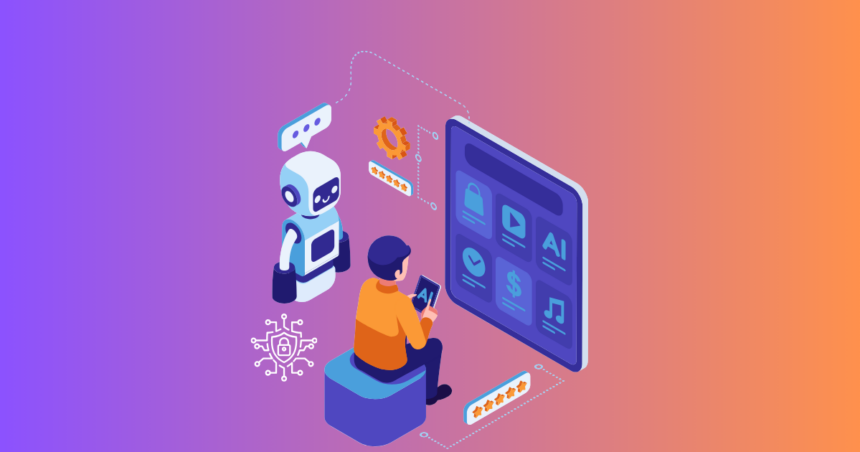
Artificial Intelligence is transforming the entertainment industry as media and gaming companies worldwide are using this technology to create stunning images and generate content. Recent data indicates that AI adoption is on the rise as about 69 percent of media companies are now using Artificial Intelligence as a way to fast track and simplify the content creation process. Although the shift to AI-driven processes has resulted in enhanced productivity and significant savings on production costs, many industry experts believe that it also poses severe risks to security as threat actors are weaponizing AI to amplify cyberattacks.
With cybercriminals increasingly exploiting AI to victimize key players in the entertainment industry, security experts are recommending using AI-powered cybersecurity solutions to stop hackers from stealing funds or spreading false information. In a time when people are scraping the bottom of the barrel and misinformation is commonly accepted as fact, fighting fire with fire could be the best strategy for entertainment companies to prevent financial losses and long-term reputational damage.
AI to Prevent Ransomware
There have been several instances wherein top tier entertainment, media, and gaming companies have fallen victim to extortion schemes. These schemes usually involve restricting access to data or stealing important files, as well as threats to leak unreleased content unless ransom is paid. In December 2023, Insomniac Games, a Sony subsidiary who developed the Spiderman 2 videogame, became victims of a ransomware attack orchestrated by a hacker group called Rhysida. The hackers reportedly demanded 50 bitcoin, which is valued at about $2 million, in exchange for restoring access to their files. After seven days of not getting anything from the Sony Group, Rhysida released the data, which contained over one million files, onto the dark web. The breach exposed employee data, company emails, and internal documents, as well as confidential contract information between Marvel and Sony.
Other development studios widely condemned the attack, which was considered as one of the most damaging cybersecurity incidents in the videogame industry. But it’s likely that this won’t be the last as AI is now being used to automate ransomware crimes, increasing their speed and making them more effective even without human intervention. To prevent ransomware attacks, media and gaming companies should integrate AI-backed ransomware defense tools into their data systems to spot attacker behavior on endpoints and block pre-ransomware activity in firewalls and servers. AI can also identify unauthorized attempts to access pre-release content and scripts, as well as malicious behavior that’s often undetected by conventional antivirus software.
Phishing and Social Engineering Defense
Cybercriminals are now using AI to create highly realistic deepfake audio or video content, primarily for making social engineering or phishing attacks. Attackers can use these deepfakes to impersonate executives or managers, tricking employees into revealing credentials or making fraudulent money transfers. They may also use these deepfakes to ruin reputations since they could create non-consensual explicit videos, or use them for disinformation campaigns.
In September 2023, MGM Resorts and Caesars Entertainment were both hit by social engineering attacks as a group called ‘Scattered Spider’ used voice phishing to impersonate their employees. According to reports, he hackers were able to convince the IT desk to reset passwords and multi-factor authentication devices. As a result, MGM’s systems for hotel check-ins, slot machines, and digital keys were impacted for days, and the company lost about $100 million in earnings due to the incident. Meanwhile, Caesars was forced to pay a $15 million ransom to prevent further operation disruptions.
To avoid becoming a victim of deepfakes or phishing attacks, entertainment companies should use AI-powered deepfake detection tools to identify “tells” or behavioral patterns that the human eye could miss. These tools can detect voice cloning by identifying unusual or unnatural cadence, tone, and pitch patterns, and even analyze blood flow patterns under human skin. This technology may also be used to scan social media pages for unauthorized use of a talent’s voice or image so they can be taken down immediately. To take down disinformation campaigns, integrate AI tools that can identify bots or AI-generated fake accounts that are spreading misinformation or malicious deepfakes.
The entertainment industry has benefited from the advancement of AI technology as it offers efficiency and cost savings. However, the fact that AI presents security risks should never be ignored. Media and entertainment companies should step up their cybersecurity measures and integrate AI-enabled protection tools to guard against cyberattacks, and ensure that AI technology doesn’t become a replacement for human talent and creativity.

I’m Erika Balla, a Hungarian from Romania with a passion for both graphic design and content writing. After completing my studies in graphic design, I discovered my second passion in content writing, particularly in crafting well-researched, technical articles. I find joy in dedicating hours to reading magazines and collecting materials that fuel the creation of my articles. What sets me apart is my love for precision and aesthetics. I strive to deliver high-quality content that not only educates but also engages readers with its visual appeal.