

Introduction: The Rise of AI Text Humanization
By 2026, nations have fully integrated artificially intelligent systems into the production processes of nearly all industries. Whether it is the use of AI for customer service or producing technical manuals, an astonishing number of text, based content is generated by an AI in one form or another. The problem is, as detection technology evolves, developers need to find a way to allow people to utilize AI without sacrificing the authentic quality of their content.
AI text humanization is the process of editing machine generated text so that it mirrors what a human would produce in the same situation, adapting a machine, generated sentence to adopt human speech variations and context sensitivities. So this isn‘t about fooling humans; machines are designed to deliver quality, and a good humanization process replicates the organic nature of human speech that people respond best to. Knowledge about the NLP mechanisms underpinning both generation and humanization is a fundamental first step.
In this guide we will look at the NLP tools and techniques, and best practices that have been developed to allow developers to produce more human, like AI text generation.
Understanding NLP Fundamentals
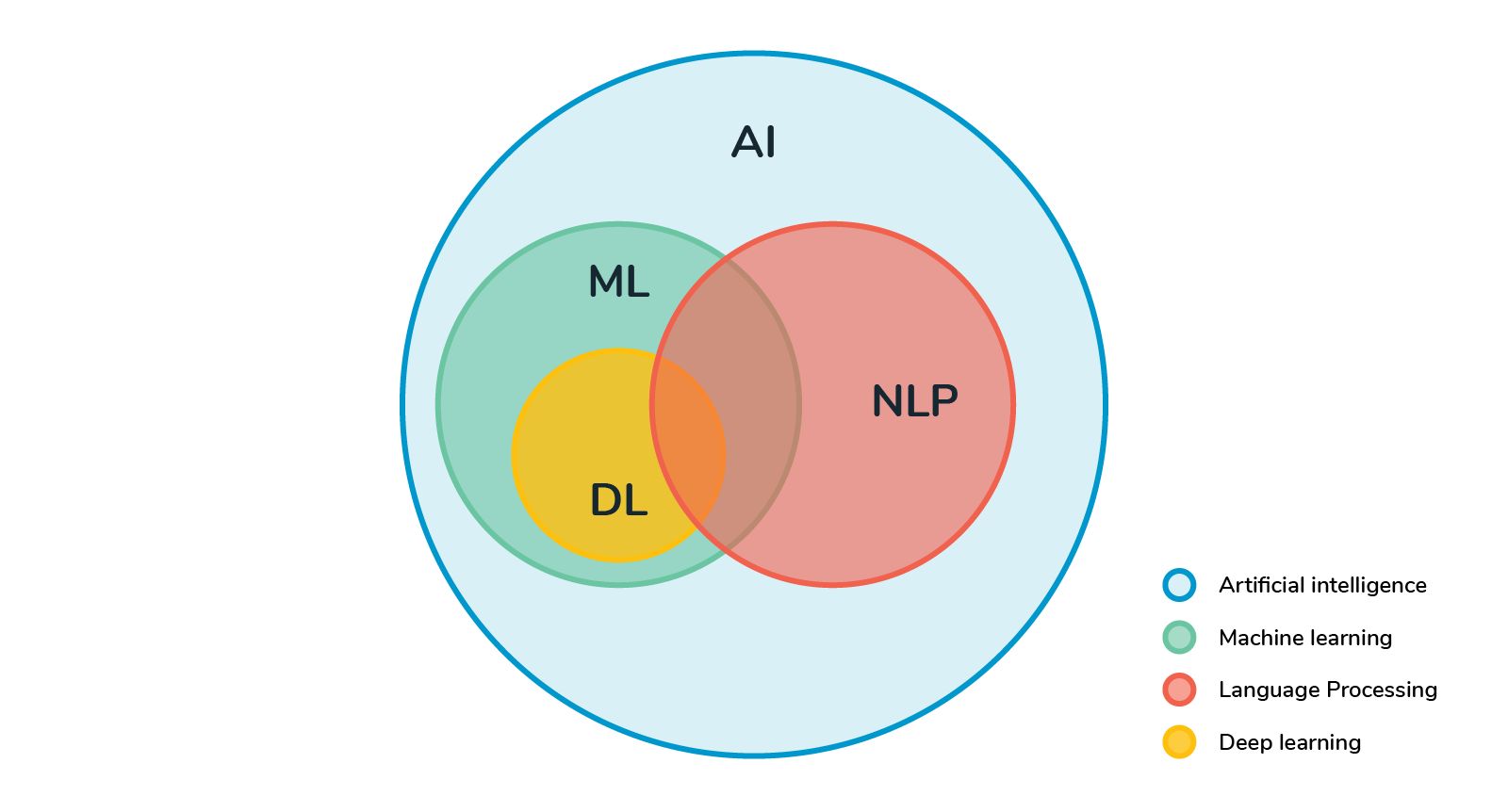
Natural Language Processing enables machines to understand, process, and generate human language in a useful manner. Key concepts include:
The process of tokenization consists of converting text into discrete items called tokens, which may be words or sub, words. Current approaches such as Byte, Pair Encoding have been widely adopted with success. They enable the handling of rare words within the model, which has been a challenge previously.
These are vector, based representations which carry semantic meaning, allowing word2vec and contextual embeddings to learn that king is to man as queen is to woman.
Attention Mechanisms are arguably the core enabling innovation behind modern NLP. In text processing, Attention gives models the ability to prioritize certain words while processing, thus allowing for long, range dependencies and a rich context.
Language Modeling predicts the next word in a sequence, forming the foundation of text generation. By training on massive text data, models learn statistical language patterns and structures that enable sophisticated text generation capabilities.
Transformer Architectures: BERT vs GPT
The transformer architecture revolutionized NLP. Two major model families dominate, each with distinct characteristics.
BERT (Bidirectional Encoder Representations from Transformers)
The Bidirectional Encoder Representations from Transformers (BERT) treat words in both contexts simultaneously. As a result they have a better grip on the understanding of each word‘s context than previous one, directional models.
BERT is pretrained using Masked Language Modeling (masking tokens randomly in input and predicting them with context) and Next Sentence Prediction (predict relationship between sentence pairs). BERT is trained well for sentiment analysis, question answering, and text classification tasks; not generation, as it is an understanding tool.
GPT (Generative Pre-trained Transformer)
GPT applies a one, way autoregressive method, predicting the subsequent token from all previous ones. This enables it to effectively handle text generation.
GPT uses a decoder, only model with causal attention,, it can attend only to prior tokens and not future ones. This makes it an extremely good sequence generation model by making it excellent at predicting the next token.
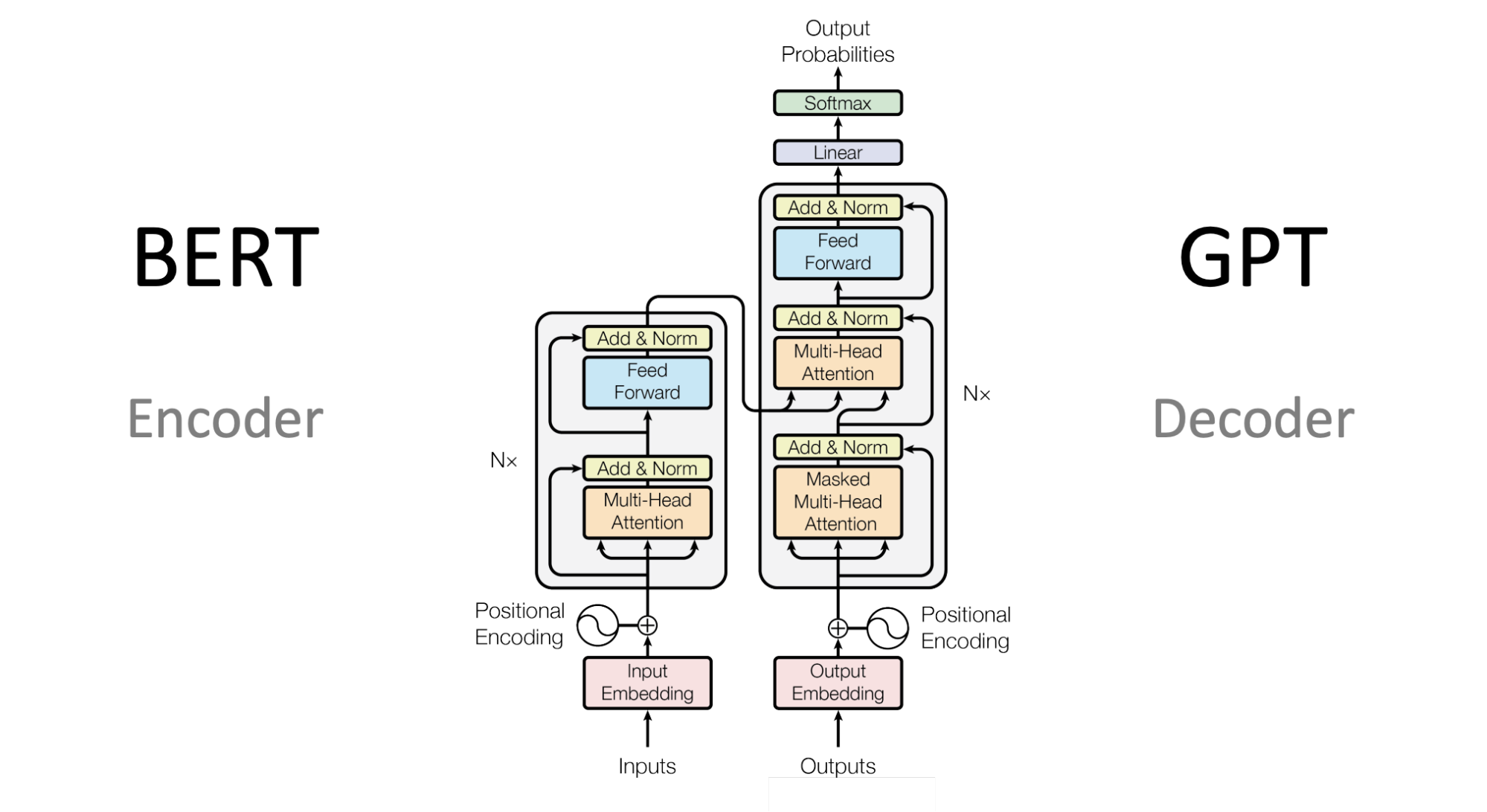
The choice depends on your use case. For humanization tasks, BERT helps analyze text quality, while GPT-style models generate content you’ll humanize.
How AI Detection Works
Understanding detection mechanisms is fundamental to developing effective humanization strategies. Modern AI checker tools employ sophisticated techniques to identify machine-generated text, analyzing multiple dimensions of writing patterns that distinguish human from AI authors.
Perplexity Analysis
Perplexity is essentially the ‘surprisingness’ to a language model that a given text is generated. It represents how predictable a sequence of words is, low perplexity occurs when a language model comes across a sequence of words it would generate because the sequence appears “natural” to it.
Lower perplexity scores tend to be artificial. AI text will always generate highly probable word sequences and thus should have an even distribution of perplexity scores. Human text has much higher and varied perplexity scores. Humans select unpredictable words, have interesting phrases and often use lower probability words to achieve desired effects.
Burstiness Metrics
Sentence burstiness deals with the variability in sentence patterns and length. Human writing typically shows a natural variation in sentence types, consisting of shorter sentences that are quick and to the point, as well as longer more descriptive sentences. Naturally humans write with rhythm, and will use shorter sentences to punch the point home after describing something lengthily.
AI produced text is usually characterized by its low burstiness; a monotonous, unchanging sentence length, and an easily predictable syntax. Machine generated text can usually be distinguished by its repetitive nature.
Additional Detection Signals
Modern detectors also analyze N-gram patterns (repeated phrase structures), vocabulary diversity (unique-to-total word ratio), syntactic complexity (parse tree variety), and semantic coherence (meaning consistency across paragraphs). These combined signals create sophisticated detection systems that developers must understand to create effective humanization strategies.
Essential NLP Libraries for Developers
Building effective text humanization systems requires the right tools. The NLP ecosystem offers powerful libraries, each with distinct strengths for different scenarios.
spaCy: Industrial-Strength NLP
SpaCy is designed for speed and efficiency in a production setting. It ships with pre, trained models in many languages and an industrial strength accuracy. If the use case requires speedy text processing with the goal of analyzing text and using the result in customer, facing application, spaCy should be the tool of choice. While its design principles have their roots in practical production applications rather than academic breadth, it is often the first library to reach for in enterprise applications which need to process large amounts of text.
NLTK: The Academic Powerhouse
NLTK provides the most complete coverage of linguistic resources and algorithm implementations, making it ideal for research and education. It is not as optimized for performance as spaCy; However, the vast array of features and great learning resources make it uniquely suitable in other contexts. NLTK has a large collection of corpora. This will be very useful for various types of linguistic research and for learning the algorithms used in modern NLP.
Hugging Face Transformers: State-of-the-Art Models
The Transformers library offers consistent API access to a vast collection of off- the, shelf models such as GPT, BERT or T5. It makes state of the art NLP widely accessible giving developers a toolkit to adopt advanced models without huge training resources. Developers benefit from an active community adding new models and enhancements to stay on the cutting edge of research.
Best practice production systems can be built by using all 3, using spaCy for preprocessing, BERT for the state of the art generation and understanding, and NLTK for specialized linguistic analysis tasks. This approach combines the advantages of each library while discouraging the disadvantages.
Practical Text Humanization Techniques
1. Introduce Lexical Variation
AI models exhibit overly consistent vocabulary patterns. The solution involves strategic synonym replacement and vocabulary variation—but strategy is key. Blind replacement makes text worse.
Maintain 70-80% vocabulary consistency while strategically varying 20-30%. Focus variation on descriptive adjectives, action verbs, and transition phrases. Avoid varying pronouns, articles, and domain-specific terminology with precise meanings. The goal is mimicking natural human variance, not creating artificial diversity that disrupts readability.
2. Adjust Sentence Structure Diversity
Increase burstiness by deliberately varying sentence length and complexity. Mix short sentences (5-10 words) with medium (15-20 words) and occasional longer ones (25+ words). This variation directly addresses one of the primary AI detection signals.
Vary sentence beginnings—AI often starts sentences similarly. Use different punctuation strategically: semicolons, em dashes, colons. Incorporate questions and exclamations naturally. AI typically generates declarative statements; humans mix sentence types.
The rhythm created by this variation makes text feel naturally authored rather than algorithmically generated.
3. Add Contextual Imperfections
Human writing isn’t algorithmically perfect. Strategic imperfections increase authenticity: conversational elements (“you know,” “actually”), contractions (“don’t” vs “do not”), casual transitions (“So,” “Now”), and personal touches like first-person perspective. These elements create the informal warmth that characterizes human communication, particularly in content meant to engage rather than merely inform.
4. Enhance Semantic Coherence and Style
Use varied transition phrases—”furthermore” for addition, “however” for contrast, “therefore” for causation. Build meaningful paragraph connections that feel natural, not forced. Implement stylistic fingerprinting by analyzing human writing samples and consistently applying patterns like sentence length preferences, vocabulary sophistication, and punctuation habits to create recognizable authorial voice.
Tools and Resources for Developers
Text Analysis Tools like Hemingway Editor, Grammarly, ProWritingAid, and LanguageTool help identify AI-like patterns and improve text naturalness. These tools analyze readability, grammar, style, and structural patterns.
Humanization Platforms: For developers seeking free humanize AI text solutions, specialized platforms offer APIs designed specifically for transforming AI content into natural writing with adjustable parameters for style, formality, and humanization degree.
Evaluation Metrics: Assess quality through burstiness improvement, lexical diversity, perplexity variation, and semantic preservation. Combined, these metrics provide holistic humanization quality scores.
Best Practices for Production Systems
Balance Automation and Quality: Implement human review for critical content, use A/B testing for strategies, and deploy gradual rollout with quality monitoring.
Respect Ethical Boundaries: Never deceive about authorship when disclosure is required. Always disclose AI assistance per legal or policy requirements. Maintain factual accuracy—humanize style, not content. Respect copyright and attribution.
Monitor and Iterate: Track detection rates, measure user engagement metrics (time on page, bounce rate, conversions), A/B test parameters, and collect stakeholder feedback for continuous improvement.
Version Control Configurations: Treat humanization settings as code with proper version control and documentation of parameter reasoning for future optimization.
Future Trends in NLP
Emerging technologies include controllable generation (fine-grained style control), multimodal models (integrating text, image, audio), few-shot humanization (adapting with minimal examples), and adversarial training (maintaining quality while improving naturalness).
Research priorities focus on linguistic diversity for multilingual support, domain adaptation for specialized writing contexts, explainable AI to understand human-like patterns, and ethical AI standards for responsible deployment.
The industry evolution shifts from “beating detectors” to “improving quality”—prioritizing genuine clarity, factual accuracy, authentic variation, and reader value over simple detection evasion.
Conclusion
AI text humanization NLP tools comprise advanced linguistics and machine learning technology, demanding expertise of NLP basics and transformer architectures, knowledge of basic libraries, understanding of detection mechanisms and the importance of ethics in use.
The methods and toolkits introduced in this guide give rise to an effective, production, quality humanization system. Some major points are to know how BERT‘s analysis differs from GPT‘s generation, how the detection mechanisms work on perplexity and burstiness, and how humanization can effectively enhance the naturalness.
A stronger push from developers for systems that increase content quality is warranted, instead of just avoidance of detection. Content writers must consider reader experience, accuracy, and responsible humanization before the finalization of content. The optimal approach is to combine the advantages of automation and the irreplaceable benefits of human oversight.
As the discipline progresses, implementations that are distinguished by an awareness of new research, adherence to sound ethical principles and a commitment to user utility will rise above the average. The intersection of improving NLP libraries, increasing comprehension of human writing patterns and ever, present computational resources makes this an exciting time for application development.
The path to success isn‘t to compete with detectors through an arms race, but to develop systems that truly offer real value to human readers. Those who prioritize clarity, interesting writing, and genuine communication will win no matter how the detectors evolve. There‘s more than enough opportunity for engineers who are willing to invest in understanding the nuances of this problem, both from a technical and a linguistic perspective.
Whether you are constructing content generation systems, deploying a humanization API, or developing next, generation NLP models, these guiding principles can serve as a path to a productive, responsible implementation. A focus on real quality improvements is the most critical component while using these revolutionary technologies that are now within the development community‘s reach.

Sandeep Kumar is the Founder & CEO of Aitude, a leading AI tools, research, and tutorial platform dedicated to empowering learners, researchers, and innovators. Under his leadership, Aitude has become a go-to resource for those seeking the latest in artificial intelligence, machine learning, computer vision, and development strategies.