

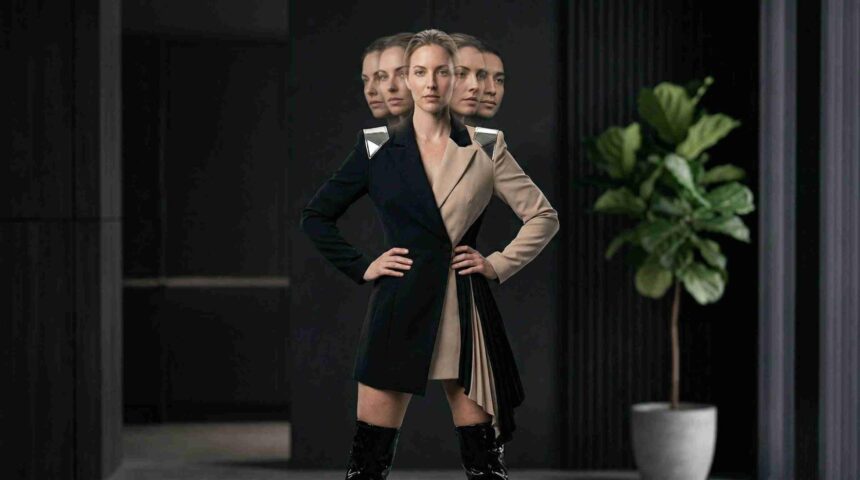
Fashion has always been built on iteration.
Before a collection reaches the runway or a campaign goes live, there are dozens of decisions made behind the scenes. Fabrics are tested, silhouettes are refined, styling is adjusted, and visual direction evolves constantly.
But one part of this process has remained stubbornly expensive.
The human element.
Every time a brand wants to test how a look feels on a different face, a different identity, or a different audience profile, it traditionally requires a new shoot.
That limitation has shaped how fashion content is produced for decades.
And now, it’s starting to change.
The Hidden Cost of Fashion Sampling
Most people associate fashion costs with production and materials.
But visual sampling is where a surprising amount of budget goes.
To test a collection visually, brands typically need:
- Multiple models
- Studio or location setups
- Styling adjustments
- Photography and post-production
Even for internal testing, this process is resource-heavy.
Which leads to a compromise.
Brands don’t test everything.
They choose a few directions, execute those, and move forward.
That means many creative possibilities are never explored.
Why Visual Testing Matters More Than Ever
The fashion industry is no longer driven by seasonal drops alone.
It’s driven by continuous content.
Brands now need:
- Lookbooks for different markets
- Social media variations
- E-commerce visuals
- Campaign-specific imagery
Each of these requires visual adaptation.
And increasingly, brands are expected to reflect diversity, personalization, and relevance across all of them.
That’s difficult to achieve with traditional workflows.
The Shift Toward Digital Sampling
Instead of producing every variation physically, brands are moving toward digital sampling.
The idea is simple.
Create a base visual, then adapt it.
Not just in color or styling, but in identity.
This is where things start to get interesting.
Because identity has always been the hardest variable to change.
Identity Becomes Flexible Instead of Fixed
In traditional fashion shoots, identity is locked early.
Once a model is selected, the entire shoot revolves around that choice.
Changing it later means starting over.
But when you introduce tools like Face Swap into the process, that constraint begins to disappear.
Instead of treating identity as a fixed decision, it becomes a flexible layer within the visual.
If you want to understand how this works at a production level, looking at how Face Swap operates in practice gives a clearer picture. Rather than rebuilding an entire shoot, it allows brands to adapt identity within the same composition while maintaining lighting, styling, and structure.
Higgsfield Face Swap enables this kind of transformation without breaking the integrity of the image.
And that changes how sampling works entirely.
One Shoot, Multiple Identities
This is where the economic impact becomes clear.
A single shoot can now support:
- Multiple model variations
- Different audience representations
- Regional adaptations
Without requiring additional production.
Higgsfield Face Swap allows brands to reuse a base visual while adapting identity in a way that feels natural and consistent.
This reduces the need for repeated shoots while expanding creative possibilities.
Faster Lookbook Development
Lookbooks have traditionally been time-intensive.
They require planning, coordination, and execution across multiple layers.
But speed is becoming increasingly important.
Trends move quickly. Campaigns need to launch faster. Content cycles are shorter.
Higgsfield Face Swap allows brands to accelerate this process.
Instead of waiting for multiple shoots, they can generate variations from existing visuals.
This makes it easier to:
- Test different directions
- Refine creative concepts
- Finalize campaigns faster
Expanding Representation Without Scaling Cost
One of the most important shifts in fashion is the demand for broader representation.
Brands are expected to reflect diversity across:
- Ethnicity
- Age
- Style identity
Traditionally, achieving this required larger shoots with more models.
Now, that requirement can be approached differently.
Higgsfield Face Swap allows brands to explore representation within the same visual framework.
This doesn’t replace real-world diversity.
But it allows brands to test, prototype, and expand representation more efficiently.
Reducing Creative Risk
Fashion is a high-risk industry.
Every campaign is a bet.
If the visuals don’t resonate, the impact is immediate.
Testing reduces that risk.
But traditional testing is expensive.
Which means it’s often limited.
Higgsfield Face Swap lowers that barrier.
By allowing identity changes without additional production, brands can test more variations before committing.
This leads to better-informed creative decisions.
The Role of AI in Scaling Fashion Content
This shift is part of a larger trend.
AI is becoming central to how businesses operate and scale.
According to AI adoption trends in business, around 77% of companies are already using or exploring AI, with many prioritizing it as a core part of their strategy.
Fashion is no exception.
The industry is moving toward systems that allow for:
- Faster production
- Greater flexibility
- Scalable output
Higgsfield Face Swap fits directly into this transition by enabling identity-level adaptation within visuals.
From Photoshoots to Content Systems
What’s really changing is not just the tool.
It’s the mindset.
Fashion brands are moving from:
- Photoshoots → Content systems
Instead of creating isolated visuals, they are building frameworks that allow content to evolve.
A single image becomes:
- A base asset
- A starting point
- A system for variation
Higgsfield Face Swap plays a role in this by making identity adaptable within that system.
Maintaining Visual Consistency
One of the challenges of scaling content is maintaining consistency.
Different shoots often result in:
- Lighting variations
- Styling inconsistencies
- Tonal differences
By working from a single base visual, brands can maintain:
- Consistent composition
- Stable lighting
- Unified visual tone
Higgsfield Face Swap ensures that identity changes do not disrupt this consistency.
Creative Control Stays Intact
A common concern is whether tools like this reduce creative control.
In practice, they shift it.
Instead of focusing on production logistics, creative teams can focus on:
- Direction
- Styling
- Narrative
Higgsfield Face Swap handles the technical complexity of identity adaptation, allowing creatives to refine the vision rather than rebuild it.
Why This Matters for Emerging Brands
For smaller fashion brands, this shift is even more significant.
They often lack the resources for large-scale shoots.
Higgsfield Face Swap allows them to:
- Produce high-quality visuals
- Experiment with different looks
- Compete with larger brands
Without matching their budgets.
The Future of Fashion Sampling
Sampling is not going away.
But it is evolving.
Physical sampling will always have a place.
But digital sampling is becoming an essential layer.
Higgsfield Face Swap represents this evolution by enabling identity to be part of the sampling process rather than a fixed constraint.
Conclusion
Fashion has always been about exploration.
Trying new ideas. Testing new directions. Refining what works.
But the ability to explore has historically been limited by cost and logistics.
Face swap technology is changing that.
Higgsfield Face Swap allows brands to experiment with identity, expand representation, and scale content without rebuilding production from scratch.
The result is not just faster workflows.
It’s a more flexible, more adaptive approach to visual storytelling.
And in an industry defined by change, that flexibility matters.

Sandeep Kumar is the Founder & CEO of Aitude, a leading AI tools, research, and tutorial platform dedicated to empowering learners, researchers, and innovators. Under his leadership, Aitude has become a go-to resource for those seeking the latest in artificial intelligence, machine learning, computer vision, and development strategies.