


Vehicle inspections have been a very important part of automotive operations for a very long time. Insurance companies need them for claims processing. Rental businesses need them at every vehicle handoff. Dealerships use them for trade-in evaluations. Traditional manual inspections have served these needs, but they come with a lot of limitations that become more problematic as business volume grows and customer expectations grow.
Computer vision technology is changing how vehicle inspections work. The shift toward computer vision-based automation represents more than just technological advancement. It focuses on fundamental operational challenges that have constrained the automotive and insurance industries for years, making it possible for new business models and service levels that weren’t previously feasible.
Why manual inspections fail
Inconsistency across inspectors
Different inspectors study the identical damage differently based on the factors of their experience, training, and personal judgment. What one inspector categorizes as small damage, another might categorize as something that needs urgent attention. These changes in judgment can make it difficult to keep consistent standards across inspections or help to compare assessments from different people.
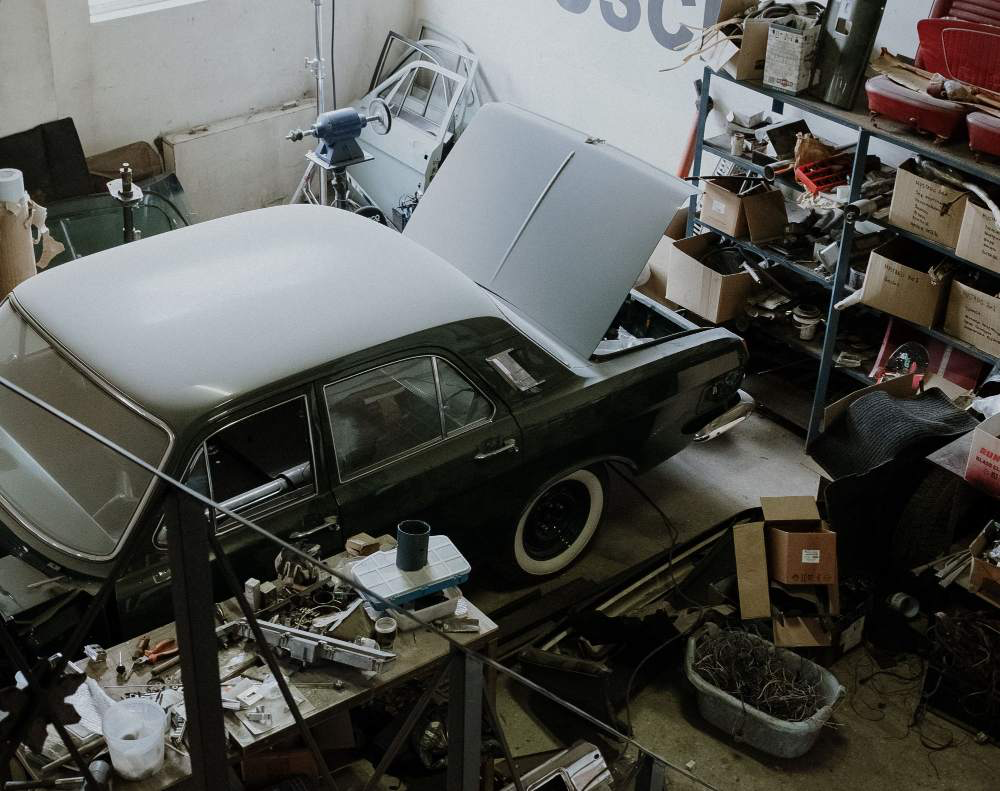
The problem becomes a lot worse when it comes to a lot of locations. Branch offices or franchise operations struggle a lot to make sure that inspections in one city meet the same standards as those in another city. Without objective evaluation criteria, consistency depends completely on individual inspector capabilities.
Speed limitations
Manual inspections normally take a lot of time, typically 30-45 minutes for a single vehicle. This leads to a lot of problems during busy periods when there are a lot of vehicles that need inspections together. Customers wait, sit idle, and the operational efficiency suffers. The time investment also limits how many vehicles can be processed daily.
Scalability challenges
Scaling manual inspection operations means hiring and training more inspectors, which involves a lot of major costs and time investment. Finding qualified inspectors, giving training, and maintaining quality standards across the growing teams becomes very difficult as operations expand.
Seasonal demand fluctuations create additional problems. Businesses need enough inspectors to handle important peak periods, but end up with a lot of capacity at slower times. This inefficient resource can result in significantly hurting the profitability.
Documentation quality
Handwritten inspection reports differ in quality and completeness. Important details get missed, descriptions don’t have precision, and the documentation may not include enough photographic evidence. Bad documentation can lead to problems later when claims are studied and actually processed or when customers question damage assessments.
Physical paperwork also creates storage problems, as finding historical inspection records requires digging through filing systems, and documents can be lost or damaged over a period of time.
Fraud vulnerability
Manual processes give limited fraud protection. Inspectors may miss damage concealment attempts or VIN tampering. Without systematic verification methods, catching activities that are fraudulent depends on individual inspector experience.
Computer vision techniques for vehicle inspection
Supervised learning methods
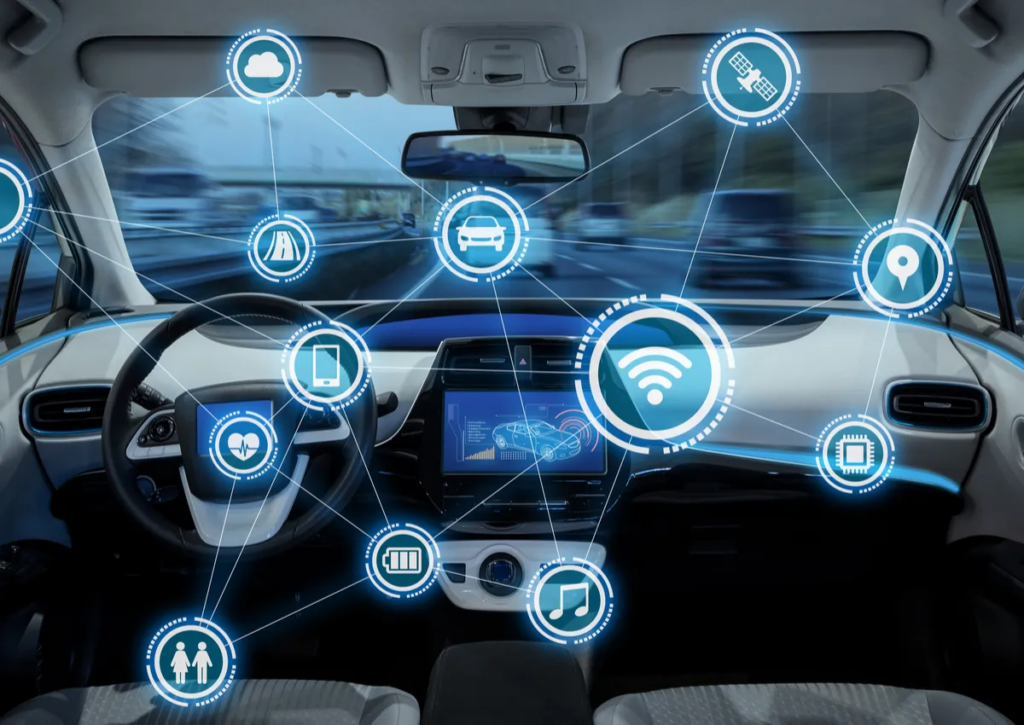
Supervised learning trains the AI models using labeled datasets where the human experts have already identified and categorized vehicle damage. The system learns to study and catch the damage patterns by studying thousands of examples where damage types, locations, and severity levels have been marked. Supervised learning excels at consistency. Once trained, the model applies identical evaluation criteria to every vehicle it inspects, removing the human variability that plagues manual inspections. This consistency proves particularly valuable for businesses operating across a lot of locations that need standardized assessment quality.
Unsupervised learning methods
Unsupervised learning takes a different approach by analyzing vehicle images without pre-labeled training data. Instead of learning specific damage categories from examples, these models learn what undamaged vehicles look like and identify anything that deviates from normal patterns.
For deeper technical details about how these methods work in practice, the learning algorithms process visual data through multiple layers of analysis, and build understanding from basic edge detection through complex pattern recognition that helps to study and also identify damage characteristics.
Semi-Supervised learning
Semi-supervised learning is a more practical approach that works by using a small set of labeled images, like ones where vehicle damage is clearly marked, along with a much larger set of unlabeled images. By learning from both, the model is able to pick up patterns more effectively, improve its accuracy, and reduce the overall effort required food manual annotation.
Core use cases
Vehicle identification
Automated systems identify vehicle make, model, year, and other specifications from images without needing manual data entry. This ability helps to speed up the processes and also reduces errors and mistakes from misidentified vehicles.
Vehicle identification also helps detect fraud attempts where claimed vehicle specifications don’t match actual vehicles. When someone claims to own a premium model but submits images of a base trim, the problem gets highlighted automatically.
Damage detection
In-depth damage detection represents the core application of computer vision in vehicle inspection. Modern systems can identify damage across 164 different vehicle parts spanning all the vehicle types, from compact cars to large SUVs and trucks.
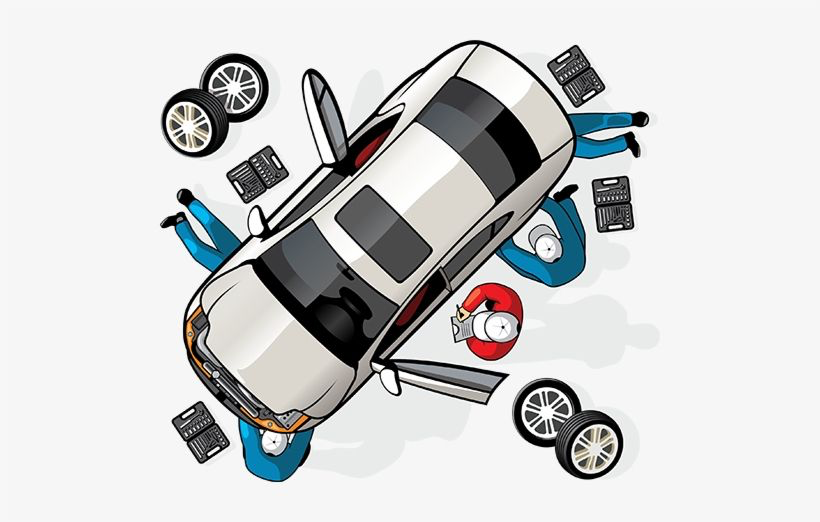
Damage detection accuracy has reached levels where AI systems match or exceed human inspector performance for the most common damage types. The reliability helps the business to confidently base operations decisions on automated assessment results.
Instant results
Edge processing delivers inspection results in real-time without network latency. Analysis happens on the device as images are captured, providing immediate feedback to users. This speed improvement helps to make the user experience better while also helping with faster operational workflows. Instant results also support real-time guidance during image capture. The system can tell users immediately if photos are enough or if they need to be taken again, which helps with reducing inspection time and also improving data quality.
Network independence
Edge AI works without internet connectivity, making inspections possible in areas with poor network coverage. Parking garages, rural locations, or anywhere with connectivity challenges no longer lead to the creation of inspection barriers.
This independence proves particularly valuable for mobile inspection scenarios where the inspectors work across varied locations with unpredictable network availability. Operations continue smoothly apart from the connectivity conditions.
Better privacy
Processing data locally instead of transmitting it to cloud servers helps to face privacy concerns about sensitive vehicle and customer information. Data stays on-device unless it is voluntarily shared, giving businesses and customers better control over information security.
This privacy advantage becomes increasingly important as data protection rules are becoming increasingly strict globally. Edge processing makes compliance simple by reducing data transmission and storage in cloud environments.
Reduced operational costs
Removing the cloud communication decreases data transmission costs and server processing expenses. While edge deployment needs capable hardware, the operational cost savings that are ongoing offset initial hardware investments over time. Decreased cloud dependency also improves system reliability. Edge systems don’t fail when cloud services experience outages, making sure that the inspection capabilities remain available consistently.
Scalability Benefits
Edge architecture scales more efficiently than cloud-dependent systems. Adding inspection capacity means deploying more edge devices rather than expanding cloud infrastructure to handle growing processing loads. This scaling approach distributes processing power rather than centralizing it, avoiding the problems that can come when many users simultaneously access cloud processing resources during the peak periods.
Conclusion
The future of vehicle inspections in AI-powered, computer vision technology is changing how the automotive and insurance industries help with vehicle conditions and one of the prime examples for this can be Inspektlabs. Manual inspection methods are giving way to automated solutions that deliver a lot of speed, consistency, and scalability.

Sandeep Kumar is the Founder & CEO of Aitude, a leading AI tools, research, and tutorial platform dedicated to empowering learners, researchers, and innovators. Under his leadership, Aitude has become a go-to resource for those seeking the latest in artificial intelligence, machine learning, computer vision, and development strategies.