

Introduction
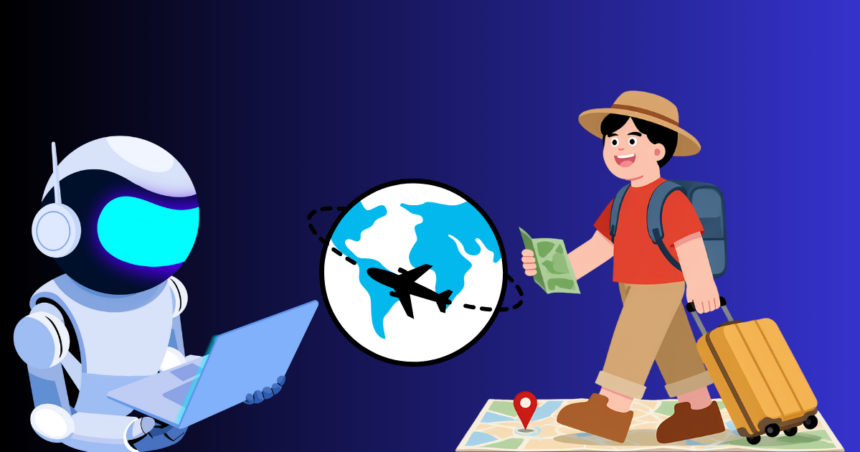
AI Travel Planners has changed how individuals plan and reserve their trips. Previously, the vacation planners used to be very dependent on travel agents, guide books, and hours of internet search to plan their vacations. This has been made easier today by the use of AI travel planners, which provide smarter and fast trip booking solutions. These smart systems process large volumes of data within seconds and are offering users customized suggestions on what to do during the flight, hotel, or activities, and even what to eat.
- Introduction
- How AI Travel Planners Work
- Customized Travel Suggestion
- Accelerated and more efficient booking
- Budget and Optimization of Cost
- Live Chats and Artificial Intelligence
- Small Devices and Apps Integration
- Improving Business Travel Performance
- Enhancing Travel Security and Safety
- Green and Eco-Friendly Travel Planning
- Challenges and Limitations
- The Future of AI Travel Planning
- Conclusion

How AI Travel Planners Work
Machine learning, natural language processing, and predictive analytics are some of the technologies used in AI travel planners to learn more about the users and their preferences and traveling patterns. As a user enters their travel information, including where they are going, when to travel, their budget, and their interests, the system goes through millions of data points of airlines, hotels and travel sites in seconds.
It then contrasts prices, reviews, availability and seasonal trends to come up with the most appropriate. The prediction systems over time learn about the behavior of the users and get better and better with time, offering more precise and focused results. This flexibility and enhancement capability makes artificial intelligence travel planners much more effective than the conventional booking processes.
Customized Travel Suggestion
The personalization of the travel experiences is one of the most amazing aspects of AI travel planners. These systems do not provide generalized recommendations, but analyze prior bookings, browsing history, and mentioned preferences to propose customized itineraries. As an illustration, a tourist who often reserves beach resorts can get a list of tropical locations, whereas a history lover can get a list of cultural and heritage locations.
Even by using AI tools, it is possible to propose uncovered treasures, which can satisfy the interests of a traveler, and lead to a unique and memorable experience. Customization improves the satisfaction, and it allows the users to save time searching and finding the right options indefinitely.
Accelerated and more efficient booking
Time is precious and AI travel planners save time spent planning a trip to a great extent. Travelers do not need to change the websites to compare prices and reviews, instead, they can get everything in one platform. AI systems immediately show the most optimal flight combinations, hotel offers, and transport offers, based on the needs of the user.
Certain sites have gone as far as giving the user the option of making bookings within a few minutes by the use of automated payment and confirmation forms. This simplified process does away with redundant processes and thus it is simpler and more convenient to plan trips than at any other time in the past.
Budget and Optimization of Cost
The AI travel planners are also very effective in making the travelers handle their budgets. The AI system can anticipate the most optimal time to fly or reserve a hotel, which will result in the best price by examining price variations and past pattern. They alert in case of price drops or special offers are made. Also, AI services can propose alternative dates of travel or local airports to save even more money.
Live Chats and Artificial Intelligence
The weather conditions, flight delays, or other unexpected situations may alter the travel plans. The use of AI travel planners gives timely updates and notifications and helps the traveler keep up. As an example, in case of delayed flight, the system can recommend alternative routes or rebooking of the ticket automatically.
There are chatbots with AI that provide 24/7 support to clients, responding immediately to questions and solving problems effectively. Such responsiveness improves the traveling experience as it reduces stress and uncertainty.
Small Devices and Apps Integration
The voice assistants may assist users in finding flights, checking the booking information, or travel reminders. The digital boarding passes, hotel reservations, and travel itineraries are stored in one convenient location on mobile apps. The location-based services are used to receive navigation, restaurant recommendations, and local events recommendations once at the destination.
Such a combination makes sure that all the information required by the traveler is on a fingertip of the traveler making the journey convenient.
Improving Business Travel Performance
The AI travel planners will be specifically helpful to business travelers who need effective and efficient booking systems. AI is applied in corporate travel management systems, which control policies of the company, monitor costs, and manage the travel process. These systems have the ability to automatically pick the flights that are most suited to meet times, suggest hotels that are in the vicinity of conference venues and come up with expense reports.
Enhancing Travel Security and Safety
This is because security is a key issue among travelers, and AI technology contributes to improving the security. The AI travel planners keep track of what is happening in the world, the weather, and health warnings to give timely notices. They are able to suggest safer routes, sell them travel insurance and make them aware of local regulations.
In times of emergency, AI systems can provide advice as to the closest medical center or contacts in an embassy. This proactive solution will make the travelers feel safer and better prepared to venture into the new destinations.
Green and Eco-Friendly Travel Planning
The travel industry has become more concerned with sustainability, and the utilization of AI travel planners can be seen as a way of mitigating a more eco-friendly approach. Studying the amount of carbon emissions and other means of transportation, AI systems will suggest more sustainable variants, which may be direct flights, the use of public transit, or the stay at an environmentally approved hotel.
Certain websites even estimate the amount of carbon footprint a journey has created and propose methods of compensating it. This will promote responsible traveling decisions and help the world to minimize environmental impact.
Challenges and Limitations
Although they have numerous advantages, AI travel planners do not lack problems. The issues of data privacy are present as users post personal data regarding their preferences in terms of traveling. It is also possible that technical errors or not correct recommendations are made because of incomplete data.
Also, there are still those travelers who enjoy human contact and personalized services of the old travel agents. Although AI technology keeps on advancing, there is a need to balance between automation and human aspect to serve various traveler needs.
The Future of AI Travel Planning
The future of AI travel planners is bright because of the development of technologies. In this case, the systems will be even more intuitive and accurate with the development of predictive analytics and data processing in real-time. The virtual reality integrations can enable travelers to preview the destinations prior to reserving and the sophisticated AI algorithms can develop fully automated and end-to-end travel experiences.
With the rise in global connectivity, the AI travel planners will probably become smarter, quicker, and more dependable and break the pattern of how individuals navigate the globe.
Conclusion
The travel planners based on AI have brought impressive changes to the travel industry by providing a smarter and quicker travel booking service. These systems make travelling both easier and more convenient through personalized recommendations, efficient booking services, cost cutting and real-time services to individuals and businesses alike.

The disadvantages are not much compared to the advantages of the technology even though issues like data privacy and technological constraints persist. With the future of AI technology unfolding further, it will be even more instrumental in terms of determining the future of the travel industry, making it more convenient, affordable, and enjoyable to all.

Dinesh Suthar is an AI and technology writer who explores the latest trends in artificial intelligence, emerging tools, and digital innovation. He simplifies complex tech topics into practical insights for businesses, marketers, and tech enthusiasts.