

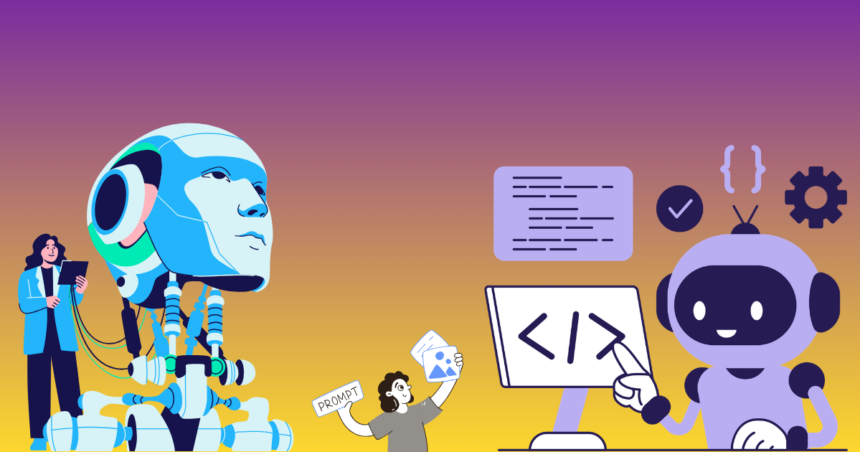
The key to generating stunning AI art is Writing Prompts for AI Art. Text prompts | You can input keywords or sentences that dictate how detailed, realistic or creative your resulting image will be Of course Writing Prompts for AI Art is not just a random word type. It’s about structuring prompts so that artificial intelligence generates precisely the outcome you’re seeking.
- What Do AI Art Writing Prompts Imply?
- Why Writing Prompts for AI Art Is Important
- Understanding How AI Interprets Prompts
- The Good Prompt Has a Basic Structure
- Adding Detail Without Over complicating
- The Use of Style Keywords in Writing Prompts for AI Art
- Controlling Perspective Composition
- Practicing and Refining Prompts
- Common Mistakes Beginners Should Sidestep
- Imagination in Writing Prompts for AI Art
- You are trained on data until October in 2023
- Conclusion
The AI art tools that gained immense popularity over the years. Generative tools like DALL·E by OpenAI and Mid journey can create stunning visuals in seconds. But for most noobs, their results do not look like what they expected. The reason is often simple. There was an insufficiently specific prompt.
Writing Prompts for AI Art: A step by step beginners guide Well, you will learn how are prompts functioning, which how they should be structured, How to make the image better quality and few things that People usually does wrong. You will be well on your way to creating AI art with powerful and effective prompts by the end!
What Do AI Art Writing Prompts Imply?
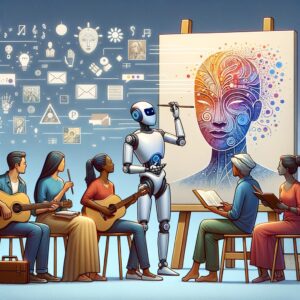
For AI Art writing prompts involve describing an image in words so an AI system will generate a visual representation of that text. The prompt acts as instructions. It understands patterns. It associates words with visual examples it has trained on from the millions of images. A quality description equals a good end result, the better you describe – the best image.
Why Writing Prompts for AI Art Is Important
How to create better AI-generated images Writing prompts for AI Art A weak prompt yields a primitive image. A good prompt yields a polished and elaborate output. With a lot of examples like a castle, the AI has very little information to go on. The system is going to generate a random castle. But a medieval stone castle on a hill during sunset, dramatic sky, cinematic lighting, ultra-detailed digital art tells the AI what you want in no uncertain terms.
Good prompts reduce frustration. This leads to beginners blaming the AI tool. The truth is the tool only acts with respect to what was told. Learning writing prompts for AI art helps you drive the output. It also saves time. Instead of 10 random images returning, you now get 1 accurate result provided your prompt is tidy enough.
Understanding How AI Interprets Prompts
This is the first step to improve Writing Prompts for AI Art. AI systems deconstruct your prompt into keywords and concepts. They each activate a visual schema. If, for example, the word sunset warm colors such as orange and pink will be started. The word snow elicits white cold ethers. The word cyberpunk conjures images of neon lights and space-age shapes.
AI models such as DALL·E by OpenAI and Midjourney are trained on massive datasets. They learn relationships between words and images. AI follows patterns, therefore when Writing Prompts For Ai Art make sure you keep this in mind. It does not imagine independently. It merges learned and learnt patterns according to instructions.
The Good Prompt Has a Basic Structure
Writing Prompt for AI Art can be done in a structure. There are several components that typically make up a strong prompt. First, describe the main subject. This gives the AI a cue about what to look for in the image. Word prompts – for instance, a young woman or a futuristic city.
Second, explain the setting or context in which your story takes place. This adds context. You might say standing in a forest or located on Mars. Third, mention lighting conditions. Lighting changes the mood dramatically. The result is influenced by phrases like soft morning light or dramatic shadows. Fourth, specify style or medium. You might add oil painting, digital art, watercolor or realistic photography. It is only when these pieces coalesce cleanly that Writing Prompts for AI Art work.
Adding Detail Without Over complicating
There are two common mistakes that beginners make. They either write very short prompts or long convoluted ones. For AI Art it is about Writing Prompts. It takes balance. Instead of swift writing beautiful girl, include descriptive details like hair color, clothes, place and mood. But do not include random ideas whose meaning contradict each other. Writing out something like a snowy beach in a desert during summer with neon medieval knights, for example, may throw the system off. Make your description clear and sensible. Short, clear sentences work best. AI systems thrive in a well-structured set of instructions.
The Use of Style Keywords in Writing Prompts for AI Art
Style is extremely important in AI-generated images. The style keywords for your AI prompts when writing art. For realism, add phrases like ultra-realistic, high-resolution photography or professional camera lens. For artistic effects, add digital painting or anime style or fantasy illustration.
Also, lighting style affects the output. Terms like cinematic lighting, golden hour or moody atmosphere drive color and contrast. By playing around with style keywords, you have a better understanding of how AI responds.
Controlling Perspective Composition
AI Art Writing Prompts, also includes cameras angle. You can dictate perspective by including phrasing such as close-up portrait, wide-angle shot or aerial view. These instructions allow the AI to shape the image. and Composition affects balance and focus.
For example, close-up portrait of an old man, detailed wrinkles, soft lighting creates a very different photo than wide land view of an old man walking through highlands. Minor differences in wording lead to major visual differences.
Practicing and Refining Prompts
AI Art Writing Prompts ==> Practice makes perfect The first try rarely yields perfection. If the output isn’t accurate, change your description. If the image is devoid of details, include additional descriptive sentences. If the background is a little distracting, make it simple. Because generating art with AI is a feedback loop. Generate multiple versions. Compare them carefully. So pay attention to what words yield better results.
Common Mistakes Beginners Should Sidestep
Always say what you want, clearly. Adding too many conflicting ideas is another great mistake. Ideas should be simple and easy to keep a focus on. Others forget to talk about lighting and style. These details significantly improve quality. And most seriously do not directly copy and use copyrighted styles.
Imagination in Writing Prompts for AI Art
AI is a tool. It cannot yet replace human imagination. AI art, writing prompts is part of creative skill Your inputs are a building block for the final output. AI makes abstract ideas visible. This collaboration between human creativity and artificial intelligence is transforming digital art. Instead of hand drawing, you articulate what you see in your mind. The AI brings it to life.
You are trained on data until October in 2023
Writing Prompts for AI Art will be even more relevant as this technology is getting better day by day. Prompt writing may become a trade skill. Companies are already employing prompt experts for creative endeavors. Future AI systems could comprehend natural language even better. They may require fewer adjustments. However clear communication is always going to be a value add. No matter what the future holds in digital artistic expression, today we learn Writing Prompts for AI Art.
Conclusion
AI Arts Needs Writing Prompts – The Essence of AI Based Image Generation Prompts need to be clear, structured, and detailed for better outputs. It just helps you be able to better know how A.I. understands the words, therefore how to control the final image. Start with a clear subject. Add environment details. Include lighting and style. Keep sentences simple and focused. It should be followed with practice and improvement. AI art tools such as DALL·E and Mid journey are amazing, but the real magic comes from exactly what you type to describe your ideas. This title lets you know what this article is about: the best writing prompts for AI art.

Shruti Roy is a content writer at Aitude, where she writes easy-to-understand articles on artificial intelligence, AI tools, and emerging tech trends. She focuses on creating helpful, practical content that makes complex AI topics simple for everyday users.