


Research work is not an easy job, whether it is for university assignments, scientific papers, or professional reports. This is mainly because research is all about wading through different reference materials, writing multiple drafts, checking citations, and ensuring originality.
- 1. Google’s NotebookLM – AI Thinking Partner
- 2. EssayWriter.co – Smart AI Writing Assistant
- 3. Rephraser.co – Paraphrasing, Summarizing, & Rewrites
- 4. Grammarly AI – Proofreading, Editing, Improvements
- 5. PlagiarismRemover.co – Checking & Eliminating Plagiarism
- 6. Paperpal — Manuscripts, Citations & Ready to Go Papers
- Why AI Tools Have Become Important in 2026?
Research work and research paper writing have always been one of the toughest and time-consuming tasks. But thanks to artificial intelligence, many tasks that once took hours and a lot of human effort can now be managed in a much smarter way.
Using AI tools, you can easily automate research-related tasks in 2026 and beyond. In case you are unfamiliar with AI tools, you’ve landed in the right place, as here in this guide, we’re going to discuss in detail the different tools that can help you manage different stages of research without exhausting much of your resources.
Let’s start with the first one….
1. Google’s NotebookLM – AI Thinking Partner
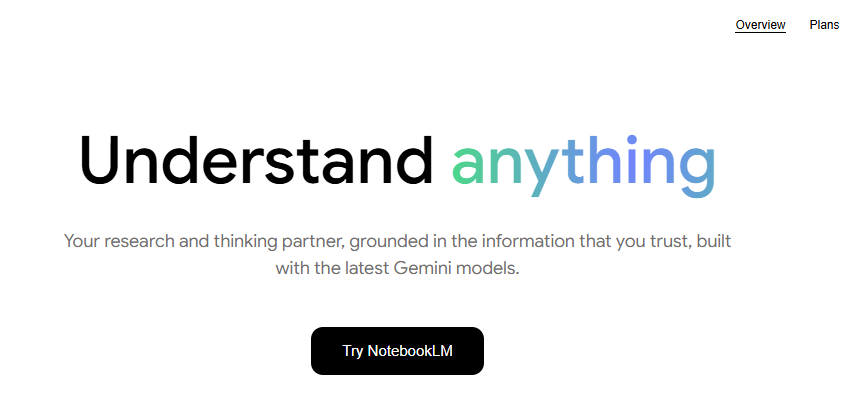
This AI notebook is a comprehensive virtual research assistant powered by Google. The main function of this tool is that it lets you upload documents and uses AI to analyze them. On the basis of its analysis, it can generate summaries, extract important information, answer crucial questions about the topic, and offer all the assistance to help you understand lengthy papers in a much efficient way.
If you have ten research papers to read for a literature review, you can use this tool and get all the key points in less than a minute. You don’t have to go through each paper from start to end anymore, which means you can save a lot of time and effort wasted in ideation and data collection.
2. EssayWriter.co – Smart AI Writing Assistant
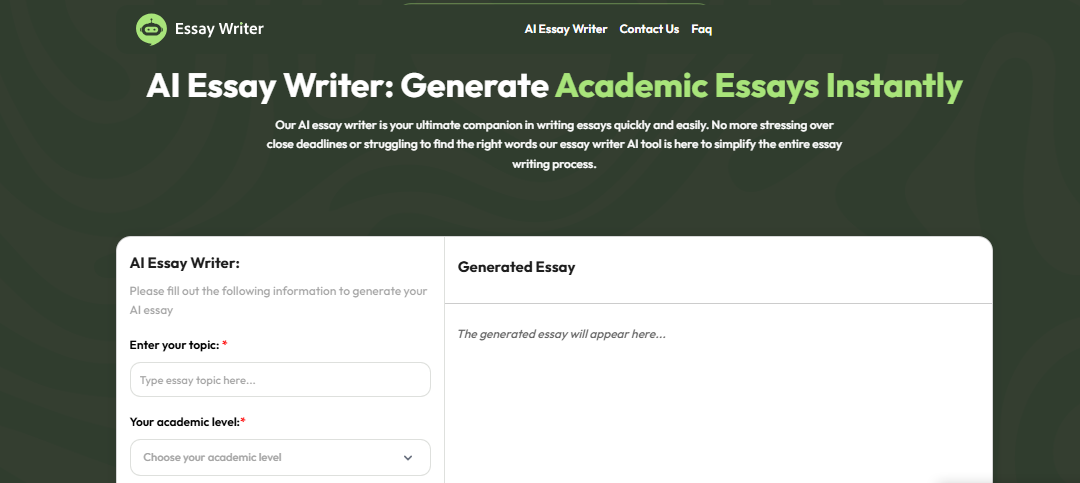
The first tool can help you collect ideas, but this is not the most important thing. Many of you might struggle with putting ideas into well-structured words. Well, this AI essay writer tool can help you with that.
The main function of this essay writer tool is that it uses AI to generate drafts based on the topic, ideas, and your instructions. You just have to give a detailed prompt providing every crucial piece of information, including the topic, word count, preferred style, citations, basic structure, etc. On the basis of the prompt you provide, the tool would write a detailed research paper or article in seconds.
Now this draft can be used as a reference or as a guide for writing your own paper. You might be tempted to use the AI paper as your own, but you must know that AI-written content gets easily flagged by AI detector tools and also lacks human touch, which makes it best only as a starting point.
3. Rephraser.co – Paraphrasing, Summarizing, & Rewrites

Many content writers or researchers, especially non-native English peeps, find it harder to express complex ideas and information in clear and formal language and tone. This sentence rephraser is an all-in-one solution that can help them with this problem.
The main function of this AI tool is that it can easily rephrase complex text in different yet simpler words without changing the meaning. In addition to this, you would find various tools through which you can easily summarize long passages into smaller versions, humanize robotic-sounding text, check grammatical mistakes, and improve language for clarity.
Rephraser.co is also helpful when you want to rephrase something from a source (while citing properly) or when you’ve written a draft yourself but want to make the language smoother and more academic, as it offers an “Academic” mode specifically designed for students and researchers.
4. Grammarly AI – Proofreading, Editing, Improvements
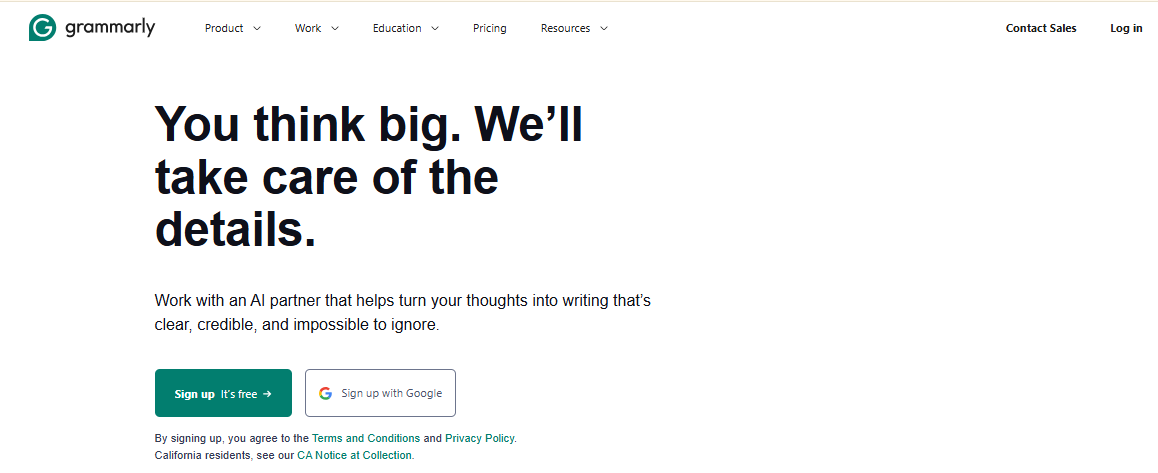
Grammarly is yet another AI-powered tool that every researcher should use. Sometimes editing and revision can take more time than preparing the first draft. In case you have a short deadline or are not good at editing work, you can always rely on this AI grammar checker and content-improving tool.
The main function of Grammarly is to scan your text and highlight all major and minor errors found in it. Not only does this tool highlight mistakes, but it also suggests quick fixes in real-time. By using the suggestions given by this tool, one can make content more digestible, coherent, and professional-sounding.
The tool offers various modes and can be tuned to check and improve academic papers. Moreover, if you get the premium version of Grammarly, you can also enjoy advanced features like AI rewriting and plagiarism checking.
5. PlagiarismRemover.co – Checking & Eliminating Plagiarism

Plagiarismremover.co is yet another valuable AI-powered tool that can be used by research paper writers. This tool, as the name tells us, is proficient in removing unwanted plagiarism.
When it comes to research paper writing or other kinds of academic documents, you have to ensure originality, or else your paper will be rejected, and you might also face other penalties. This AI-powered website is home to both a reliable plagiarism remover and a plagiarism checker.
The plagiarism checker comes with a free version and is extremely accurate in terms of results. It can easily highlight traces of both direct and indirect plagiarism. Once you find similarities, you can easily remove them using the plagiarism remover tool. The tool rewrites text differently without changing the core message or intent, making it a valuable option.
6. Paperpal — Manuscripts, Citations & Ready to Go Papers

This tool is quite valuable, especially for researchers working in STEM or preparing papers for journals.
Paperpal offers useful tools that can help you with various tasks.
It helps with citation formatting, manuscript preparation, and even checks for readiness based on common criteria for submission.
If you’re preparing a research article or thesis, Paperpal can save you time on reference formatting, checking consistency, and ensuring your document meets formal requirements.
Why AI Tools Have Become Important in 2026?
AI research tools have become very advanced these days. In the past, AI tools were only capable of spinning words with synonyms and identifying petty errors like typos or missing punctuation, but today these tools have become valuable writing assistants.
They don’t just automate simple tasks anymore, but would help you with complex operations like ideation, handling large documents, paraphrasing, writing, citation management, and much more.
The reason why AI tools have become so important these days is that these tools can take out the complexities of writing and enable researchers to focus more on the real work, which is developing ideas, analyzing complex data, and arguing logically instead of just meeting word count requirements.
Point to Note
AI tools are powerful but not perfect. AI-generated drafts can have errors, incorrectly paraphrased content, or inaccurate citations. Therefore, it is essential to always review, verify facts, and ensure academic integrity yourself. In case you find problems with the AI outputs, it is best to humanize the AI text yourself before submitting it.
Think of AI as a helper, not a replacement for your own thinking.
Also, over-relying on AI can lead to low-quality writing or even unintentional plagiarism if you don’t properly reword or cite sources. So we would advise you to always use AI tools responsibly.
Conclusion
In 2026, research work will become much easier, and this is all thanks to AI tools. With AI tools like essay writers, plagiarism removers, editors, and citation managers, one can easily save a lot of time and energy wasted on mundane tasks.
In this guide, we have mentioned a few popular tools and their use cases for your knowledge. Using these tools would give you the freedom to focus more on important parts of research, which are ideation and critical thinking.
We hope that after reading this guide and using the best AI tools, you will be able to make your research process faster, smoother, and more effective.
Best of Luck!

Sandeep Kumar is the Founder & CEO of Aitude, a leading AI tools, research, and tutorial platform dedicated to empowering learners, researchers, and innovators. Under his leadership, Aitude has become a go-to resource for those seeking the latest in artificial intelligence, machine learning, computer vision, and development strategies.