

Photography has not been less than their implementation of cameras, light and ability to capture the actual moments. But in 2026, it is all going to change, with a new visual creation being developed AI photography. Instead of the work of actual cameras, creators can now make a very realistic photograph using the tool of artificial intelligence. Unrealistic photos produced with the assistance of AIs can be easily confused with the real photograph, so it is not always that easy to distinguish between a photo made with the help of AIs and an actual photograph.
The application of AI photography in marketing, social media, fashion, product design, even journalism is gaining in popularity. It is also being utilized to create such professional images, without necessarily having to hire costly photoshoots, and creators are using it to experiment with new forms of art.
What is AI Photography?
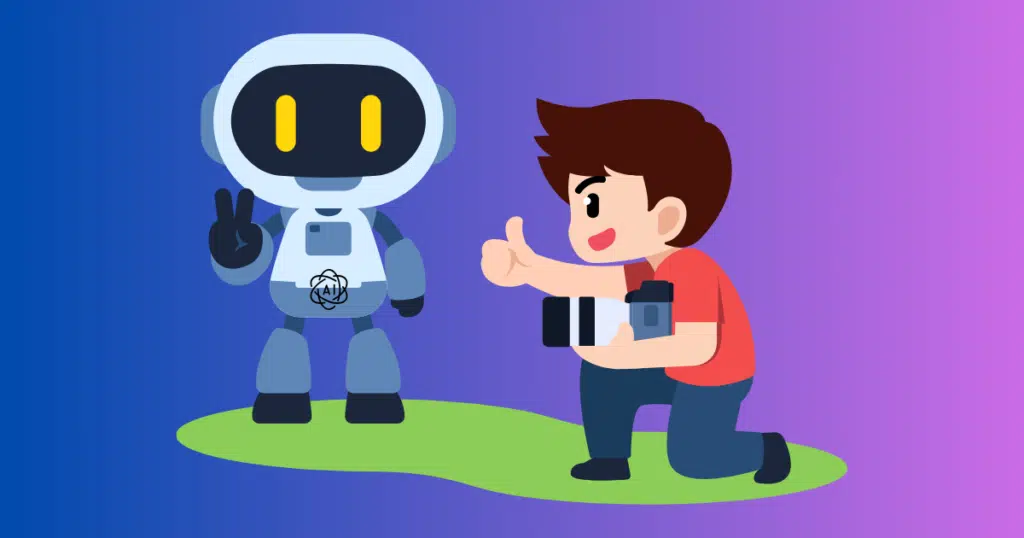
AI photography is a process of creating realistic photographs with the help of the artificial intelligence instead of the traditional cameras. They may be typed by typing text, style or through reference pictures. The AI models read through millions of real photographs, and acquire the knowledge of the patterns: lighting, composition, depth, and texture to make new images.
Image A.I. such as DALL·E is fashionable to create photo-realistic images based on the simplest descriptions. Using an example, in case the user writes the following sentence: a sunset portrait of a woman standing on a beach with soft golden light, the AI will produce a realistic image, which will resemble a professional picture.
The operation of AI Photography
The combination of deep learning algorithms, which are also trained on an extremely large quantity of real-life photographs, motivates AI photography. These models are aware of the appearance that the objects will have in the different conditions of light, angles and settings. In an event whereby a user enters a prompt, the AI dissects the prompt into visual representations and reconstitutes it into a single image.
This process is broken down into a sequence of steps, which include of comprehending the prompt, composition, addition of light and textures and details refinement. It is even possible to approximate the camera effects with the help of a modern AI system, e.g., depth of field, motion blur, lenses distortion, etc. This will give a misleading impression on the final product that it was captured by a high-quality DSLR camera.
Why AI Photography is gaining popularity?
The rate of AI photograph in 2026 is very high; it is justified by the following aspects. Among the biggest reasons, there is cost efficiency. The use of cameras, studios, lighting systems, models and editing time characterize the traditional photography. Most of such costs are removed in the help of AI photography.
One more is speed. In a matter of seconds, the users can generate substantial quality images without prior arrangements of capturing a photograph. This is best suited where it comes to doing business that will require fast contents to be developed.
Photography advertising of business and AI
Nowadays AI photography is changing the manner in which marketing is carried out in the world today. The companies are encouraging the use of AI-generated pictures, display product pictures and post product pictures on social media and web pages. It enables companies to produce infinitely many permutations of the content without having to establish costly shoots.
Using the example of an online store, different product images shot in various settings: studio lighting, an outdoor scene or a lifestyle scene without necessarily having to take numerous shots of the product. This enables marketing to be more efficient, and also enable brands to experiment with different visual styles in a relatively short period of time.
Effects on the traditional Photographers
The advent of AI photography has not only offered new opportunities to the traditional photographers but it has also presented them with a challenge. On the one hand, AI will aid in reducing the requirement in simple or stock-style photos. On the other hand, it also offers the professionals with the new creative opportunities.
Currently, many photographers employ AI to make their work process more efficient, brainstorm before shooting, and process photos more efficiently. Instead of replacing photographers, AI is becoming a complementary tool, which increases the productivity and the rates of creativity.
AI Graphy vs Real Graphy
There are advantages to artificial intelligence photography and actual photography. Real photography is a documentation of real-life scenarios, emotions and real-world environment. It is appreciated due to its originality and human attachment.
In its turn AI photography gives an opportunity to twist all the details up to the extreme. The users are free to make the best lighting, backgrounds and compositions without any form of restrictions. This is why it is the most appropriate one to undertake creative projects and marketing along with conceptual art.
Ethical Problems and Veracity Problems
With the increasing realism of AI photography, ethical concerns are increasingly becoming a concern. One of the main issues is authenticity. When the pictures produced by AI appear to be identical to the actual photos, it becomes difficult to state what is real and what is produced by AI.
Of concern is misinformation, copyright and abuse of AI generated visuals as well. In a few industries where labeling systems are now in place to help establish the content being generated by AI as well as to facilitate transparency. AI photography needs to be used responsibly to ensure that there is no confusion and abuse of AI photography.
Future of AI Photography
It is believed that the future of AI photography will be extremely advanced and immersive. Perhaps in the nearest future, the AI systems will come up with interactive pictures, which will be adjusted in accordance with the input of the user. It can be integrated with a virtual reality and augmented reality to enable users to enter photo spaces generated by AI.
There will also be real time AI photography, whereby photographs will be generated in real time based on the information inputted by the live camera and the AI enhancement made. It will only be a means of smudging the boundary between real life photography and computer-generated creation.
Conclusion
To sum up, AI photography is transforming the manner in which pictures are produced, exchanged, and utilized by 2026. Now it is possible to make high quality and realistic looking photos within a few seconds without the assistance of the tools such as DALL·E and such websites like Canva.
Although it is transforming the photography industry, it is not overthrowing the actual photographers. Rather it is broadening creative potentials and creating new means of creating visual work. The future of photography is, probably, some combination between human imagination and the AI technology, which will then collaborate to produce more potent and more imaginative images than ever before.

Dinesh Suthar is an AI and technology writer who explores the latest trends in artificial intelligence, emerging tools, and digital innovation. He simplifies complex tech topics into practical insights for businesses, marketers, and tech enthusiasts.