

Software supply chain security has moved from a specialized concern to one of the defining challenges in modern application security. This shift is not driven by a single trend, but by the convergence of multiple structural changes: the widespread adoption of open-source dependencies, the centralization of delivery through CI/CD pipelines, and the increasing reliance on distributed architectures composed of loosely coupled services.
- Why Software Supply Chain Security Became the Core of AppSec
- The Best AI Supply Chain Security Platforms
- 1.) Apiiro – Best Overall AI-Driven Supply Chain Security Platform
- 2. Cycode – Full SDLC Supply Chain Correlation
- 3. Sonatype Nexus Lifecycle – Policy-Based Dependency Control
- 4. JFrog Xray – Artifact and Binary Supply Chain Security
- 5. Detectify – External Attack Surface Intelligence
- 6. Contrast Security – Runtime Supply Chain Visibility
- 7. StackHawk – API-Centric Supply Chain Testing
- 8. Klocwork – Static Analysis for Controlled Environments
- 10. Acunetix – Continuous Web and Supply Chain Exposure Testing
- 11. Burp Suite – Manual and AI-Augmented Supply Chain Testing
- How to Build a Real Supply Chain Security Strategy
- FAQs About AI Supply Chain Security
In this environment, applications are no longer built, they are assembled. Code written internally represents only a portion of the final system. The rest is composed of external packages, container images, infrastructure definitions, and third-party integrations. Each of these elements introduces its own risk, but more importantly, risk emerges from how they interact.
Traditional tools were designed to answer narrow questions: which dependencies are vulnerable, which endpoints are exposed, which configurations are misaligned. While these capabilities remain important, they are insufficient on their own. The real challenge is understanding how these signals connect, and which combinations actually represent meaningful exposure.
This is where AI-driven supply chain security platforms redefine the category.
They do not simply improve detection. They improve interpretation. By correlating signals across layers, mapping relationships, and prioritizing based on context, they transform fragmented data into actionable insight. In doing so, they shift supply chain security from an inventory problem to a decision-making problem.
Why Software Supply Chain Security Became the Core of AppSec
Software Is Now Assembled, Not Written
Modern development practices assume reuse. Dependencies, frameworks, and pre-built components are not optional, they are foundational. This creates a supply chain where most of the code executed in production is not authored internally.
The implication is clear: security must extend beyond proprietary code to include everything that enters the system.
Pipelines Became Trust Boundaries
CI/CD pipelines have evolved into critical control points. They manage secrets, orchestrate builds, and produce deployable artifacts. Compromising a pipeline can have a broader impact than exploiting a single vulnerability.
Security must therefore account for how software is built, not just how it behaves.
Risk Emerges from Interactions
A vulnerability does not exist in isolation. Its impact depends on context, how it is used, where it is exposed, and what depends on it. Supply chain security requires understanding these relationships, not just identifying individual issues.
The Best AI Supply Chain Security Platforms
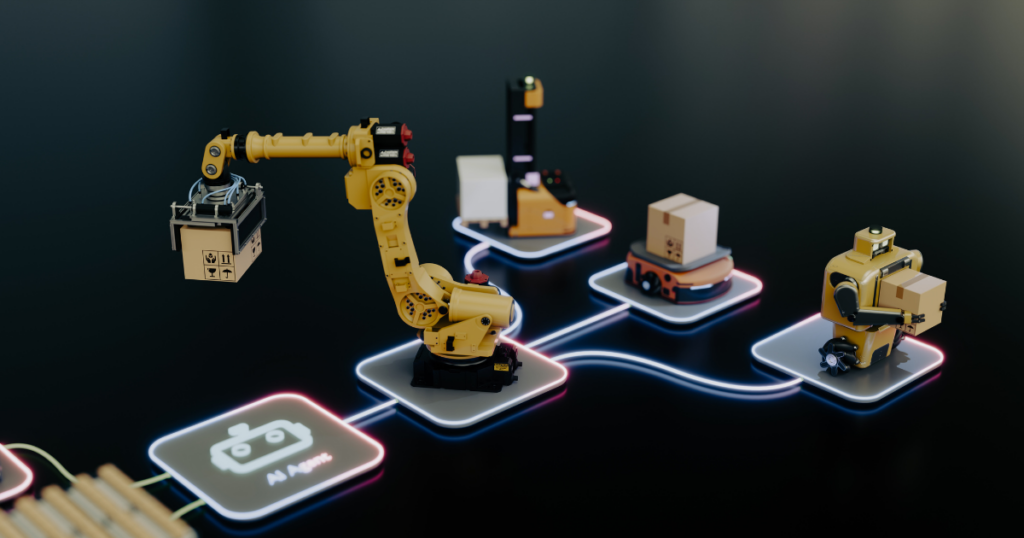
1.) Apiiro – Best Overall AI-Driven Supply Chain Security Platform
Apiiro stands out because it treats supply chain security as a system-level problem. Instead of focusing on individual components, it maps the relationships between code, pipelines, services, and APIs. This creates a dynamic model of how the application is built and exposed.
Its AI capabilities are centered on correlation. A vulnerability in a dependency is not evaluated in isolation, but in relation to how it is used, whether it is exposed, and how it interacts with other components. This allows the platform to identify risk scenarios that would otherwise remain hidden.
Another key strength is ownership mapping. In distributed environments, delays often occur because teams do not know who is responsible for a given issue. Apiiro resolves this automatically, accelerating remediation.
By combining contextual modeling with prioritization, it enables teams to move from reactive triage to structured decision-making.
Key Features
- System-level architectural mapping
- AI-driven risk correlation
- Ownership-based prioritization
- Continuous context awareness
2. Cycode – Full SDLC Supply Chain Correlation
Cycode focuses on providing visibility across the entire software development lifecycle, connecting code, pipelines, and runtime environments into a unified view. Its approach reflects the reality that supply chain risk is distributed across multiple stages rather than confined to a single layer.
The platform aggregates signals from repositories, CI/CD pipelines, infrastructure configurations, and deployed applications. AI is used to correlate these signals, identifying how risks introduced in one stage can affect others. This allows teams to trace vulnerabilities back to their source and understand how they propagate through the system.
Cycode also emphasizes developer workflows, integrating with tools used during development and deployment. This ensures that findings are surfaced early and addressed before they become more difficult to fix.
Its strength lies in breadth. While some platforms focus deeply on specific layers, Cycode provides a horizontal view across the entire lifecycle, making it easier to understand how different components interact.
Key Features
- End-to-end visibility across SDLC
- Cross-layer risk correlation
- Integration with development and pipeline tools
- AI-assisted prioritization
3. Sonatype Nexus Lifecycle – Policy-Based Dependency Control
Sonatype Nexus Lifecycle addresses supply chain security through governance and control. Its platform focuses on managing dependencies at scale, ensuring that organizations maintain visibility and enforce policies consistently.
It provides detailed insight into open-source components, including vulnerabilities and licensing considerations. AI enhances prioritization by evaluating which issues require immediate attention and which can be deferred.
Key Features
- Dependency governance and policy enforcement
- Visibility into vulnerabilities and licenses
- Integration with CI/CD pipelines
- AI-assisted prioritization
4. JFrog Xray – Artifact and Binary Supply Chain Security
JFrog Xray operates at a layer of the supply chain that is often underrepresented in traditional AppSec strategies: artifacts and binaries. While many tools focus on source code and dependencies, Xray is designed to analyze what is actually built, stored, and deployed.
This distinction is important. Vulnerabilities do not only exist in code repositories, but they also persist in compiled artifacts, container images, and packages distributed across environments. Xray scans these artifacts continuously, ensuring that risk is identified even after the build stage.
Key Features
- Continuous scanning of artifacts and binaries
- Integration with artifact repositories and pipelines
- AI-assisted prioritization of deployed components
- Visibility across container and package ecosystems
5. Detectify – External Attack Surface Intelligence
Detectify approaches supply chain security from the outside in, focusing on how applications appear to attackers rather than how they are constructed internally.
Its platform continuously scans external assets, including domains, APIs, and exposed services, identifying vulnerabilities and misconfigurations. This external perspective is critical because it validates whether internal security assumptions hold true in production.
Key Features
- Continuous external attack surface monitoring
- Automated asset discovery
- AI-driven prioritization of external risks
- Validation of real-world exposure
6. Contrast Security – Runtime Supply Chain Visibility
Contrast Security introduces a runtime perspective to supply chain security, focusing on how vulnerabilities behave in real execution environments.
Rather than relying solely on static analysis, the platform instruments applications to observe behavior directly. This allows it to determine whether vulnerabilities are actually reachable and exploitable in production.
This capability is particularly valuable in supply chain contexts, where not all vulnerabilities are equally relevant. A dependency may contain known issues, but if the vulnerable code paths are never executed, the practical risk is limited. Contrast identifies these distinctions automatically.
Key Features
- Runtime instrumentation and analysis
- Detection of exploitable vulnerabilities
- Reduction of false positives
- AI-assisted prioritization based on behavior
7. StackHawk – API-Centric Supply Chain Testing
StackHawk addresses one of the most critical aspects of modern supply chain security: API exposure.
APIs serve as the primary interface between services, making them a central point of risk. Traditional testing approaches often fail to capture the complexity of API interactions, particularly in microservice architectures.
StackHawk integrates dynamic testing into CI/CD pipelines, enabling continuous evaluation of APIs as they are developed and deployed. Its AI capabilities improve test relevance by identifying which endpoints and workflows are most likely to introduce risk.
Key Features
- API-first dynamic testing
- Integration with CI/CD pipelines
- AI-driven prioritization of endpoints
- Developer-focused workflows
8. Klocwork – Static Analysis for Controlled Environments
Klocwork is particularly strong in environments where precision, control, and compliance are more important than speed.
Its static analysis capabilities are designed for large, complex codebases, including embedded systems and regulated industries. In these environments, supply chain security extends beyond dependencies to include how code is written, structured, and validated.
The platform analyzes code for vulnerabilities, coding standard violations, and potential security issues. AI enhances prioritization by helping teams focus on findings that are most relevant to system integrity.
Key Features
- Deep static analysis
- Support for regulated environments
- AI-assisted prioritization
- Integration with controlled development workflows
10. Acunetix – Continuous Web and Supply Chain Exposure Testing
Acunetix contributes to supply chain security by focusing on continuous validation of web application exposure, particularly in environments where applications evolve rapidly and external interfaces change frequently.
While often categorized as a web vulnerability scanner, its role in supply chain security becomes clear when viewed through the lens of exposure validation. Dependencies, frameworks, and integrations ultimately surface through web interfaces. If these interfaces are not continuously tested, vulnerabilities introduced upstream may remain undetected in production.
Key Features
- Continuous web and API vulnerability scanning
- AI-assisted prioritization and noise reduction
- Coverage of modern web technologies
- Validation of externally exposed attack surface
11. Burp Suite – Manual and AI-Augmented Supply Chain Testing
Burp Suite represents the human-driven side of supply chain security, enhanced by AI-assisted capabilities. While most platforms focus on automation and scale, Burp remains essential for exploratory testing and validation of complex attack scenarios.
Supply chain vulnerabilities often emerge from interactions between components. These interactions are not always predictable, making them difficult to detect through automated scanning alone. Burp Suite enables security professionals to manually explore applications, test assumptions, and uncover vulnerabilities that require contextual reasoning.
Key Features
- Manual and automated security testing
- AI-assisted analysis and payload generation
- Deep exploration of application behavior
- Support for complex attack scenarios
How to Build a Real Supply Chain Security Strategy
Effective supply chain security is not achieved by selecting a single tool. It requires aligning multiple capabilities into a coherent system.
Organizations should focus on:
- Connecting layers rather than replacing them
Each layer addresses a different dimension of risk. - Prioritizing context before coverage
Understanding what matters is more important than seeing everything. - Embedding security into workflows
Findings must be actionable within development processes. - Reducing noise before adding tools
More signals do not improve security unless they are interpretable.
The most successful strategies are those that reduce friction in decision-making, not just increase detection capabilities.
FAQs About AI Supply Chain Security
What is software supply chain security?
Software supply chain security focuses on protecting every component involved in building, packaging, and delivering software. This includes dependencies, CI/CD pipelines, artifacts, and infrastructure. The goal is to ensure that code and components are trustworthy throughout their lifecycle. It extends beyond application code to include how software is assembled, updated, and distributed, reducing the risk of compromised components entering production environments.
Why is supply chain security different from application security?
Application security focuses on vulnerabilities within the code and runtime behavior of an application. Supply chain security addresses the broader ecosystem, including dependencies, build systems, and delivery pipelines. The key difference lies in scope. Supply chain security evaluates how external components and processes influence application risk, ensuring that threats are mitigated across the entire lifecycle, not just within the application itself.
How does AI improve supply chain security?
AI improves supply chain security by analyzing relationships between components, dependencies, and runtime behavior. Instead of relying on static vulnerability lists, it prioritizes risks based on context, such as usage and exposure. This reduces noise and helps teams focus on meaningful threats. AI also enables continuous monitoring and faster decision-making, allowing organizations to respond to risks more efficiently and maintain stronger overall security posture.
Are SBOMs enough for supply chain security?
SBOMs are an important foundation for supply chain security because they provide visibility into software components and dependencies. However, they are not sufficient on their own. They represent a static snapshot and do not reflect how components are used or how risk evolves over time. AI-driven platforms extend SBOM data by adding context, prioritization, and continuous analysis, making the information actionable for security teams.
What is the biggest challenge in supply chain security?
The biggest challenge in supply chain security is not detecting vulnerabilities but interpreting them. Organizations often have visibility into dependencies and risks but struggle to determine which issues require immediate attention. Without context, teams may waste effort on low-impact fixes or overlook critical vulnerabilities. AI helps address this by prioritizing risks based on real-world exposure, enabling more effective and consistent decision-making across systems.

I’m Erika Balla, a Hungarian from Romania with a passion for both graphic design and content writing. After completing my studies in graphic design, I discovered my second passion in content writing, particularly in crafting well-researched, technical articles. I find joy in dedicating hours to reading magazines and collecting materials that fuel the creation of my articles. What sets me apart is my love for precision and aesthetics. I strive to deliver high-quality content that not only educates but also engages readers with its visual appeal.