
Intelligent agents represent one of the most practical and impactful applications of artificial intelligence in our world today. These autonomous systems perceive their environment, make decisions, and take actions to achieve specific goals with minimal or no human intervention. Unlike traditional software, intelligent agents can adapt to changing conditions, learn from experience, and operate independently to solve complex problems.
- Types of Intelligent Agents in Artificial Intelligence
- 1. Simple Reflex Agents
- 2. Model-Based Reflex Agents
- 3. Goal-Based Agents
- 4. Utility-Based Agents
- 5. Learning Agents
- 10 Real-World Intelligent Agent Examples
- 1. Clinical Documentation Agents in Healthcare
- 2. Autonomous Vehicles and Navigation Systems
- 3. Smart Thermostats and Home Automation
- 4. Financial Trading and Investment Agents
- 5. Patient Triage Agents in Emergency Care
- 6. Virtual Customer Service Assistants
- 7. Predictive Maintenance Agents in Manufacturing
- 8. Medical Imaging Analysis Agents
- 9. Intelligent Recruitment and HR Agents
- 10. Autonomous Delivery Robots
- Benefits of Intelligent Agents in Business and Society
- The Future of Intelligent Agents in AI
- Conclusion:
As AI technology continues to evolve, intelligent agents are becoming increasingly sophisticated, handling tasks that once required human expertise and judgment. From healthcare diagnostics to financial analysis, these AI-powered systems are transforming how businesses operate and how we interact with technology in our daily lives.
In this article, we’ll explore ten compelling real-world intelligent agent examples across various industries, demonstrating the versatility and power of this technology.
Types of Intelligent Agents in Artificial Intelligence
Before diving into specific examples, it’s helpful to understand the different types of intelligent agents that exist in AI systems:
1. Simple Reflex Agents
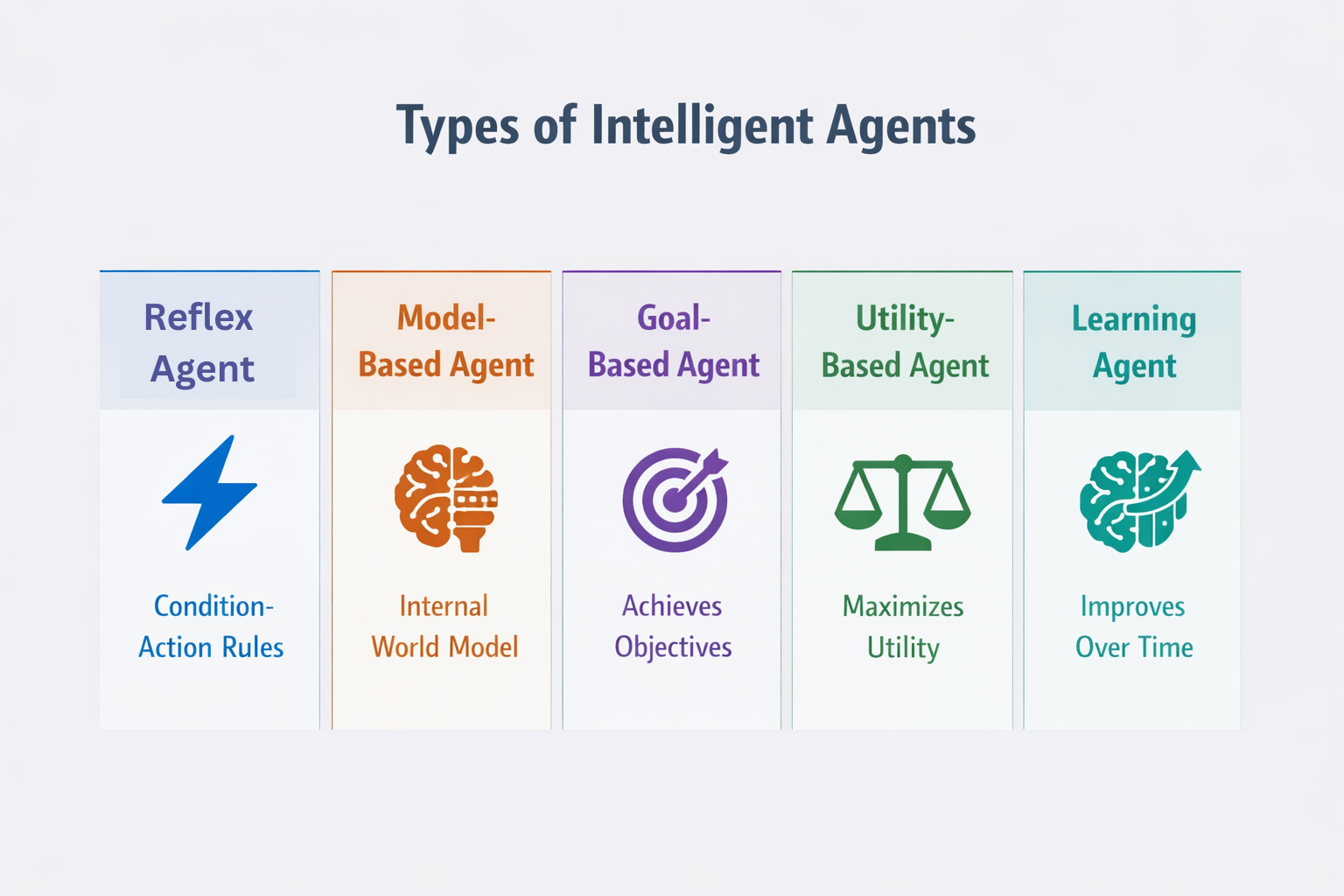
These basic agents operate using condition-action rules (if-then statements). They respond directly to current perceptions without considering history or future consequences. While limited in capability, they excel in straightforward, predictable environments.
2. Model-Based Reflex Agents
These agents maintain an internal model of their environment, allowing them to handle partially observable situations by tracking the world state. They can make more informed decisions by inferring aspects of the environment they cannot directly perceive.
3. Goal-Based Agents
These agents evaluate potential actions based on how they contribute to achieving specific objectives. They can plan sequences of actions to reach desired outcomes, making them more flexible than reflex-based systems.
4. Utility-Based Agents
These sophisticated agents make decisions by calculating the expected “utility” or value of different outcomes. They can balance competing objectives and handle uncertainty by choosing actions that maximize overall benefit.
5. Learning Agents
These adaptive systems improve their performance over time through experience. They analyze past actions and outcomes to refine their decision-making processes, becoming more effective with each interaction.
Now, let’s explore how these intelligent agent types manifest in real-world applications across different industries.
10 Real-World Intelligent Agent Examples
1. Clinical Documentation Agents in Healthcare
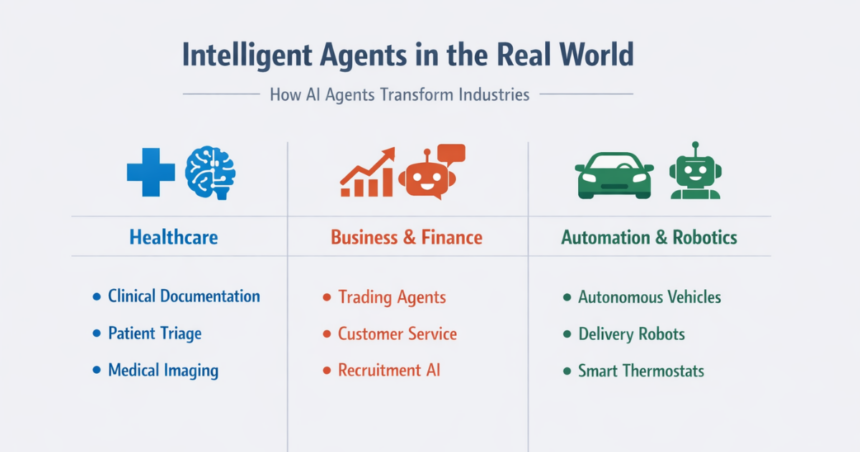
Healthcare professionals spend countless hours on administrative tasks like documentation. AI-powered clinical documentation agents are transforming this process by automatically extracting and summarizing crucial information from patient records, test results, and medical correspondence.
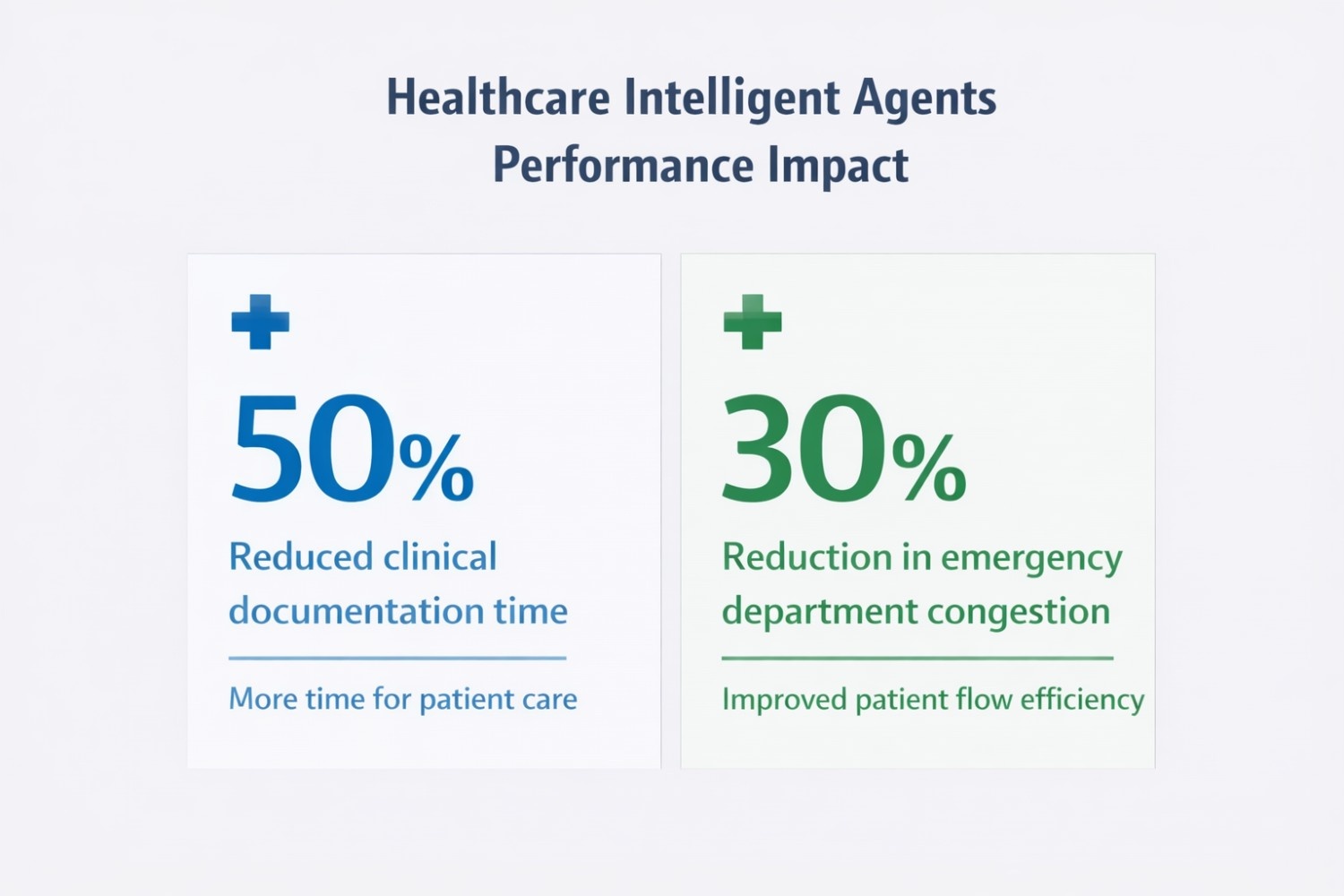
These intelligent systems can reduce administrative time by up to 50%, allowing doctors and nurses to focus more on patient care. The technology not only improves efficiency but also enhances accuracy by ensuring critical details aren’t overlooked during documentation.
2. Autonomous Vehicles and Navigation Systems
Self-driving cars represent one of the most visible examples of intelligent agents in action. Companies like Waymo (formerly Google’s Self-Driving Car Project) have developed sophisticated utility-based agents that process data from multiple sensors to navigate complex environments safely.
These systems continuously monitor road conditions, predict the behaviour of other vehicles and pedestrians, and make split-second decisions to ensure passenger safety. They exemplify how intelligent agents can handle environments with high uncertainty and constantly changing variables.
3. Smart Thermostats and Home Automation
Simple reflex agents like smart thermostats monitor the current temperature in a room and make decisions based on predefined rules. When the temperature drops below a set threshold, they activate heating; when it rises above another threshold, they turn it off.
While basic in concept, these intelligent agents demonstrate how AI can improve everyday life through automation of routine tasks and optimization of home environments for comfort and energy efficiency.
4. Financial Trading and Investment Agents
In the financial sector, utility-based AI agents analyze market trends, evaluate risk factors, and execute trades at optimal times. Platforms like Wealthfront use intelligent agents to build investment portfolios tailored to an investor’s preferences and risk tolerance.
These systems weigh potential returns, market volatility, and diversification strategies to recommend asset allocations that best align with financial goals. They continuously monitor market conditions and automatically rebalance portfolios when necessary, providing sophisticated financial management without human intervention.
5. Patient Triage Agents in Emergency Care
AI-powered triage agents are helping healthcare systems manage patient flow more efficiently. These intelligent systems engage with patients, ask structured questions about symptoms, and assess medical needs to direct individuals to the most appropriate care level.
The UK’s National Health Service has implemented such systems, resulting in a 30% reduction in emergency department congestion. By ensuring patients receive the right care at the right time, these agents improve both healthcare outcomes and resource allocation.
6. Virtual Customer Service Assistants
Intelligent customer service agents have evolved far beyond simple chatbots. Modern systems can understand complex customer inquiries, access relevant information across multiple databases, and provide personalized solutions.
These agents learn from each interaction, continuously improving their ability to resolve issues without human intervention. For businesses, this means 24/7 customer support capability, reduced wait times, and consistent service quality, all while freeing human agents to handle more complex cases.
7. Predictive Maintenance Agents in Manufacturing
In industrial settings, intelligent agents monitor equipment performance through sensors and predict potential failures before they occur. These systems analyze patterns in temperature, vibration, and other metrics to identify early warning signs of mechanical problems.
By enabling proactive maintenance, these agents help manufacturing companies avoid costly downtime, extend equipment lifespan, and optimize maintenance schedules based on actual conditions rather than fixed intervals.
8. Medical Imaging Analysis Agents
AI agents specializing in medical imaging are revolutionizing diagnostics by automatically reviewing CT scans, MRIs, and X-rays to identify abnormalities. These systems can detect early-stage cancers or rare diseases that might otherwise go unnoticed.
Beyond spotting anomalies, these intelligent agents can quantify tumor growth, measure organ function, or track disease progression over time. This technology helps radiologists reduce fatigue-related errors and focus their expertise on complex cases requiring human judgment.
9. Intelligent Recruitment and HR Agents
The hiring process involves reviewing countless resumes, screening candidates, and scheduling interviews and tasks that AI agents can streamline significantly. Intelligent recruitment systems can filter applications to identify the most qualified candidates based on specified criteria.
These agents have been shown to reduce hiring time by 20% while improving candidate satisfaction by 15%. By handling routine aspects of recruitment, they allow HR professionals to focus on the human elements of hiring, such as assessing cultural fit and building relationships with potential employees.
10. Autonomous Delivery Robots
Delivery robots used on sidewalks or in office complexes exemplify autonomous agents in action. Equipped with sensors, GPS, and AI navigation systems, these robots transport goods to customers without direct human control.
They navigate paths, avoid pedestrians, and adapt to unexpected obstacles while independently completing delivery tasks. This technology is transforming last-mile delivery logistics, offering cost-effective and environmentally friendly alternatives to traditional delivery methods.
Benefits of Intelligent Agents in Business and Society
The real-world intelligent agent examples above demonstrate several key benefits:
- Automation of routine tasks, freeing humans for more creative and complex work
- Enhanced decision-making through analysis of vast amounts of data
- Improved efficiency and productivity across various business operations
- 24/7 operation capability without fatigue or performance degradation
- Adaptability to changing conditions through learning and self-improvement
- Cost reduction through optimization of resources and processes
The Future of Intelligent Agents in AI
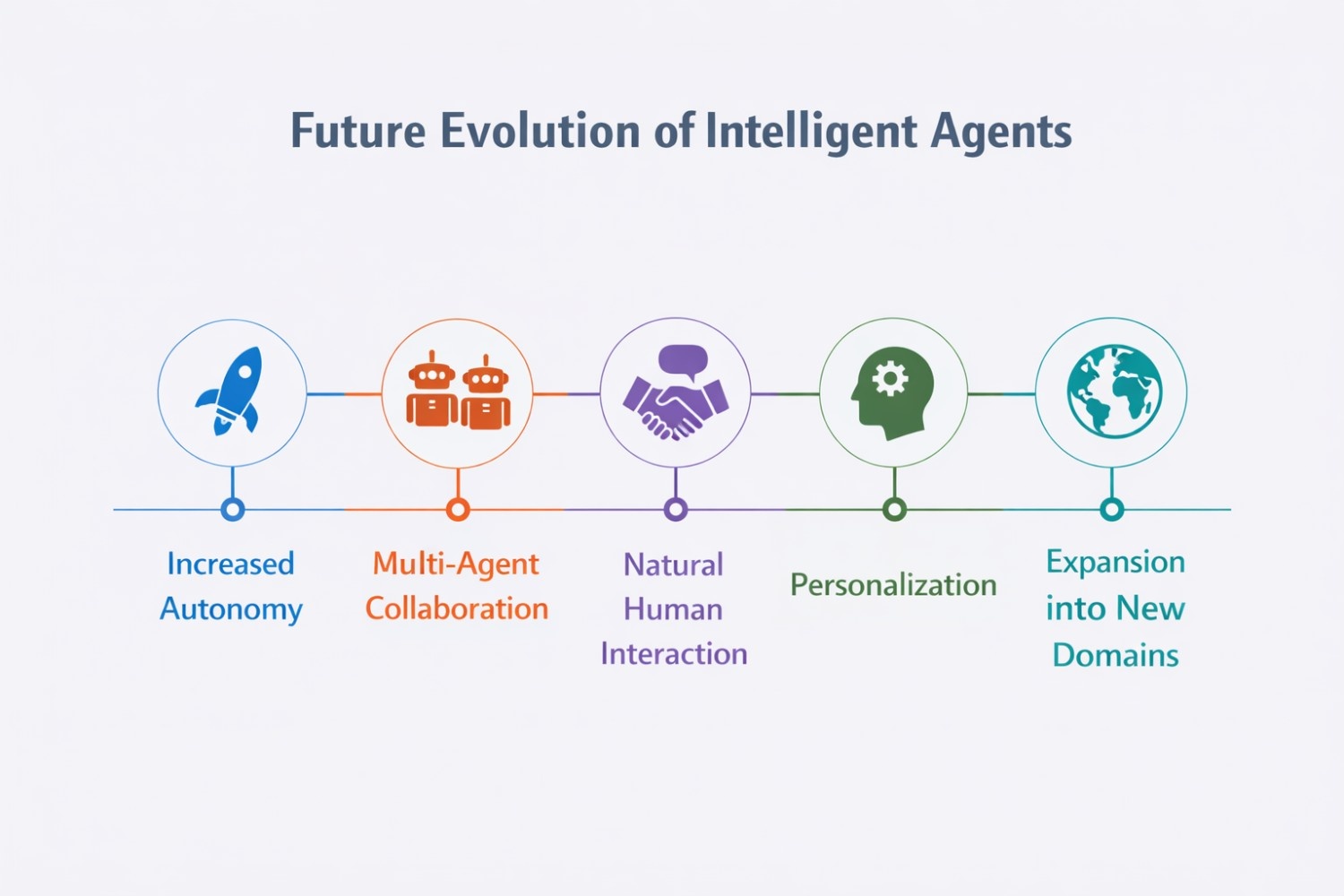
As artificial intelligence continues to advance, we can expect intelligent agents to become even more sophisticated and widespread. Several trends are likely to shape this evolution:
- Increased autonomy– Future agents will handle more complex tasks with less human oversight
- Enhanced collaboration– Multiple specialized agents will work together to solve complex problems
- Improved natural interaction– Agents will become more adept at understanding and responding to human communication
- Greater personalization– AI systems will tailor their behaviour more precisely to individual preferences and needs
- Expanded application areas– Intelligent agents will enter new domains currently requiring human expertise
Conclusion:
The ten real-world intelligent agent examples we’ve explored represent just the beginning of how AI is transforming our world. From healthcare to finance, customer service to manufacturing, these autonomous systems are proving their value by handling complex tasks, making informed decisions, and adapting to changing circumstances.
As businesses and organizations continue to adopt intelligent agent technologies, those who embrace these innovations early will gain significant competitive advantages in efficiency, customer experience, and operational excellence. The intelligent agent revolution is not just about automation and it’s about augmenting human capabilities and creating new possibilities for innovation and growth.
By understanding the different types of intelligent agents and their applications across industries, businesses can better position themselves to leverage this powerful technology for their specific needs and challenges.
Are you using intelligent agents in your business operations? Share your experiences in the comments below!

Hi, I’m Pragya.
I write about AI tools, digital trends, and emerging technologies in a way that’s simple, practical, and easy to apply. I enjoy exploring new AI platforms, testing their features, and breaking them down into clear guides that actually help people use them confidently.
My focus is not just on writing content, but on creating value. I believe powerful technology should feel accessible, not overwhelming. That’s why I aim to turn complex tools into actionable insights for creators, marketers, and growing online businesses.
I’m constantly learning, researching, and staying updated with the fast-moving AI space so readers always get relevant and useful information.