
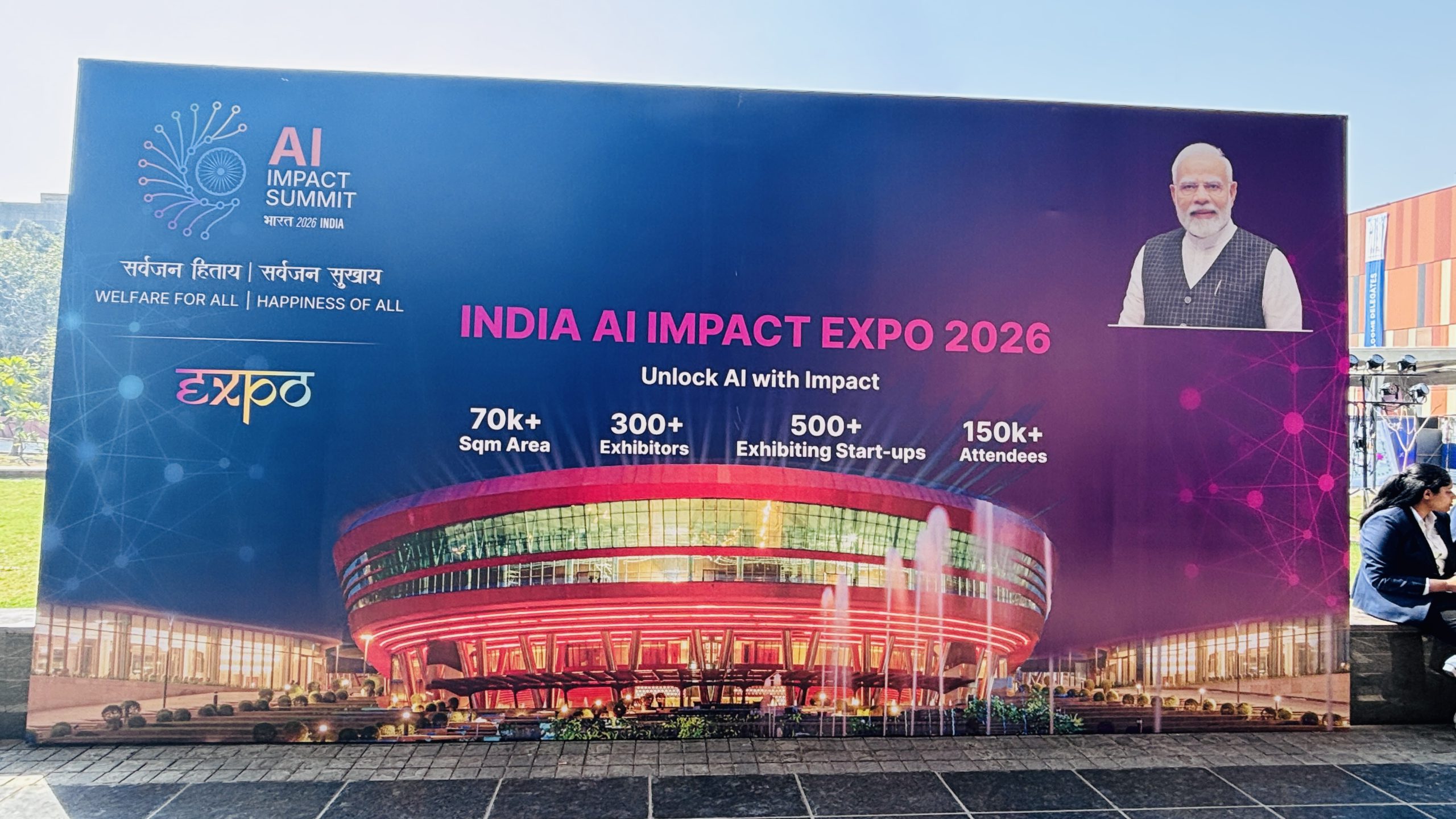
From 16th to 20th February 2026, New Delhi is hosting India AI Impact Summit 2026. I attended on 16th and 17th February, and for me, it was more than just an event – it was a real ground-level view of India’s AI ecosystem.
- 1. The Scale Was Massive
- 2. Big Brands vs Small Companies
- 3. Industry-Based AI Solutions Are Growing
- 4. Many Companies Say “AI” – But Clarity Is Missing
- 5. The Application Layer Boom (LLM Era)
- 6. Core Research-Based Innovation Is Limited
- 7. Interacting with Big Tech Was Eye-Opening
- AI Summit… and an Unexpected Reunion
- A Small but Honest Note
- Final Reflection
India AI Impact Summit 2026 in New Delhi brought together hundreds of startups, enterprises, and AI enthusiasts under one roof. I had the opportunity to attend, and it was more than just an event – it gave me a real, on-the-ground perspective of where India’s AI ecosystem stands today.
I’m not a professional writer. I’m a tech person running a platform called Aitude.com where we explore AI tools.
I went there with one simple goal: To understand what companies in India are actually building with AI.
Here are my honest 7 key insights.
1. The Scale Was Massive
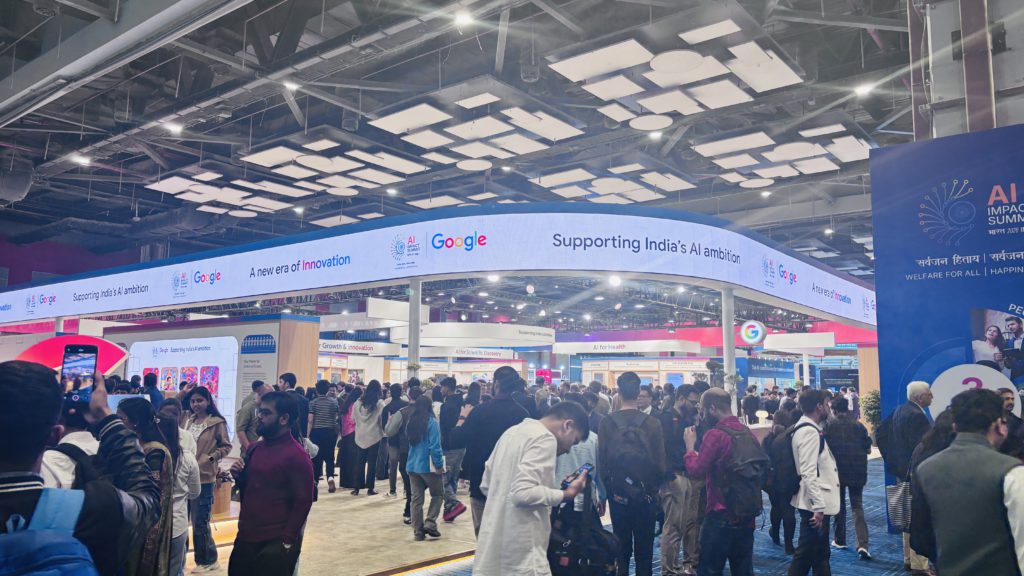
There were hundreds of startups and companies spread across multiple exhibition halls. It was simply not possible to stop at every stall.
So I made a strategy:
- First observe big brands
- Then explore small and mid-sized companies
- Focus more on domains that interest me
By the second day, the place became extremely crowded. Every hall was full of AI enthusiasts – students, developers, founders, and investors. The enthusiasm was real.
2. Big Brands vs Small Companies
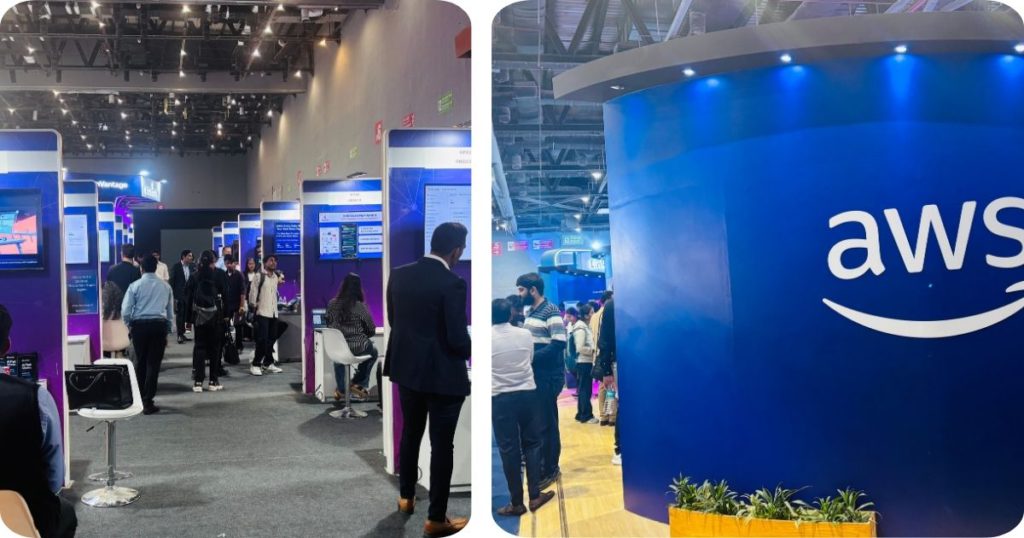
One very clear pattern I observed: large enterprises were showcasing hardware-integrated AI solutions, while smaller startups were more focused on software + AI applications.
This is quite obvious:
- Hardware + AI requires heavy capital
- Software + AI (especially using LLM APIs) is easier to access
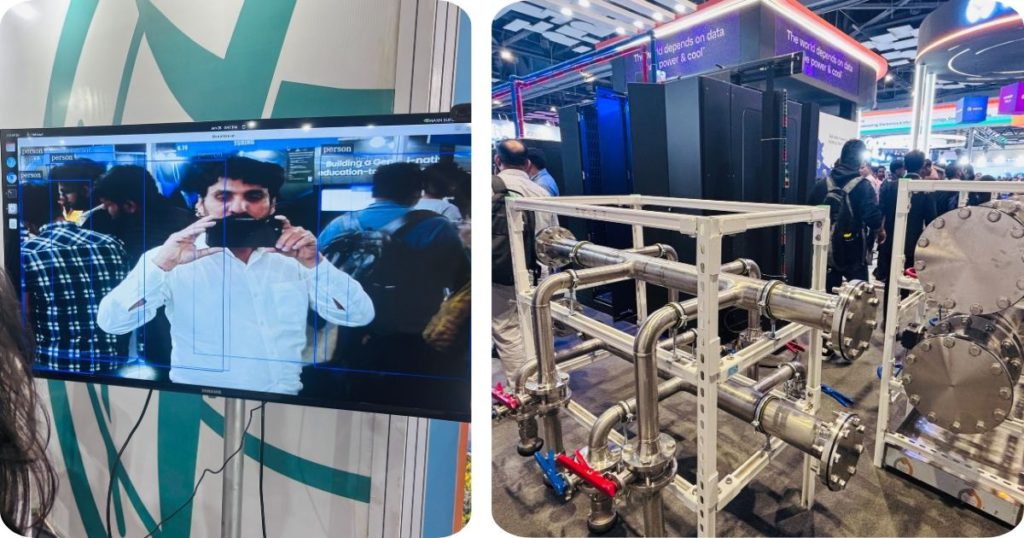
For example:
- Tata Consultancy Services (TCS) was showcasing an autonomous driving prototype and a prompt-based warehouse design system.
- Many smaller companies were presenting analytics dashboards and data-processing tools powered by AI.
I’m not saying this applies to every company – but it was a visible trend.
3. Industry-Based AI Solutions Are Growing
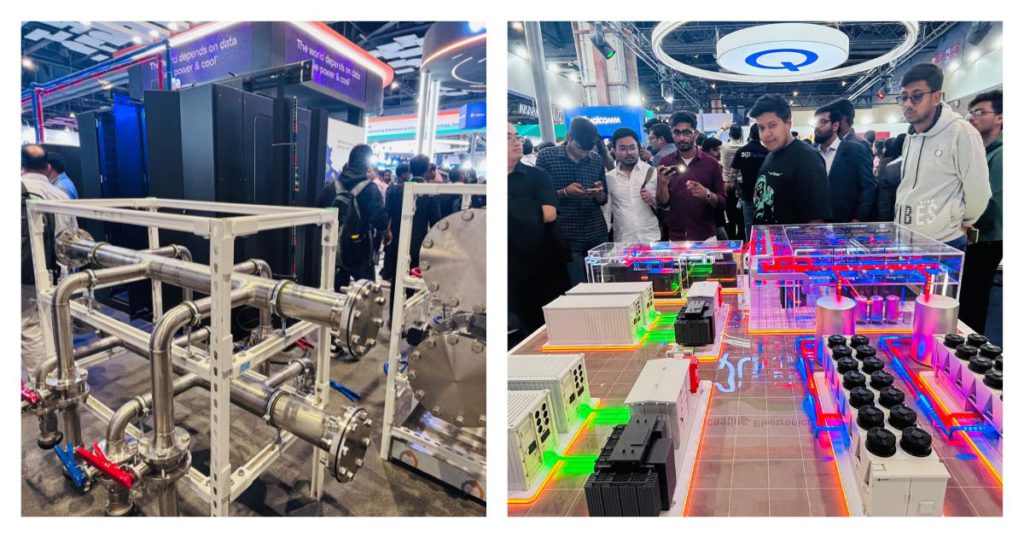 Big brands are not showcasing “AI tools.” They are showcasing industry solutions powered by AI.
That’s an important distinction.
Instead of saying “We use AI,” they are saying:
- We optimize logistics
- We automate warehouse design
- We improve telecom operations
- We enhance enterprise productivity
The AI part is embedded – not marketed loudly. That shows maturity.
4. Many Companies Say “AI” – But Clarity Is Missing
This was one interesting and slightly confusing observation. Not all companies were truly AI-focused.
In some stalls, when I asked how AI is used, explanations were unclear. For example, I saw a car racing game where they said AI was used to generate roads, buildings, and amenities. Maybe my understanding was incomplete – but the explanation didn’t feel very strong.
It made me realize that sometimes “AI” is used more as a marketing label than a core engine. This is not criticism – just an observation from a curious visitor.
5. The Application Layer Boom (LLM Era)
Many small-scale companies were building on top of pre-trained LLMs – and that makes sense. Today, with easy access to APIs from companies like:
Building AI applications at the application layer has become easier. Most startups are:
- Wrapping LLMs
- Adding dashboards
- Solving workflow problems
- Creating automation tools
The barrier to entry is lower – which explains the explosion of AI startups.
6. Core Research-Based Innovation Is Limited
This might be a sensitive but realistic point. I did not see many deep, research-based AI innovations developed fully from scratch.
Most solutions were:
- Integrations
- Applications
- System-level implementations
But that is understandable. India’s deep AI research ecosystem is still growing compared to global research hubs.
Still, the energy and enthusiasm were strong – especially among young engineers and students. And that enthusiasm is powerful.
7. Interacting with Big Tech Was Eye-Opening
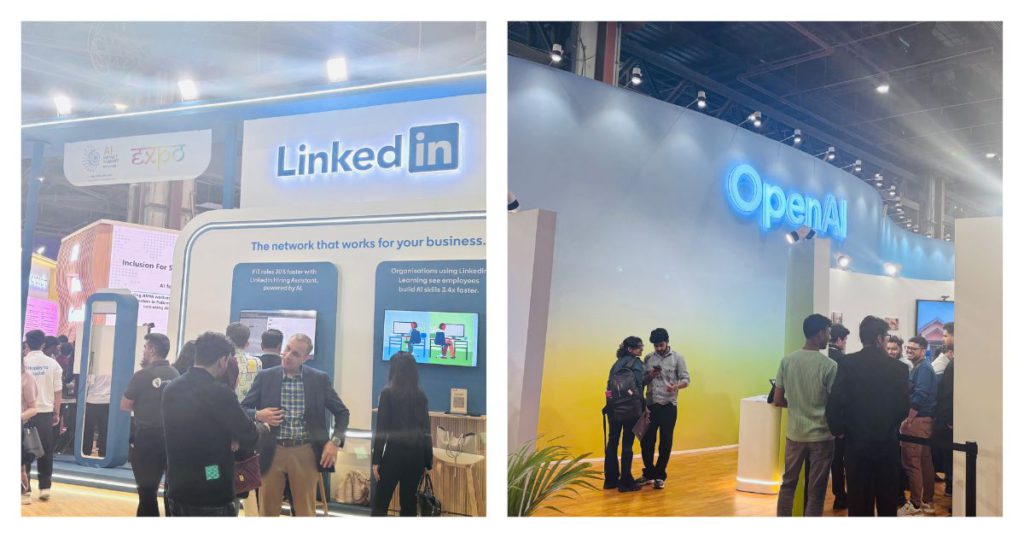 For me personally, one of the most exciting parts was interacting with representatives from AWS, OpenAI, Microsoft, Qualcomm, LinkedIn, TCS, and Airtel.
I was trying to understand how they represent their already established products in an AI-first narrative.
As someone running a small platform like Aitude, this was inspiring. Big brands focus less on hype and more on positioning, clarity, and integration.
That was a valuable lesson for me.
AI Summit… and an Unexpected Reunion
One of the most special moments for me was not about AI technology at all – it was personal.
At the summit, I met my old friend Vivek Sharma, who was exhibiting his company ProvisCommerce.ai.
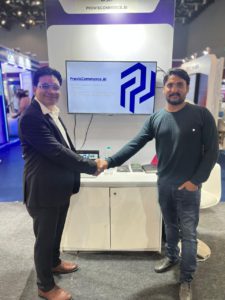
We hadn’t met for almost 13 years.
And suddenly, in the middle of this massive AI gathering – this “AI Mahakumbh” – we ran into each other. It honestly felt like finding something that was missing.
We didn’t just reconnect as friends – we connected as people who are now building in the same AI ecosystem. Seeing him exhibiting his own AI product, and me walking around exploring ideas for Aitude, made the moment even more meaningful.
Life moves fast. Careers evolve. Technology changes. But some connections remain. Meeting an old friend after 13 years – in an AI summit of all places – was one of the most unexpected and beautiful parts of this experience.
A Small but Honest Note
The food was expensive – very expensive. At such large-scale innovation events, basic things like food pricing should be more reasonable. But maybe that’s how events work.
Final Reflection
I went to India AI Impact Summit 2026 not as an expert speaker – but as a curious tech person running a small AI-focused platform.
What I saw:
- Massive enthusiasm
- Rapid growth in AI adoption
- Strong presence of enterprise players
- Explosion of application-layer startups
- Limited deep research innovation (for now)
India’s AI journey is accelerating. We may not yet lead in foundational research globally – but we are building, integrating, and scaling AI faster than ever before. And the enthusiasm of the young generation gives me confidence that bigger innovation waves are coming.
For me, this summit was not just about seeing AI. It was about understanding where India stands – and where we are heading. And as I continue building Aitude.com.
I want to contribute in my own small way by helping people discover practical AI tools and ideas.

Sandeep Kumar is the Founder & CEO of Aitude, a leading AI tools, research, and tutorial platform dedicated to empowering learners, researchers, and innovators. Under his leadership, Aitude has become a go-to resource for those seeking the latest in artificial intelligence, machine learning, computer vision, and development strategies.